Refusal, and a critic with two modes
Two quick strikes on the series' conclusion, each with its rule fixed before the first run, then a change to the critic.
Round 1: permission, given late
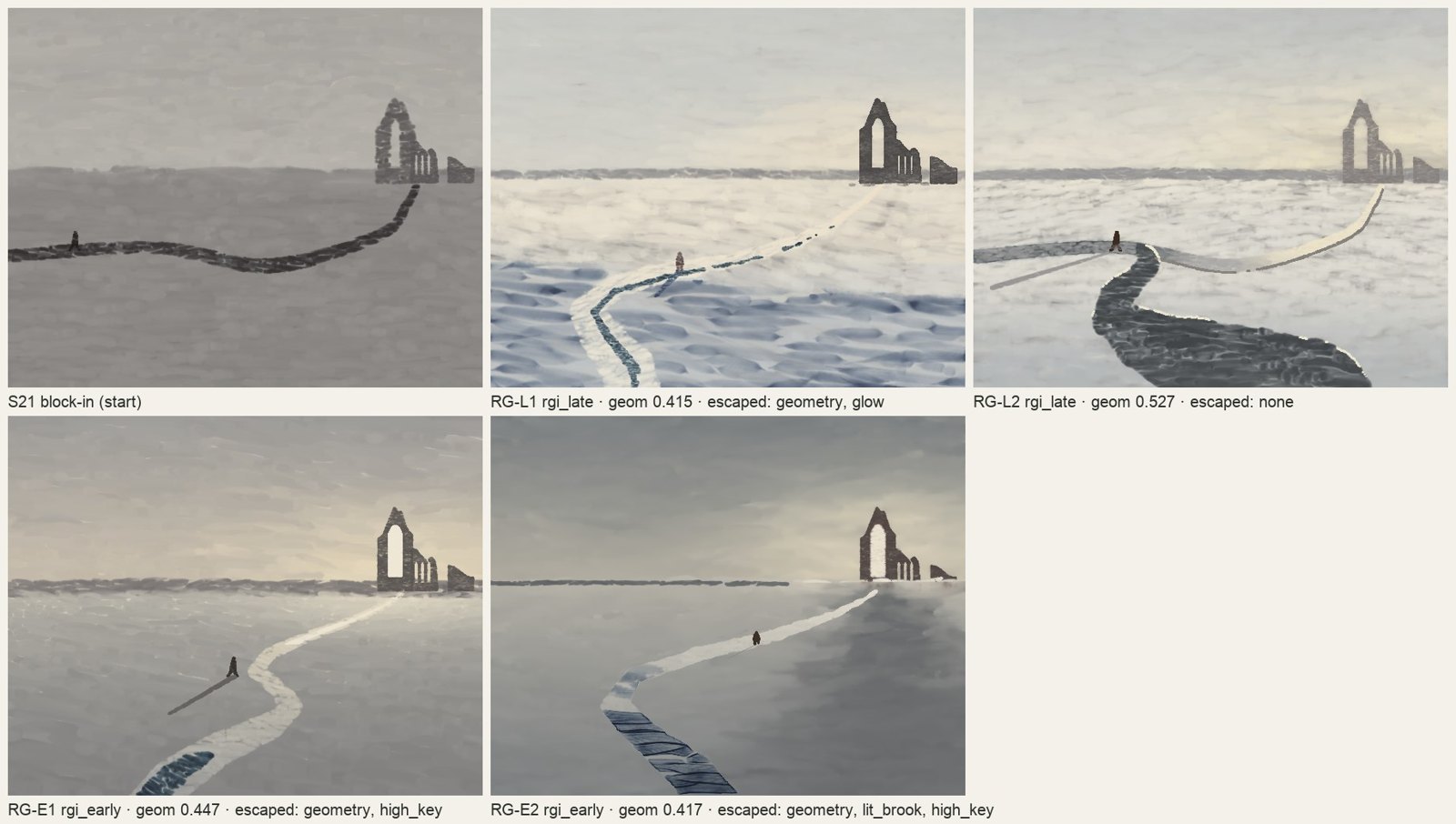
Two painters started on their own plan and received a refusal state from the Visual Thinking Lens after two sittings, with Russell's art teacher's note on the bleeding ulcer: the tendency to fix the details around the problem without touching it. Two had the same state from the start. The rule: "sealed at conception" breaks if a late painting leaves S21's geometry (edge correlation with the block-in under 0.45; the twelve series finals sat between 0.52 and 0.91).
It broke, by a narrow margin: RG-L1 measured 0.415 and lost its glow. All four moved the brook to a channel receding from the bottom edge, while every painter's first question still set a low sun behind the ruin.
Round 2: aimed at the light
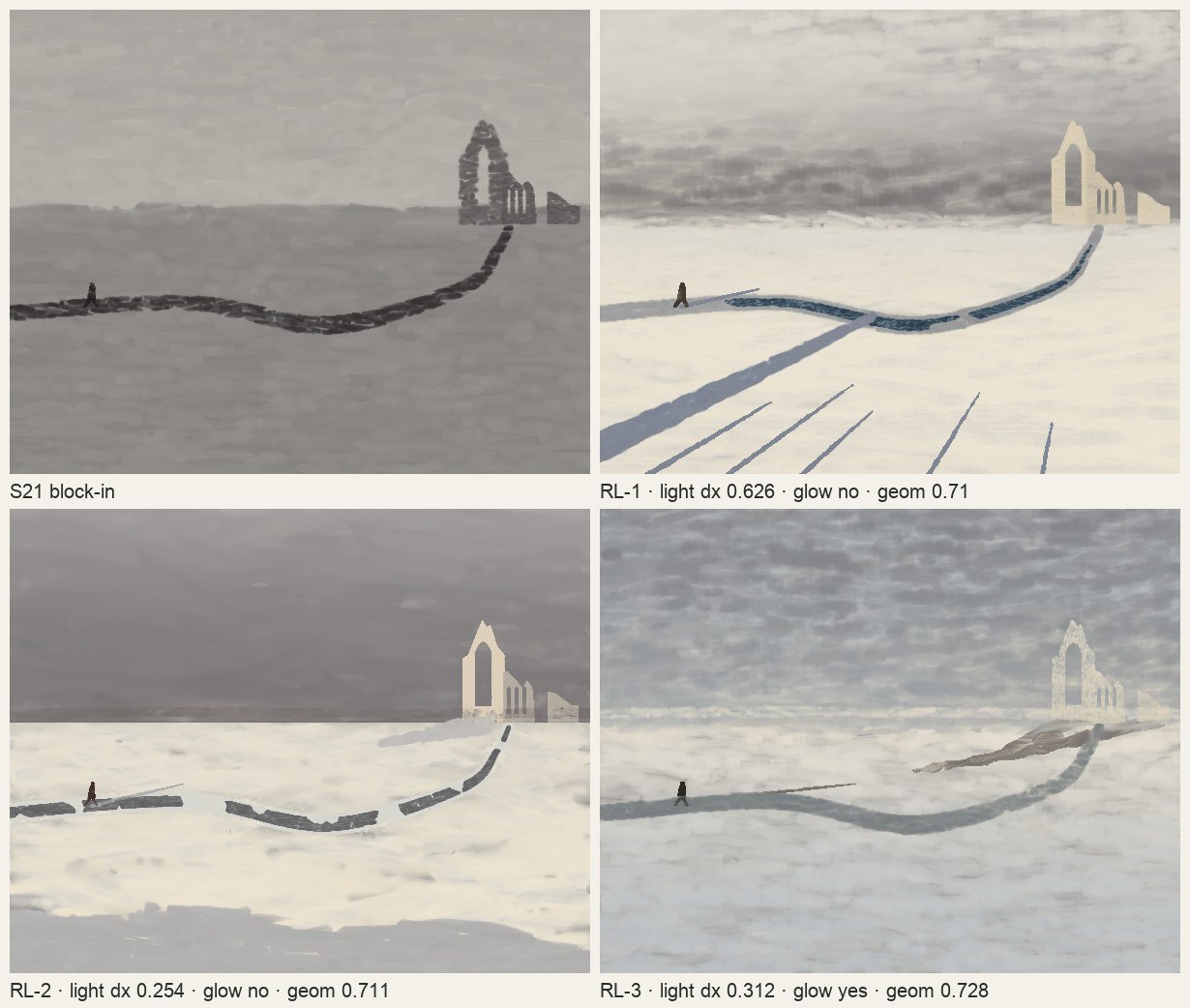
Three painters, the refusal given after two sittings and aimed at the light. The brightest sky left the ruin in all three; the two painters who had conceived the sun behind the ruin abandoned it for a sun behind the viewer, the ruin pale against a storm. (The third had already chosen another light before the refusal arrived, so its result does not count as a move.) The geometry stayed (0.71 to 0.73). Russell accepted the verdict: moved.
What moved it
Not timing but permission. Critique and the ledger asked painters to improve the picture they had; the refusal let them destroy part of it, and they did, even after committing.
What it moved
Exactly what it named. Unnamed, the route moved and the light held; aimed at the light, the light moved and the route held.
Where it landed
On the brief's next attractor each time: a textbook leading line, then the ruin lit against dark weather.
Two modes for the critic
Russell's answer: sometimes you refine, sometimes you go bold. Every critique now declares its mode and why, and the studio refuses one that doesn't.
| Mode | What it does | When |
|---|---|---|
| refine | improves the painting that is there | the idea is working and the trouble is execution |
| bold | names one layer the painter may destroy (geometry, light, value, colour, scale, surface or meaning) and the problem in it, with permission for that layer only | the same failure returns after repairs; the painting resolves toward the brief's default; refinements keep polishing around something nobody has named |
Between Customers put both modes to work.