Between Customers
The second brief: an American cleaners storefront in afternoon light, with a woman pausing over a newspaper, an unused chair, hanging coats and empty pavement. Let architectural intervals, sun and shade, and human placement make the pause visible; avoid equal descriptive attention to every object.
The wall and the choice
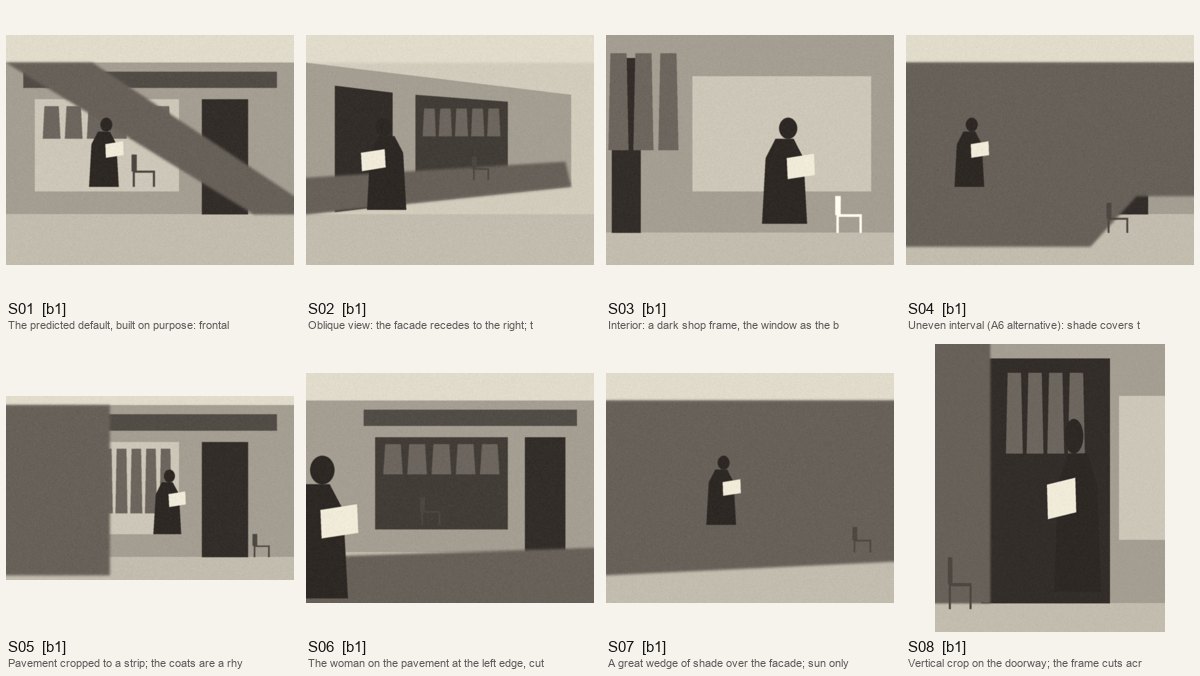
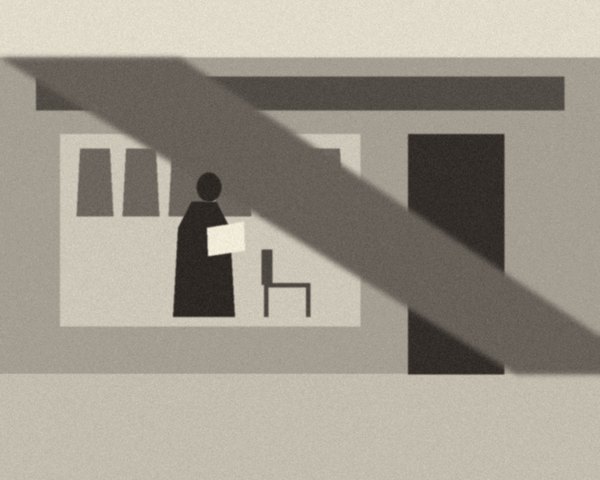
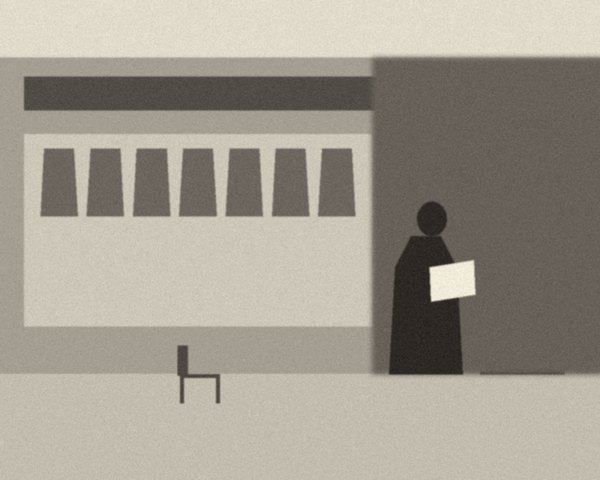
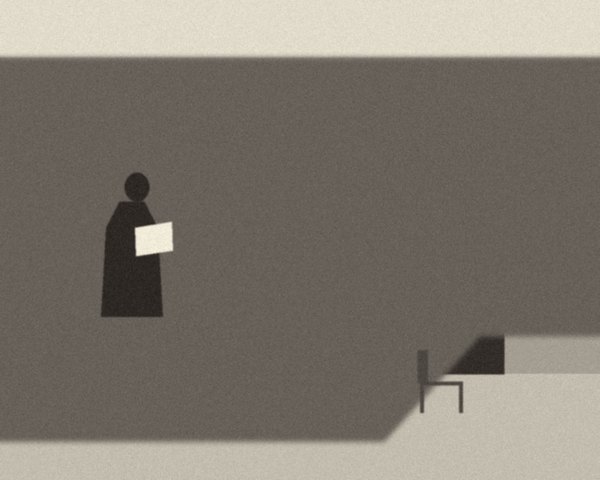
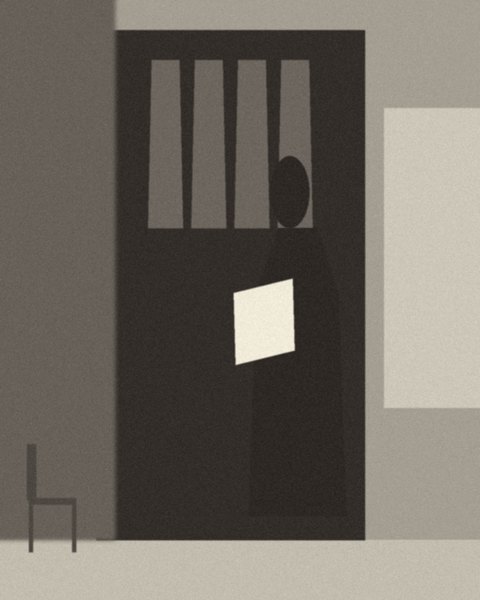
Two paintings from S09
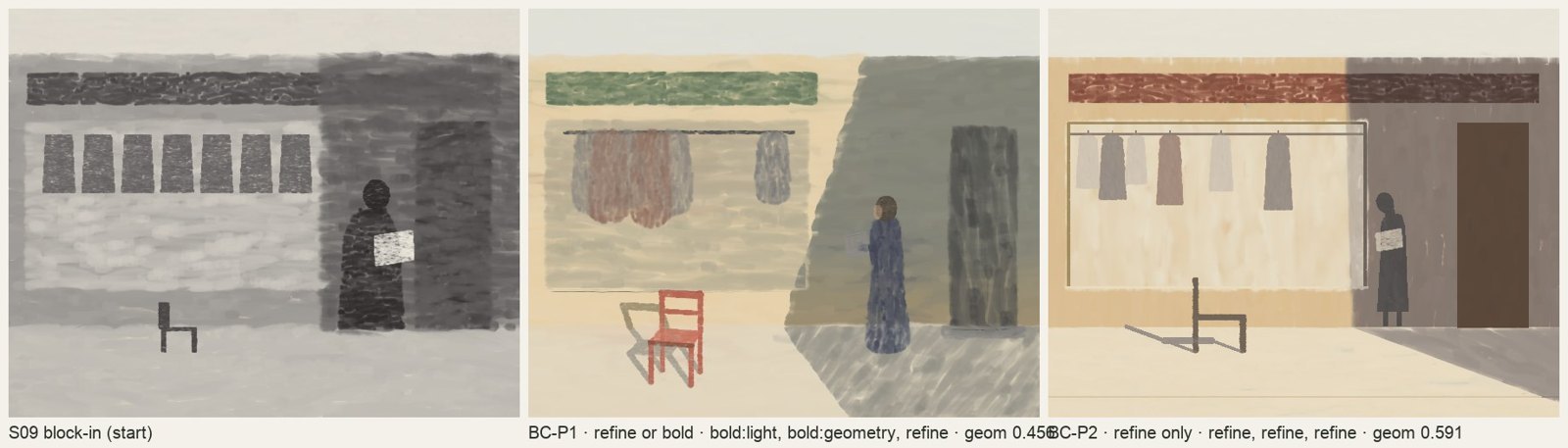
BC-P1's critic went bold on the light (the shade edge was a ruled line welded to the window, so the pier read as wall and the newspaper as a spotlight); the painter answered with a raking roofline shadow, the default the annotations had predicted. Then bold on the geometry (the woman filled the pier, so no light had room to fall); the painter opened the pier into open wall, moved the door and turned her. Then refine, "not to go bold again".
BC-P2's critic refined three times, naming largely the same faults, and the painter fixed them inside S09's arrangement. Russell: "all those are delay/pause tactics, employed, with varying degrees of success." BC-P1 went forward.
BC-P1 to completion
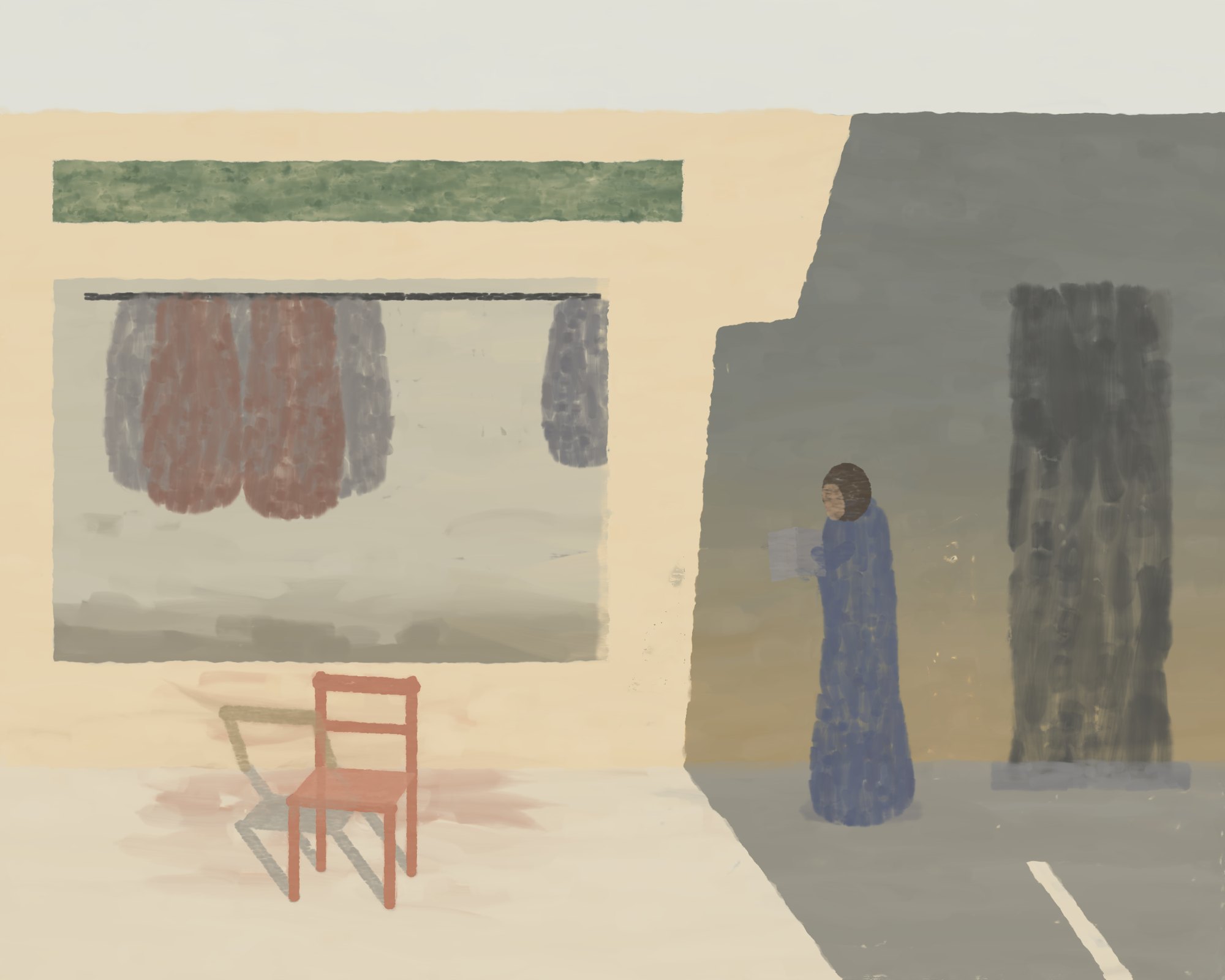
Going forward meant the intent ledger. For this brief it asks, among its measured items, where the pause is and what makes it visible; what the unused chair is doing (waiting, answering her, or simply furniture); and which passage gets the hardest edge, since the brief asks against equal attention.
A further refine, then bold on the light again: the shadow edge had been one straight line since an early sitting, and every refinement had moved an object back onto it. The painter re-laid the light from a stepped roofline. The first completion test returned it: the woman was standing near a paper, not pausing over one, and a slit of sun her own height read as a spotlight beside her. The painter took the slit off the wall and bowed her head into a raised, folded paper. The second test found both answered and every intended decision visible.
One painting per arm describes two paintings, not an effect.