Visual stages, comparisons and decisions from the original run. Internal prompts, operating documents and downloadable implementation files are omitted. Some interactive comparisons are shown as separate images.
The path passes.
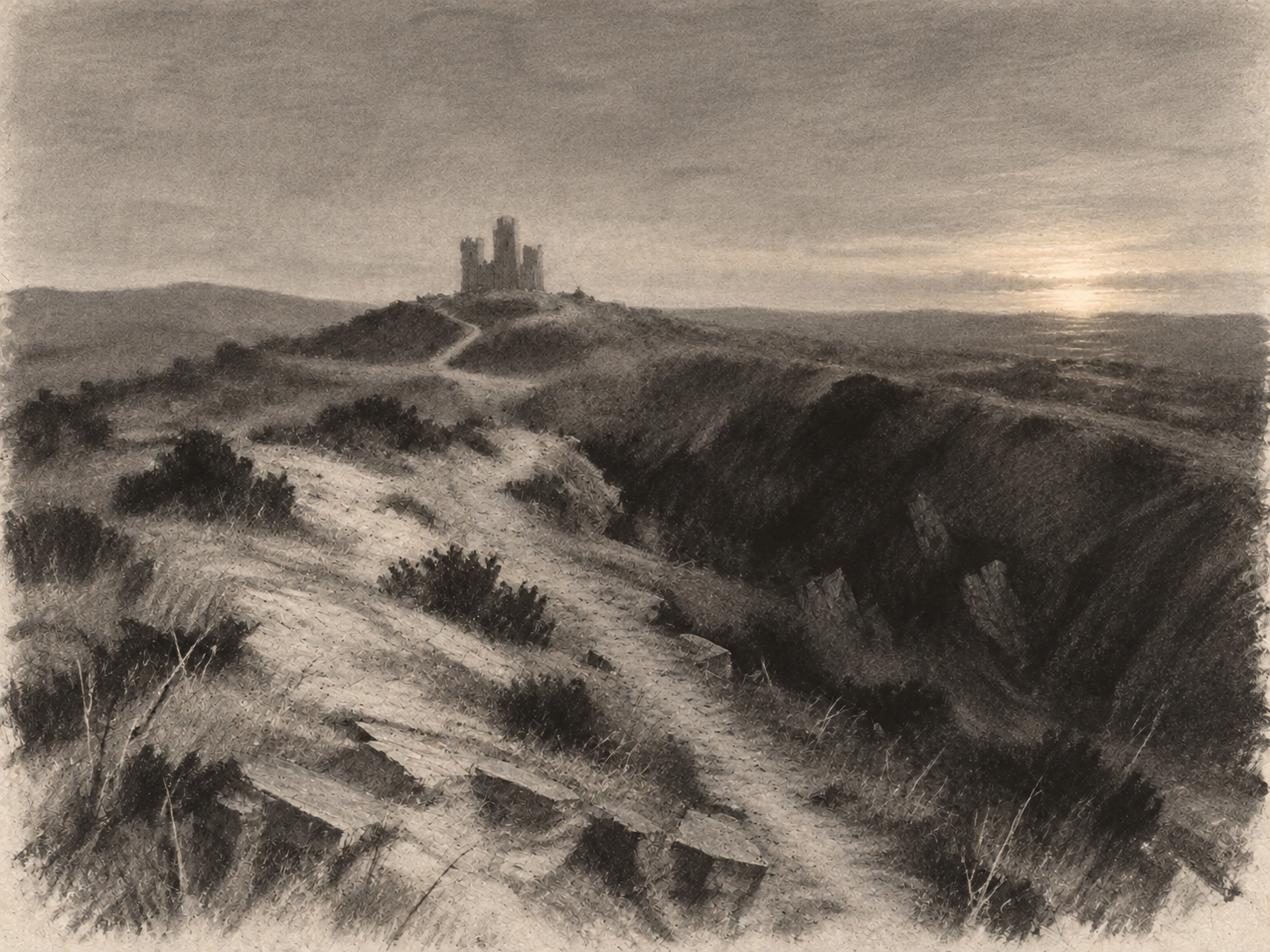
PROVISIONAL HOLD · EA path follows the lip of a dark hollow toward the last light. The castle remains on the ridge, but the road no longer makes it the destination.
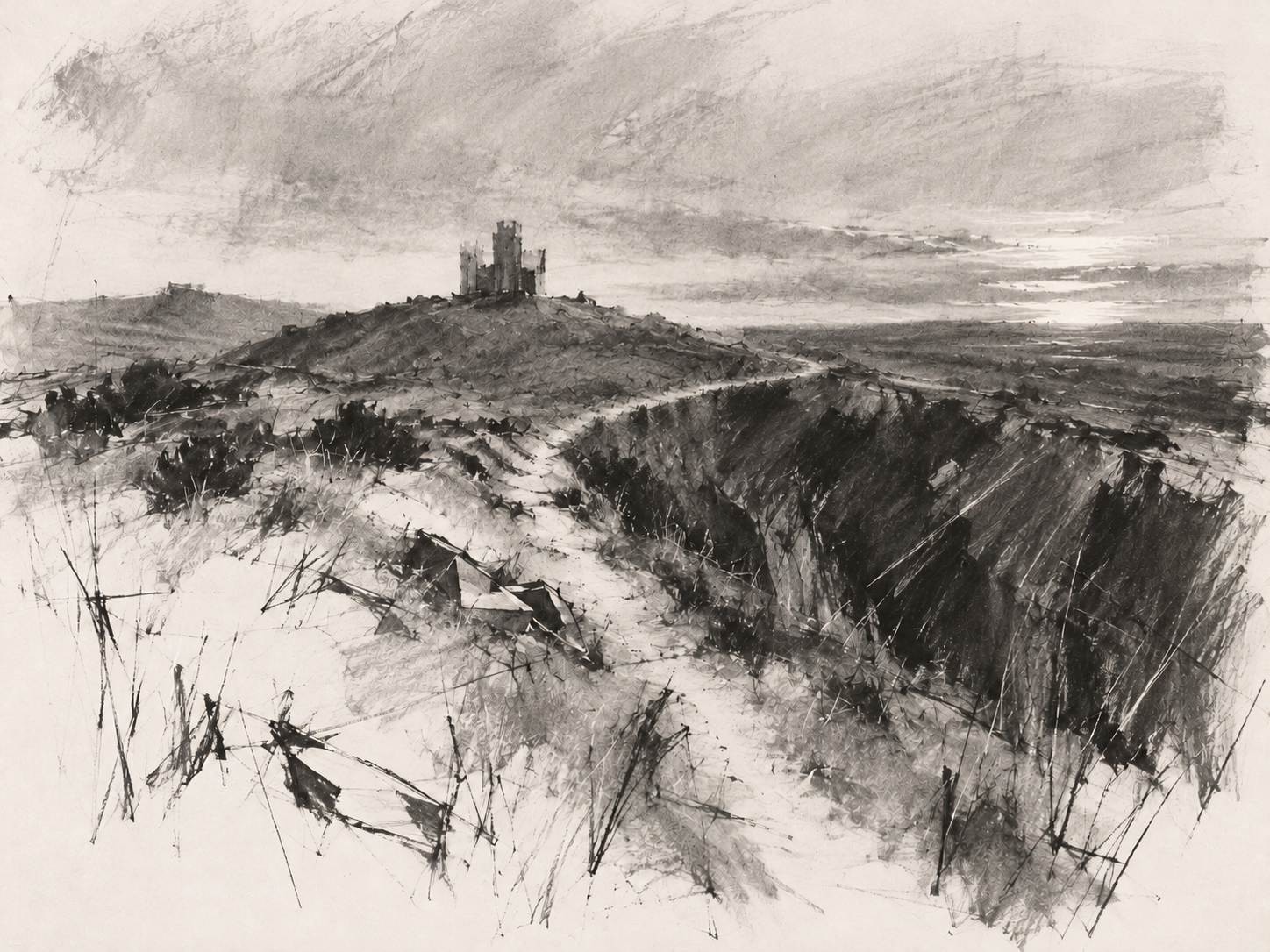
Save selected image · Final raster: built-in image_gen, directed by the native studies. It does not have a recovered native stroke history.
A stopping judgment with an objection.
What became specific
The large dark hollow determines the path’s turn. The pale approach, broad foreground paper and small distant upright establish different kinds of attention. The route moves toward light while the castle stays behind it.
What changed my mind
I began by favoring an interrupted road to the castle. The developed images did not justify forcing that break. The passing-route alternative was more useful: it made the route depend on the land rather than on a destination imposed by the prompt.
The strongest objection
With the path diverted, is the castle just decoration? Removing it leaves a viable landscape, but weakens the upper vertical anchor and the distant scale against the near hollow. That supports retaining it quietly, without enlarging it or reconnecting the road.
Why stop here
More stone detail repeats A’s overdescription. Clarifying every road edge restores the ribbon. Forcing a hidden section repeats D’s inconclusive intervention. I have no specific remaining structural correction that presently outweighs those losses.
Reopen on evidence. If the castle reads as pasted-on, the far path as a floating stripe, or the drawing as uniform texture instead of broad charcoal and paper, those are concrete grounds to reopen.
Some fine texture and foreground accents remain artificial. Hold is a revisable, same-assistant artistic judgment—not proof of originality, an independent verdict or an automatic engine score.
Let the alternative compete.
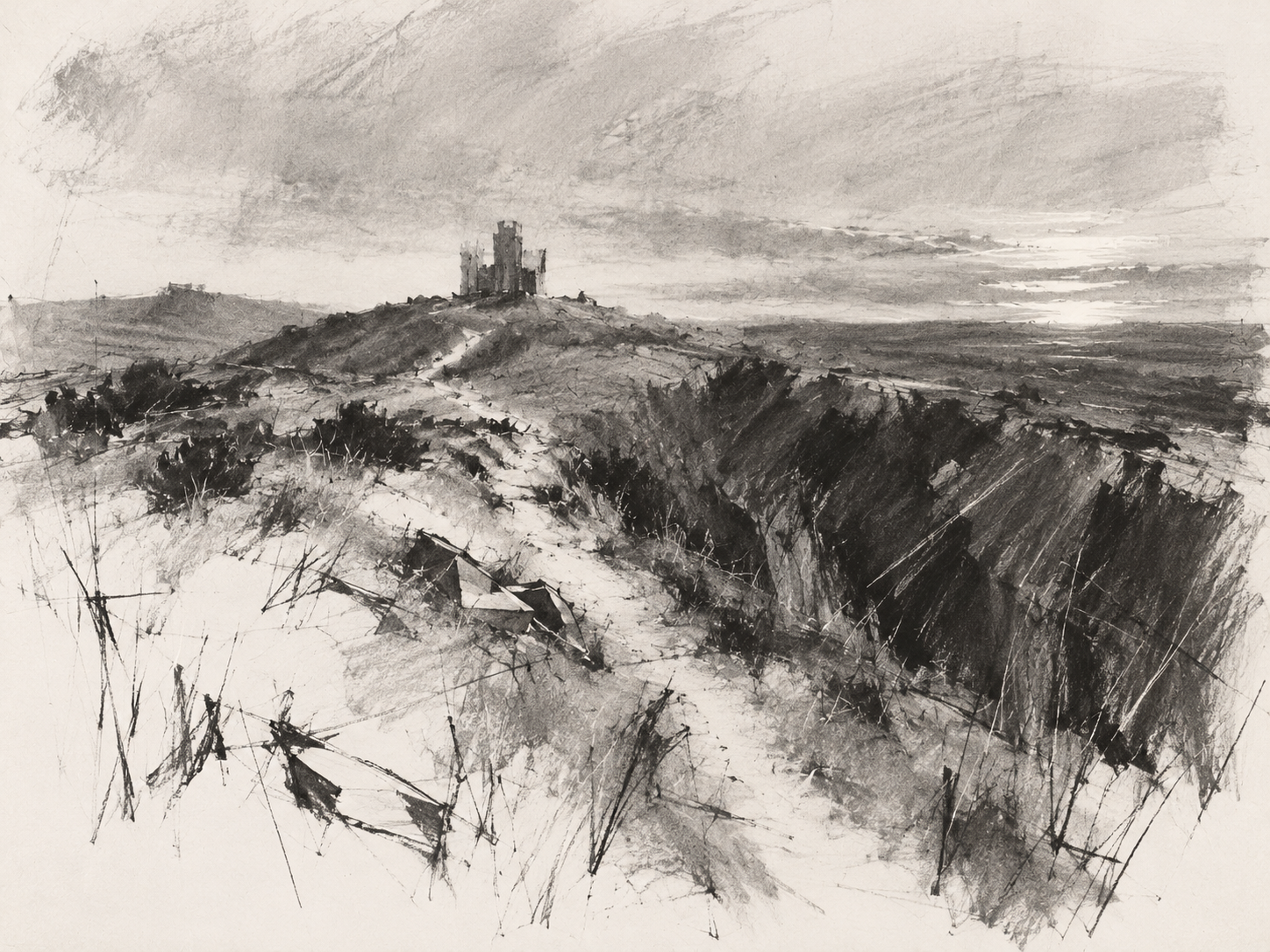
The native structure becomes a materially stronger charcoal drawing. Its path still points toward the castle.
The path now follows the hollow lip toward the right-hand light. Selected for that relation—not merely because it follows the edit request.
A second upright anchor above the dark foreground and lateral ridge.
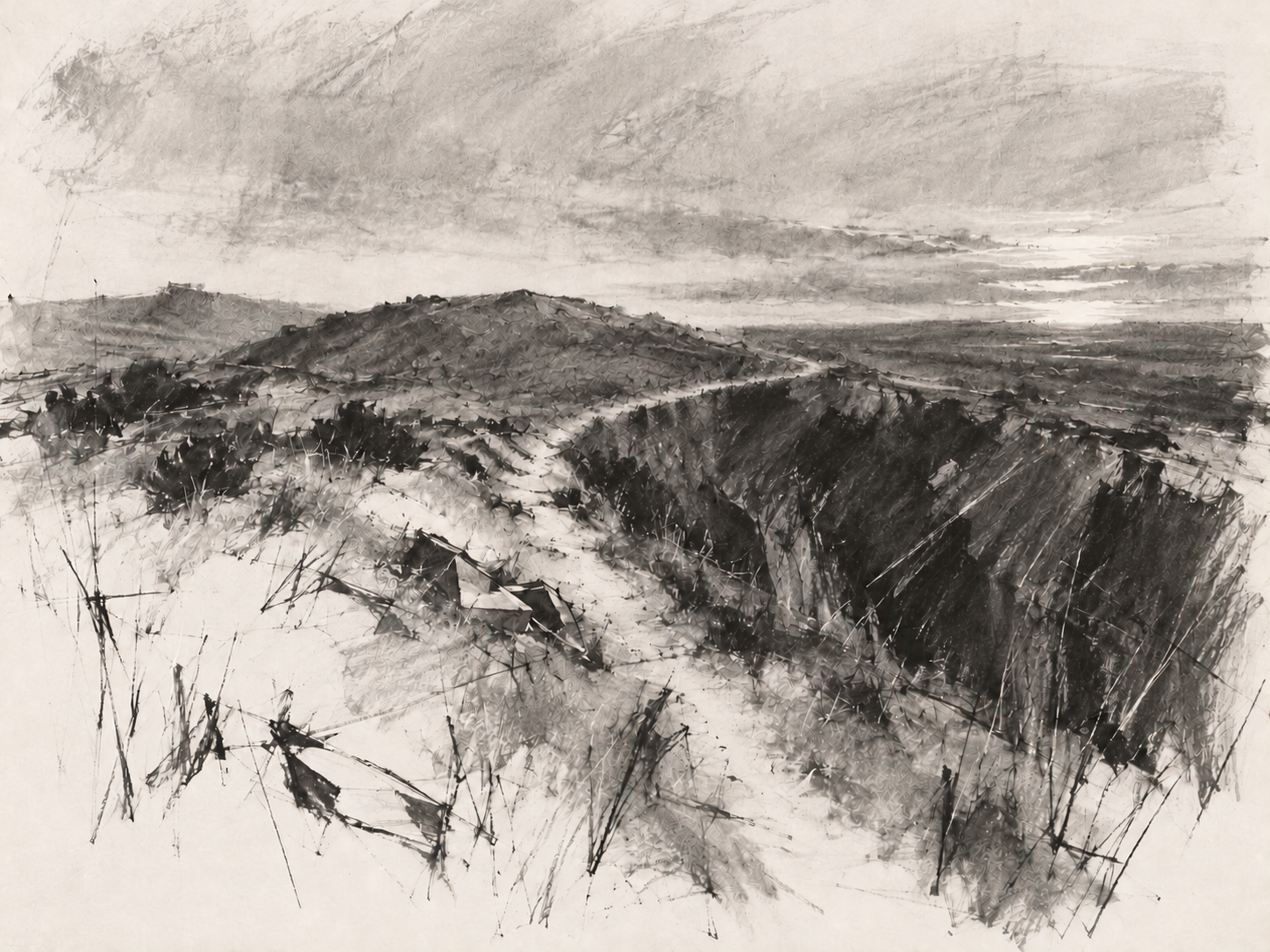
The land still works, but the upper ridge loses its counterweight and distant scale. Fine texture changed in this generative edit: the comparison is qualitative, not pixel-controlled.
First, reconstruct locally.
The earlier cutouts lacked connected terrain. This continuation built a new uneven land surface, projecting banks, irregular stones and a route that sits on that terrain. Native charcoal strokes worked from those locally authored construction fields; no source-image pixels were traced or pasted. The local tool is Hands/Canvas, not the legacy Rust oil simulator.
This is procedural drawing support—not learned freehand perception. The generator entered after the local studies supplied a readable route/hollow relationship and a comparison of route values.
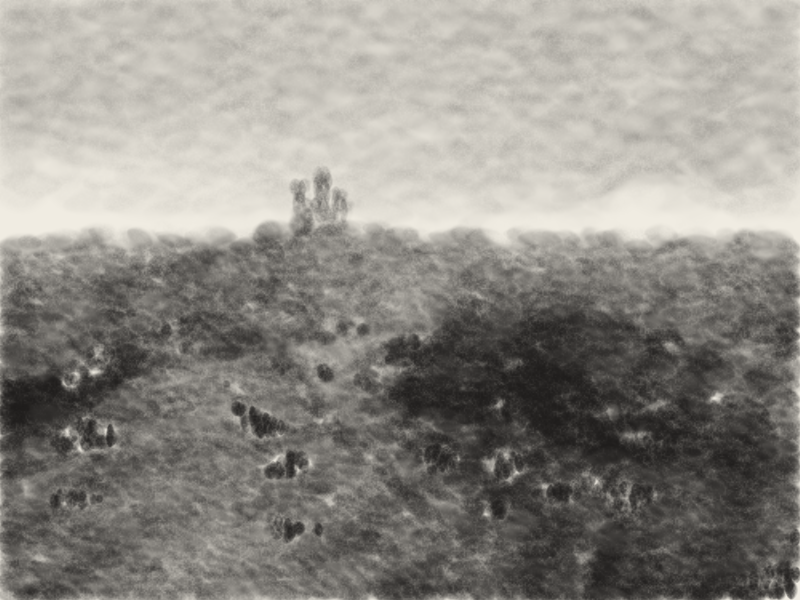
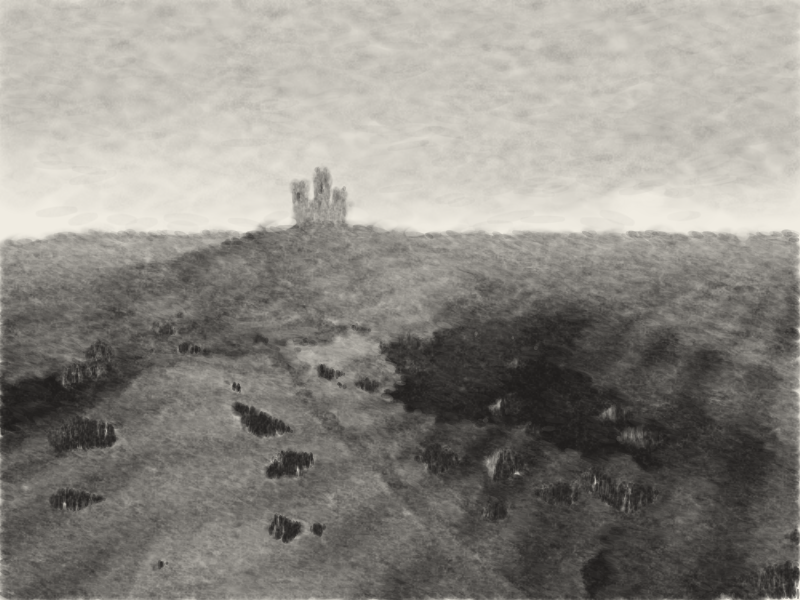
Broad deposits establish the hollow; mottling still conceals form.
·
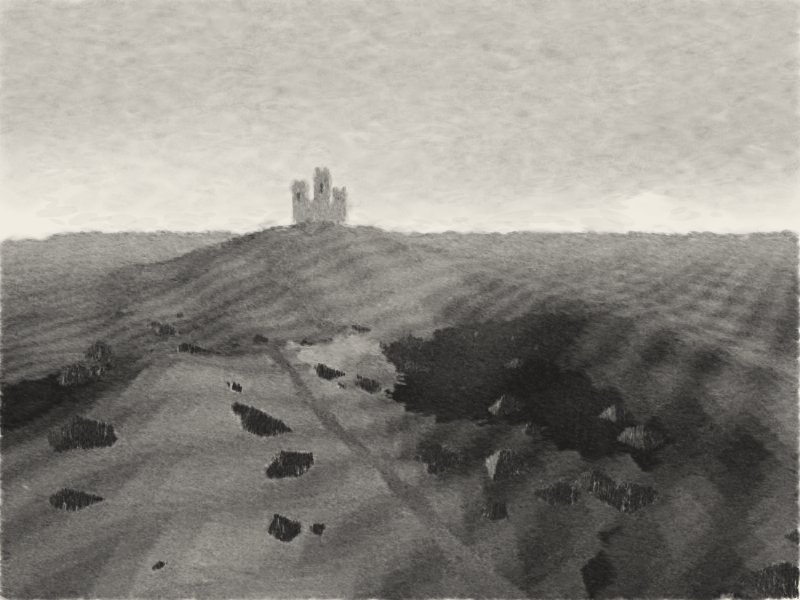
Ground support emerges; detail remains soft.
·
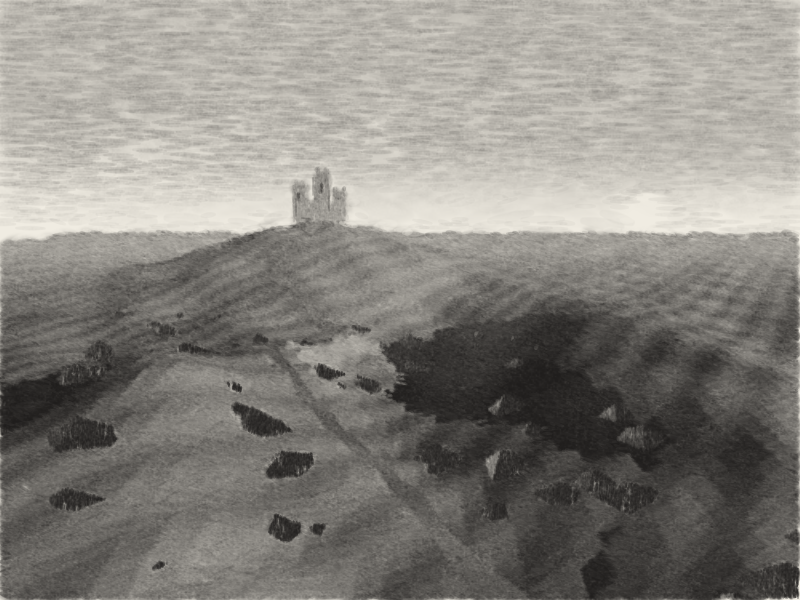
Connected space and irregular ground are now readable.
·
The land dominates; the path is too difficult to follow.
·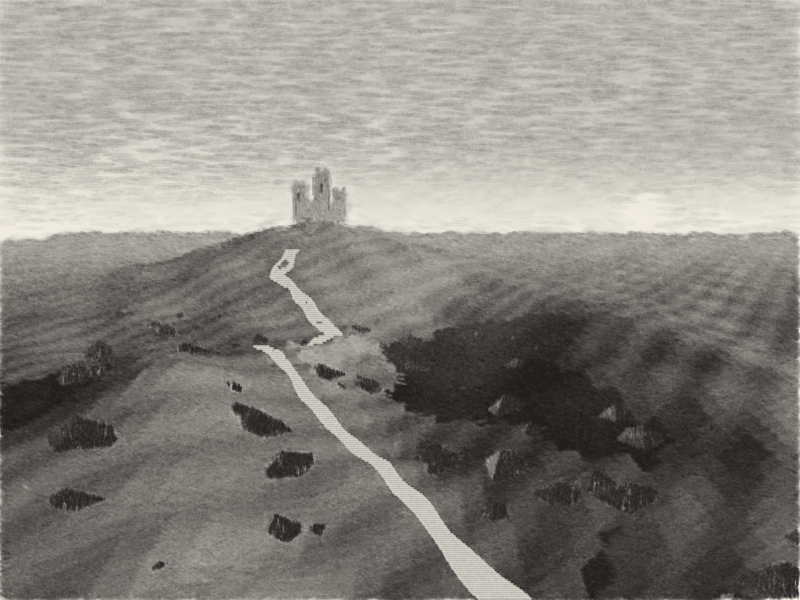
Rejected as an unfairly exaggerated comparison. A white stripe is not evidence against every clearer path.
·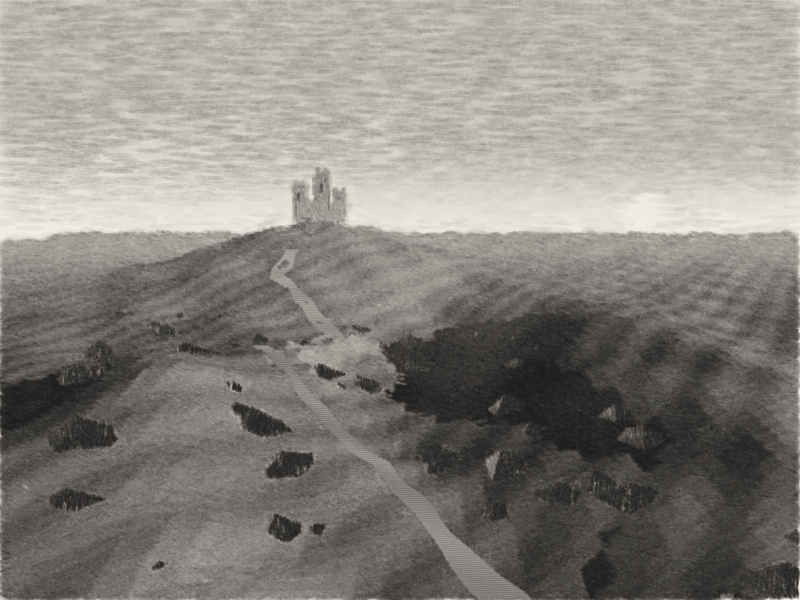
A less extreme alternative. Retained as composition guide, with synthetic edge handling explicitly unresolved.
·Inspect the construction scaffold and earlier work
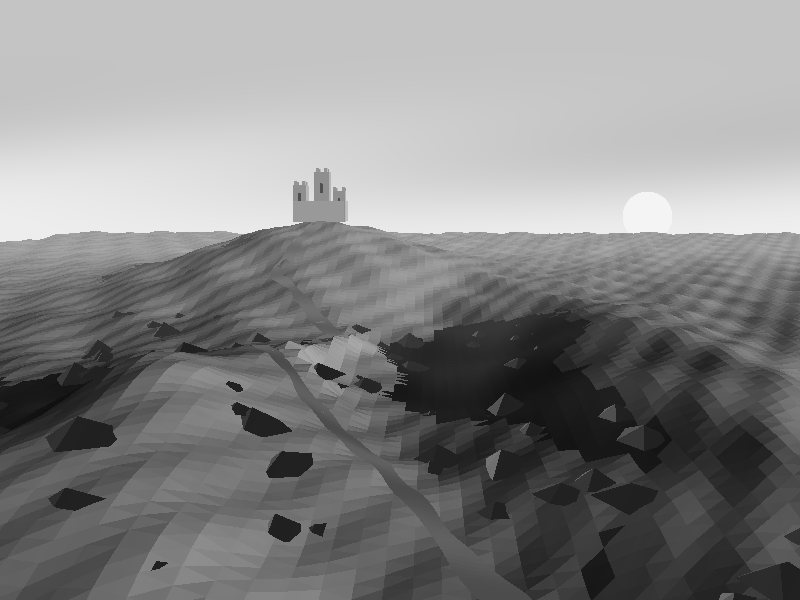
An authored value/flow scaffold. Final native images are separately rendered strokes, fitted to this guide.
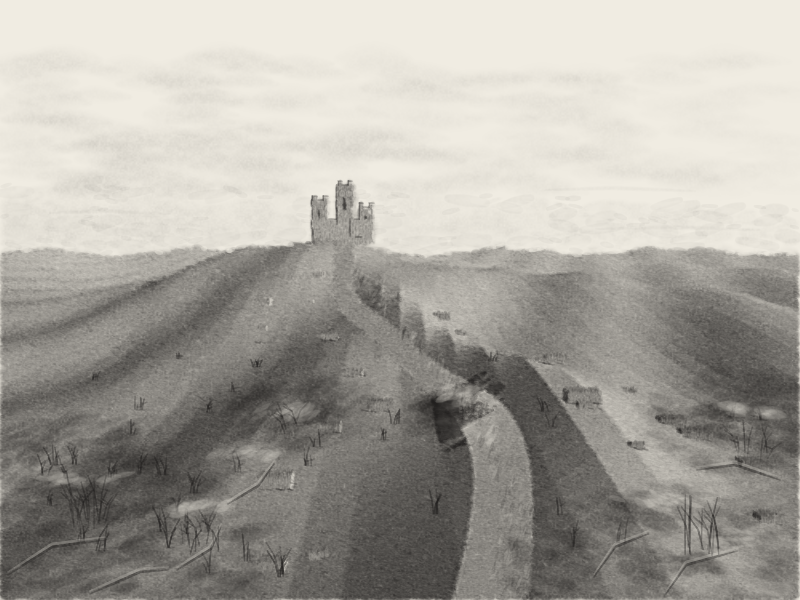
Preserved unchanged. Smooth land and applied details motivated this continuation.
· · · · Prior review
The returns were not all gains.
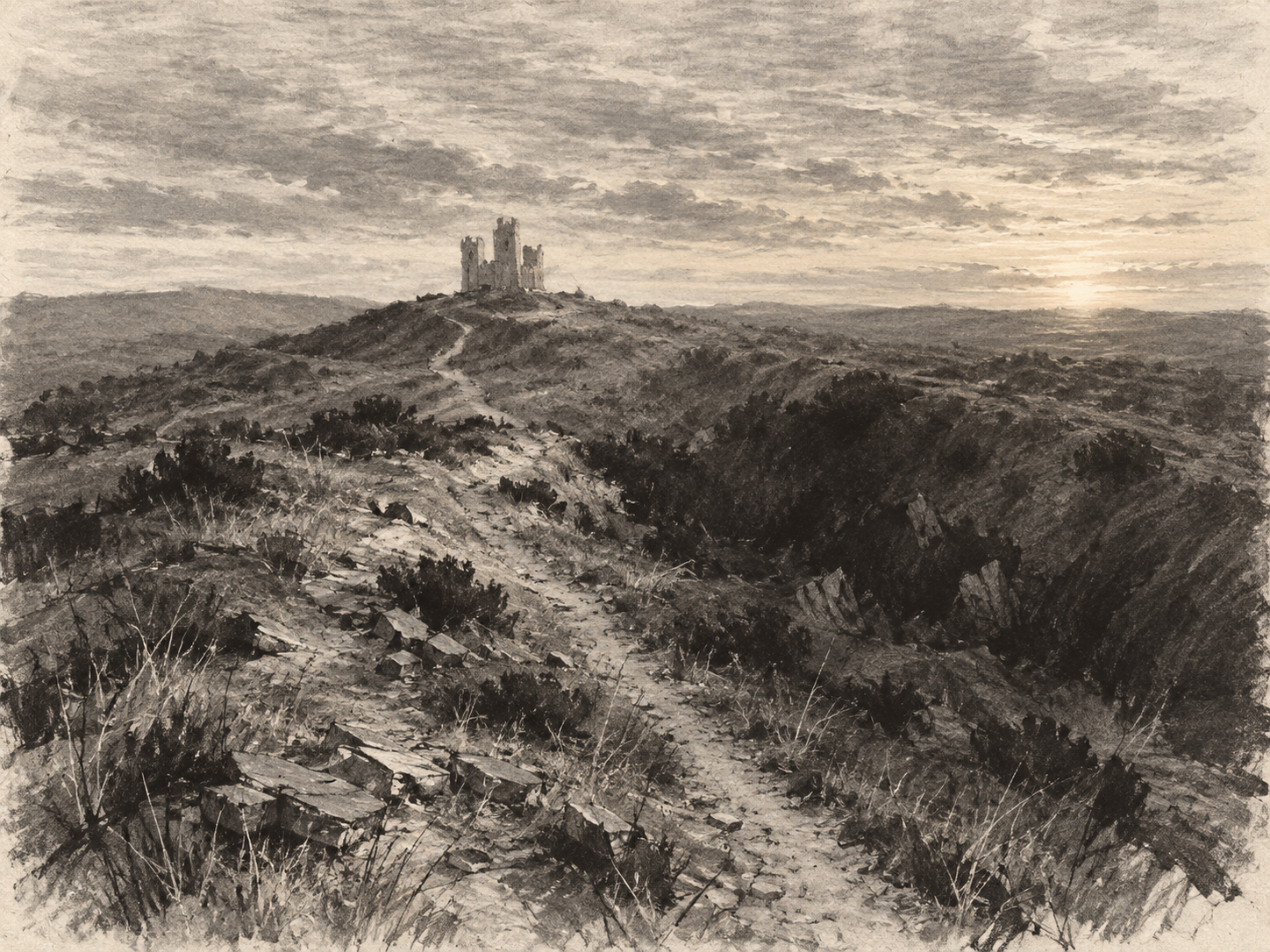
Coherent ground and masonry, but nearly every stone and cloud competes for attention. Native composition survived.
Sky quieted, but the result largely softened detail and spread surface texture. Rejected as the finish.
Broad charcoal and paper reserves replace much of the even description. Stronger base for structural challenges.
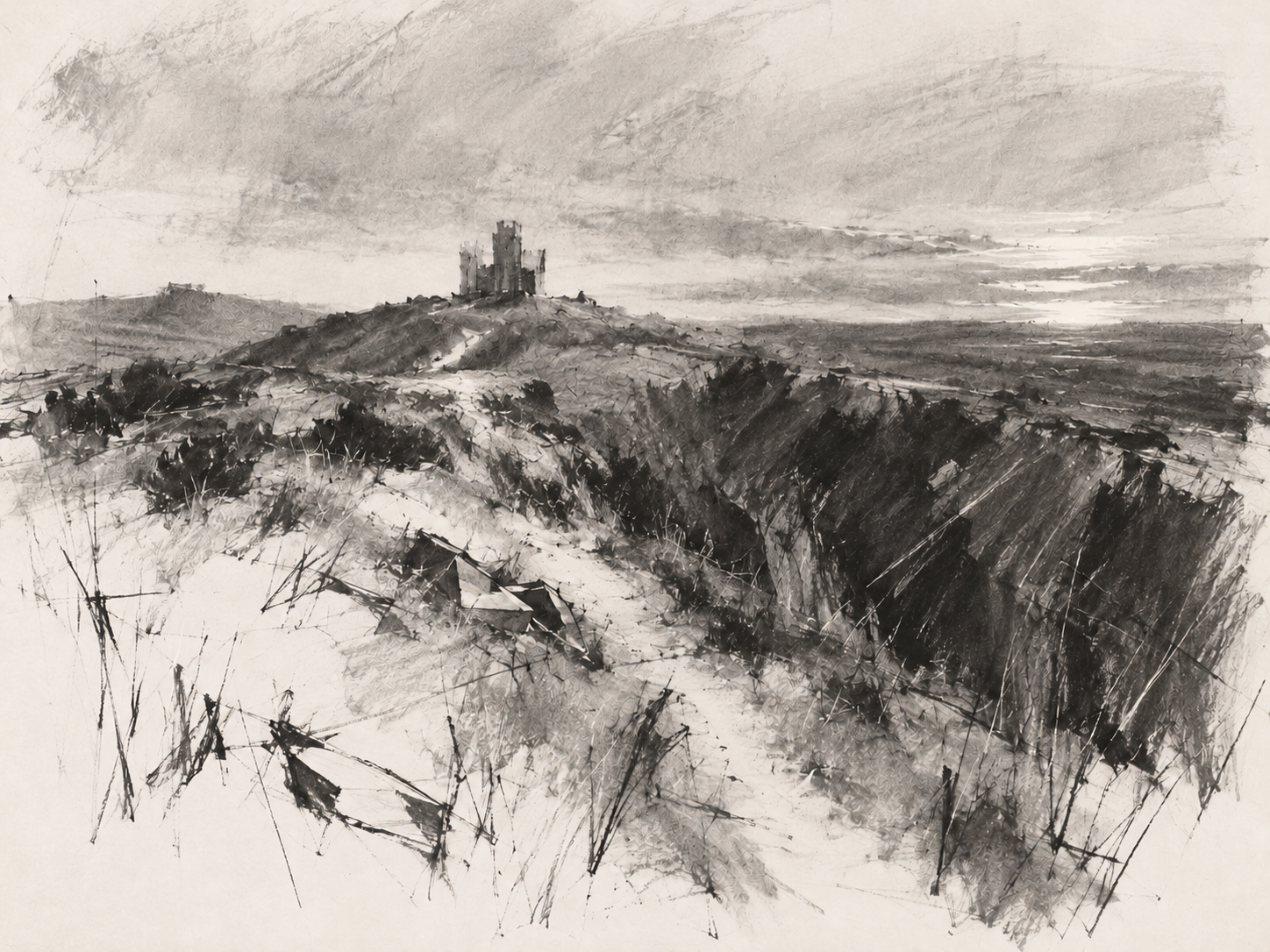
Narrows the passage but does not convincingly execute complete route disappearance. Busier middle ground. Partial compliance, not general evidence that interruption fails.
Defeats the destination preference. Path, hollow and low light now work together; castle stays small and separate.
Tests the remaining role of the castle. Not eligible as a final response to the literal brief.
Methods, decisions and receipts.
Local images have accumulated command histories and scalar canvases. Generated images have exact prompts, input lineage and hashes, but no native marks. All versions and rejected alternatives remain available.
Exact generator prompts A–F
A / Material reconstruction
B / Attempted subtraction
C / Substantial redraw
D / Attempted hidden turn
E / Selected / passing route
F / Diagnostic / remove castle
Immutable decision snapshots
The record gate checks file integrity and decision dependencies. It explicitly does not verify artistic quality. This was operated by the assistant, not an autonomous critic or independent panel.