Visual stages, comparisons and decisions from the original run. Internal prompts, operating documents and downloadable implementation files are omitted. Some interactive comparisons are shown as separate images.
VTL Studio / actual cross-tool artistic loop / 8 October 2026
Workroom: a path to Hold.
The critic read the user's return, chose two successive GPT image edits, evaluated both, and stopped on the second return. The native instrument stayed on the shelf because neither intervention required it.
O — Hold for the current brief.
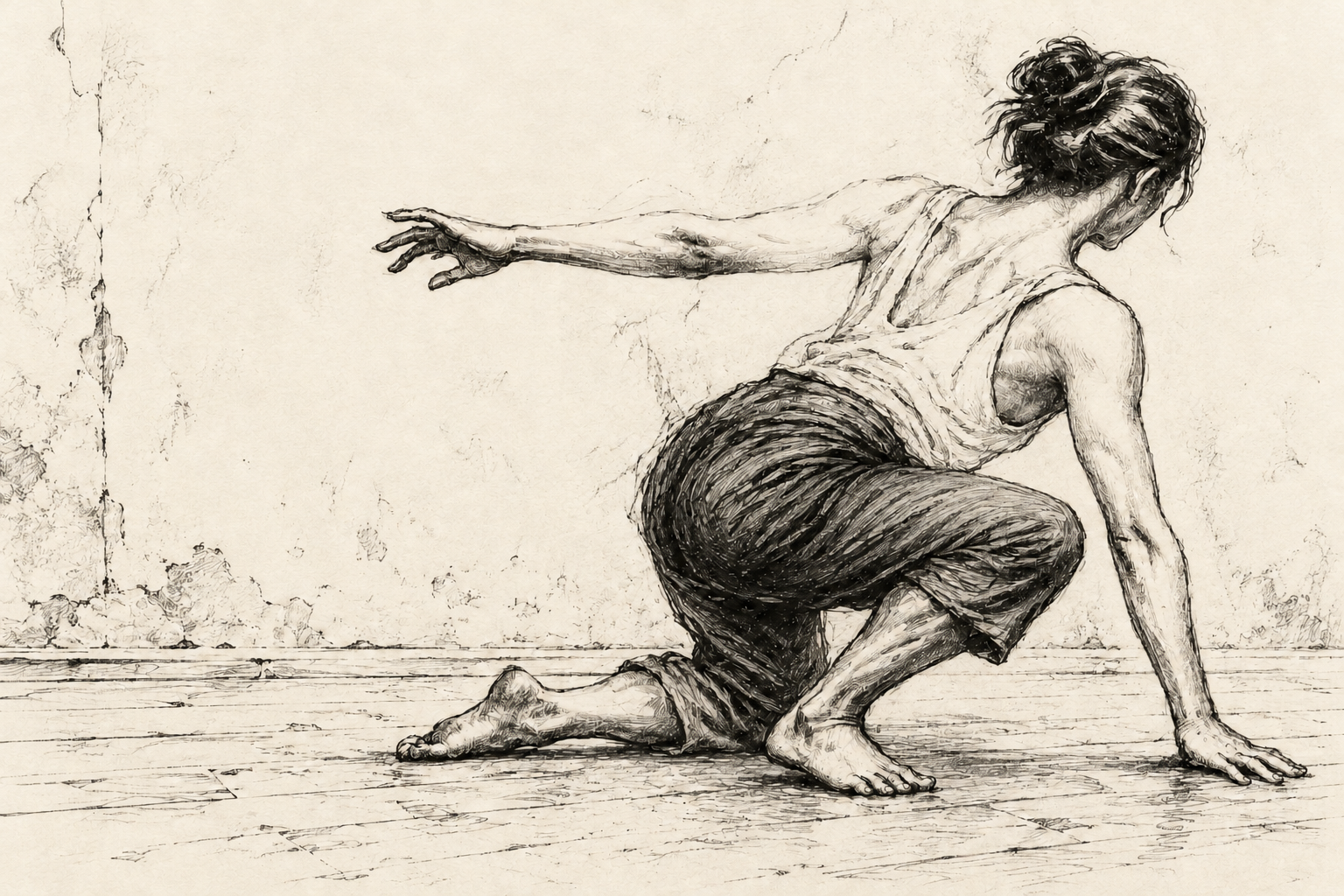
The reach has space to act; the dark crouch gathers weight; the upper body remains more open; the room supports the gesture. No further intervention currently offers a persuasive gain over what it risks losing.
Retained image: second generated return, copied unchanged into the project. External raster artwork; no native stroke history is claimed.
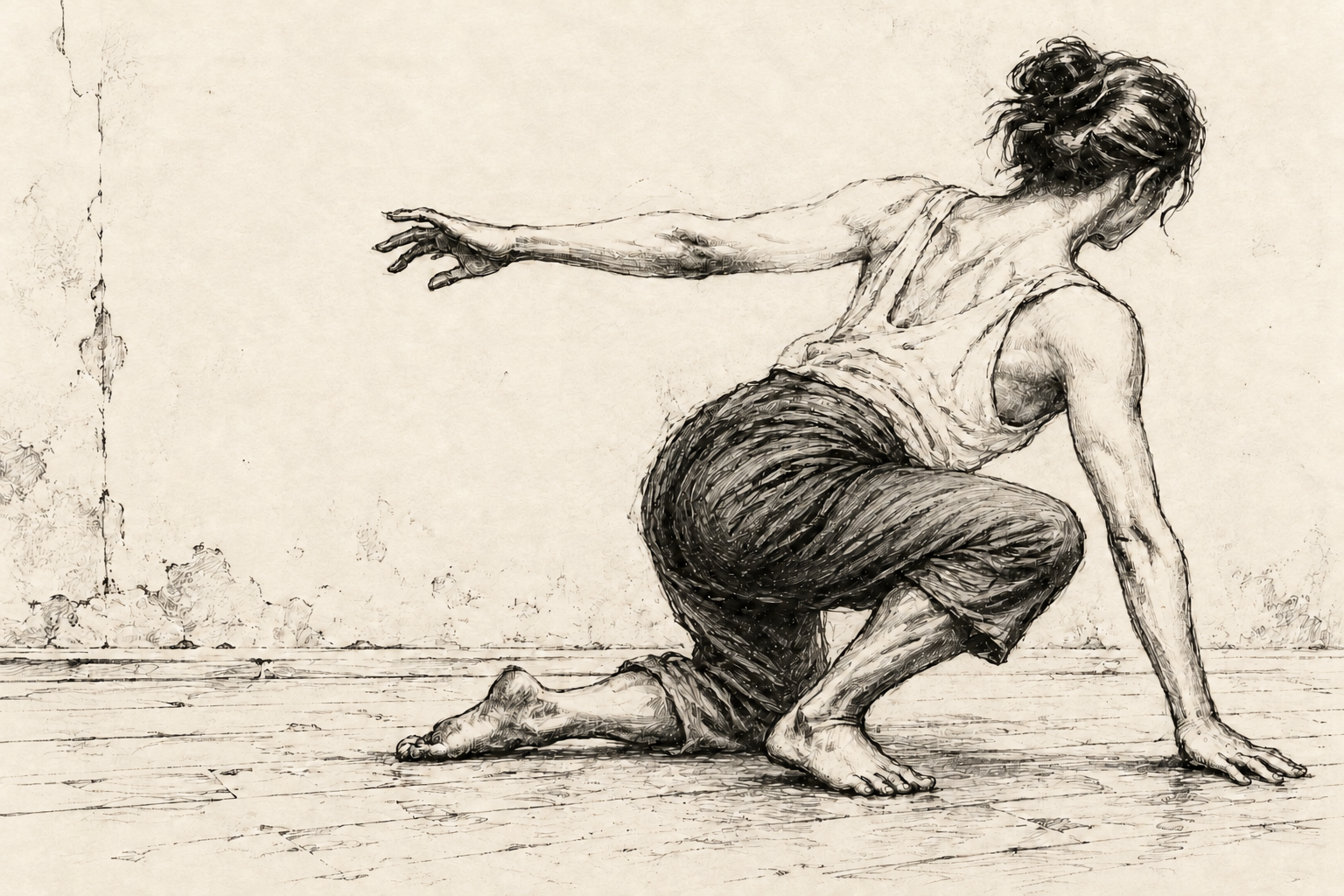
The source already carries a strong reach and crouch. Test more selective resolution across the upper body and room while preserving the dark cloth.
GPT edit: coordinated reinterpretation across the image. Native smoothing and erasure had recently produced less convincing alternatives.
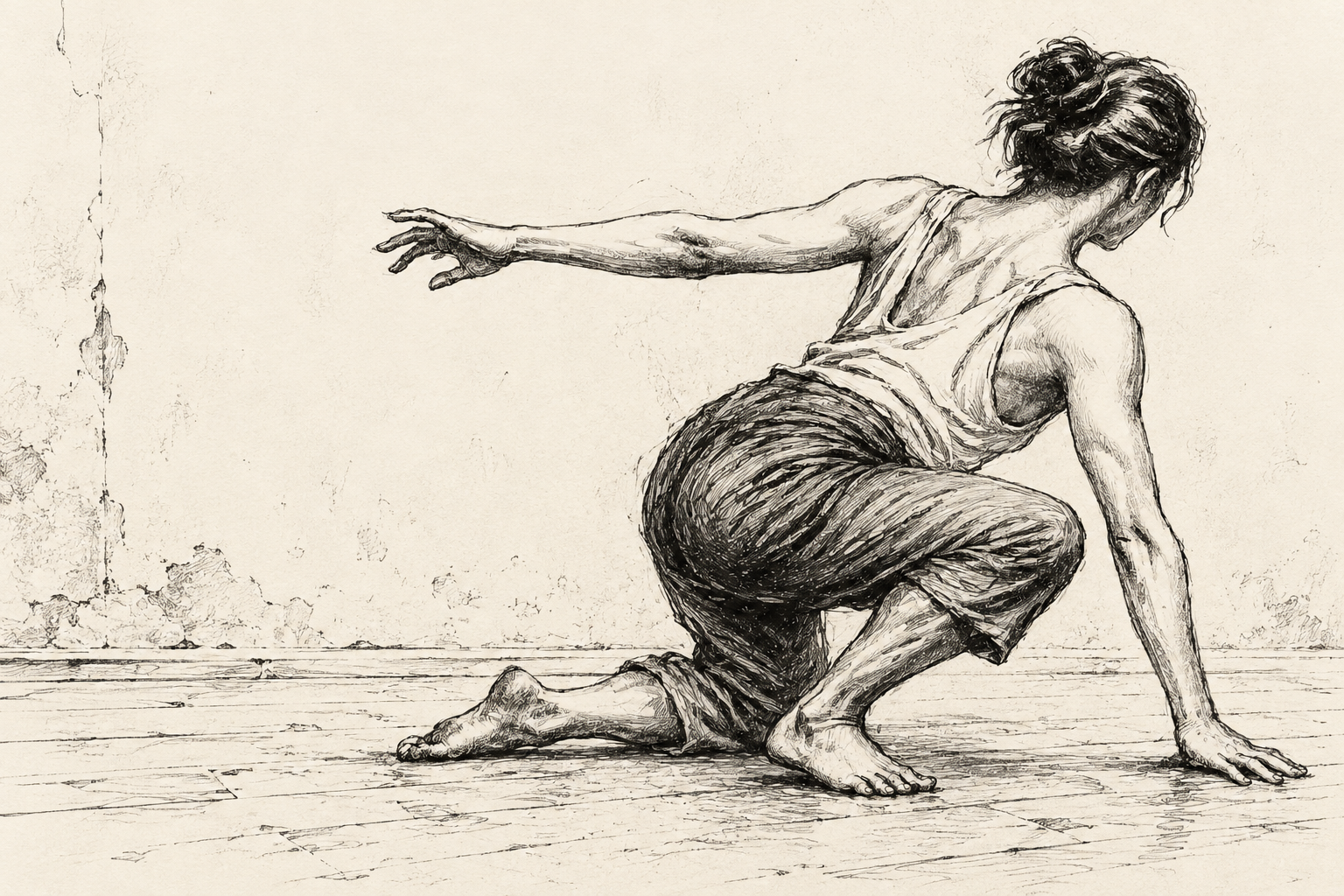
2. Δ — quiet the introduced wall
The first return opens the upper body but adds branching cracks around the arm. Preserve the figure gains; remove that competition.
GPT edit: a scoped background revision, with the original user return as a supporting wall reference.
3. O — Hold
The quieter wall gives the reach room. Dense cloth and lighter torso carry different jobs. Contacts remain readable at drawing scale.
No further tool call: added native accents, a new source or another engine currently lack a specific expected benefit.
Every state stays visible
Base: the user-supplied ChatGPT return. Original generation settings and exact earlier parent remain unknown.Return 1: retained as a working base, not a finished result. The new crack network competes with the extended arm.Return 2: selected for Hold. General figure treatment and gesture survive; pixel-exact preservation is not asserted.
The actual prompts
The first asks for unequal drawing decisions while preserving pose, clothing compression and workroom. The second changes the wall, using both the first return and the user's image.
Why stop here?
The long arm enters a relatively quiet field while the gathered legs and averted head hold the figure back. Dark clothing anchors the lower body. More interrupted marks in the upper back and garment let the paper participate without cutting holes in anatomy. The floor provides a place for the feet and palm to bear weight.
Further quieting of the cloth is not automatically an improvement. More native accents could make the marks equally insistent again. Another generator or museum source needs a concrete pictorial question; none currently outweighs the risk of drift.
This is the main assistant's artistic judgment for this objective, not an independent anatomy review or an objective quality score. The user can reopen the work with a different output intention, a consequential visible failure or a meaningful alternative.
What this run establishes
Actual critique → tool choice → edit → returned-image critique → another edit → Hold.
Both edits used the built-in image-generation tool, not the CLI. Exact internal model/version and seed were not exposed.
The original, both returns and exact prompts are preserved with hashes. The final file is byte-identical to return 2.
No native rerender, museum/API reference or Midjourney call was needed. No callable MJ adapter is established in this run.
The assistant supplied direction and critique. This is an operated studio loop, not a newly implemented unattended multi-backend router.
Round count, tool limits, pixel residual and surface polish were not the stated reasons for Hold.