Visual stages, comparisons and decisions from the original run. Internal prompts, operating documents and downloadable implementation files are omitted. Some interactive comparisons are shown as separate images.
What omission costs.
Two studies ask whether clothing can recede and let the hands carry the drawing. Both begin from the same retained canvas. Neither replaces it.
Decision: Ω — refuse these versions as replacements. A quiets the clothing without reorganizing it. B gains blank space at the cost of bodily substance. The previous drawing remains the working version.
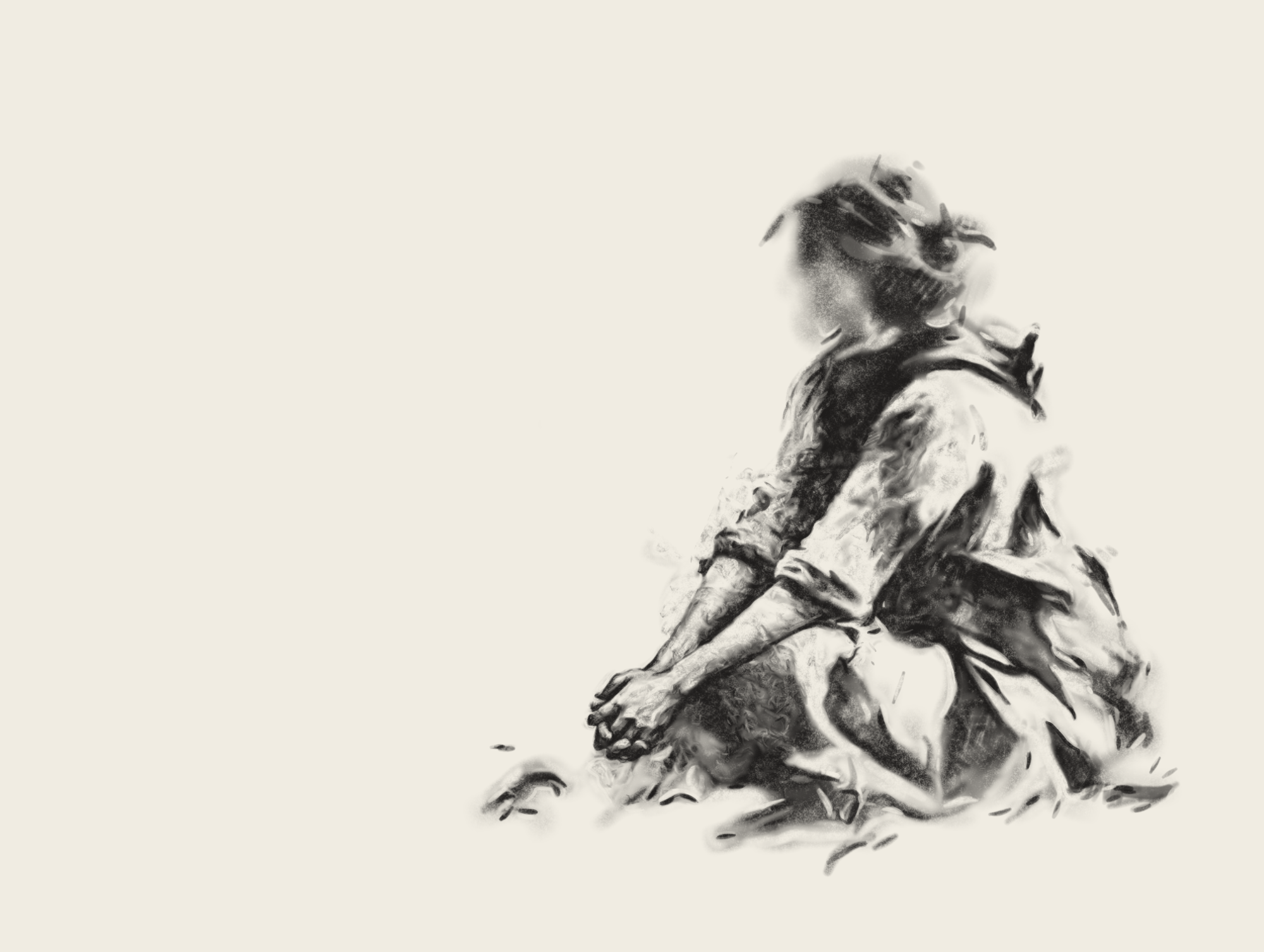
Retained drawing
Read them as a set
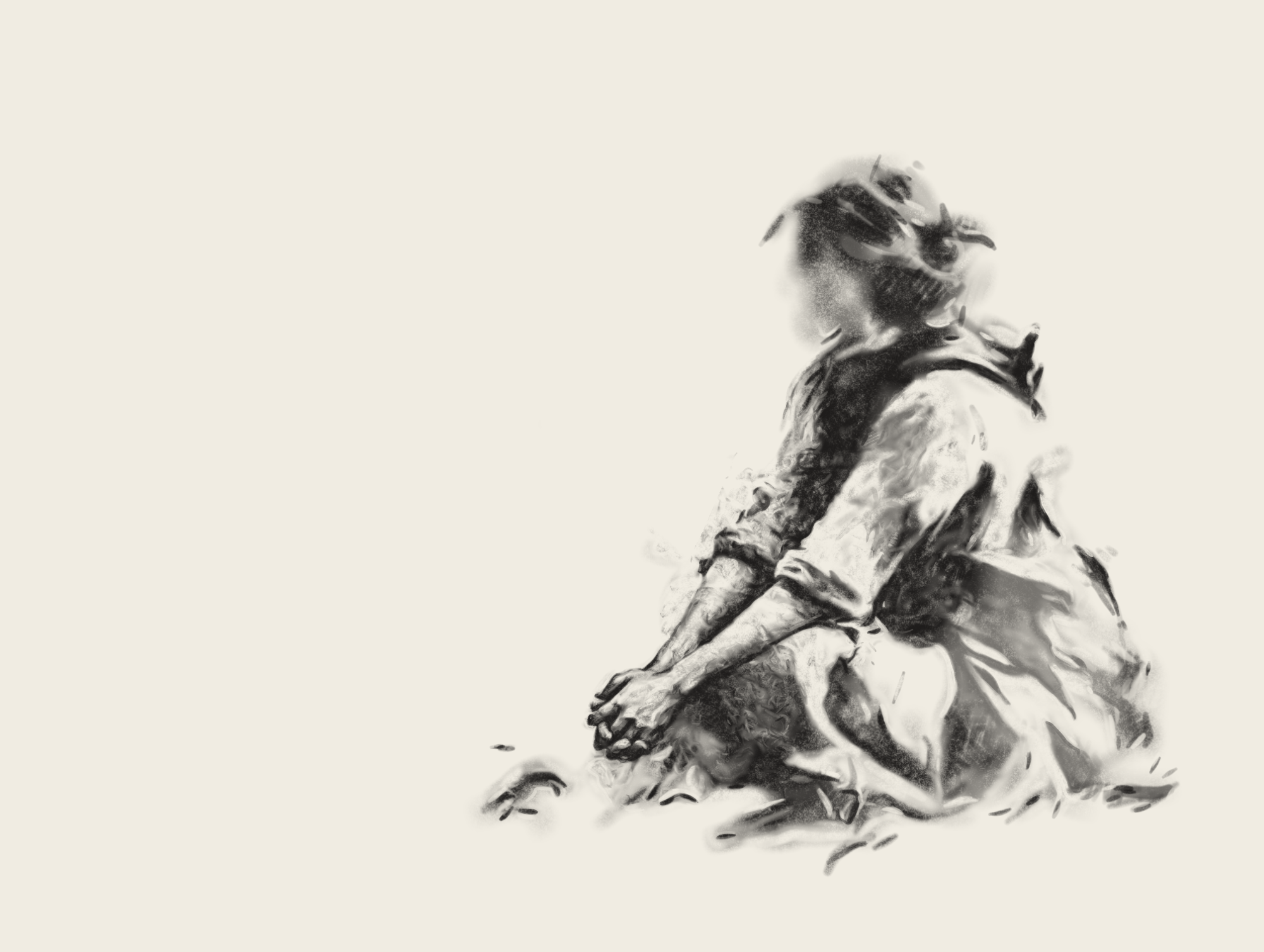
A: the sleeve and flank are quieter. The original folds are still present, simply paler. The hands become relatively stronger, but this does not yet create a convincing hierarchy of asserted and omitted marks.
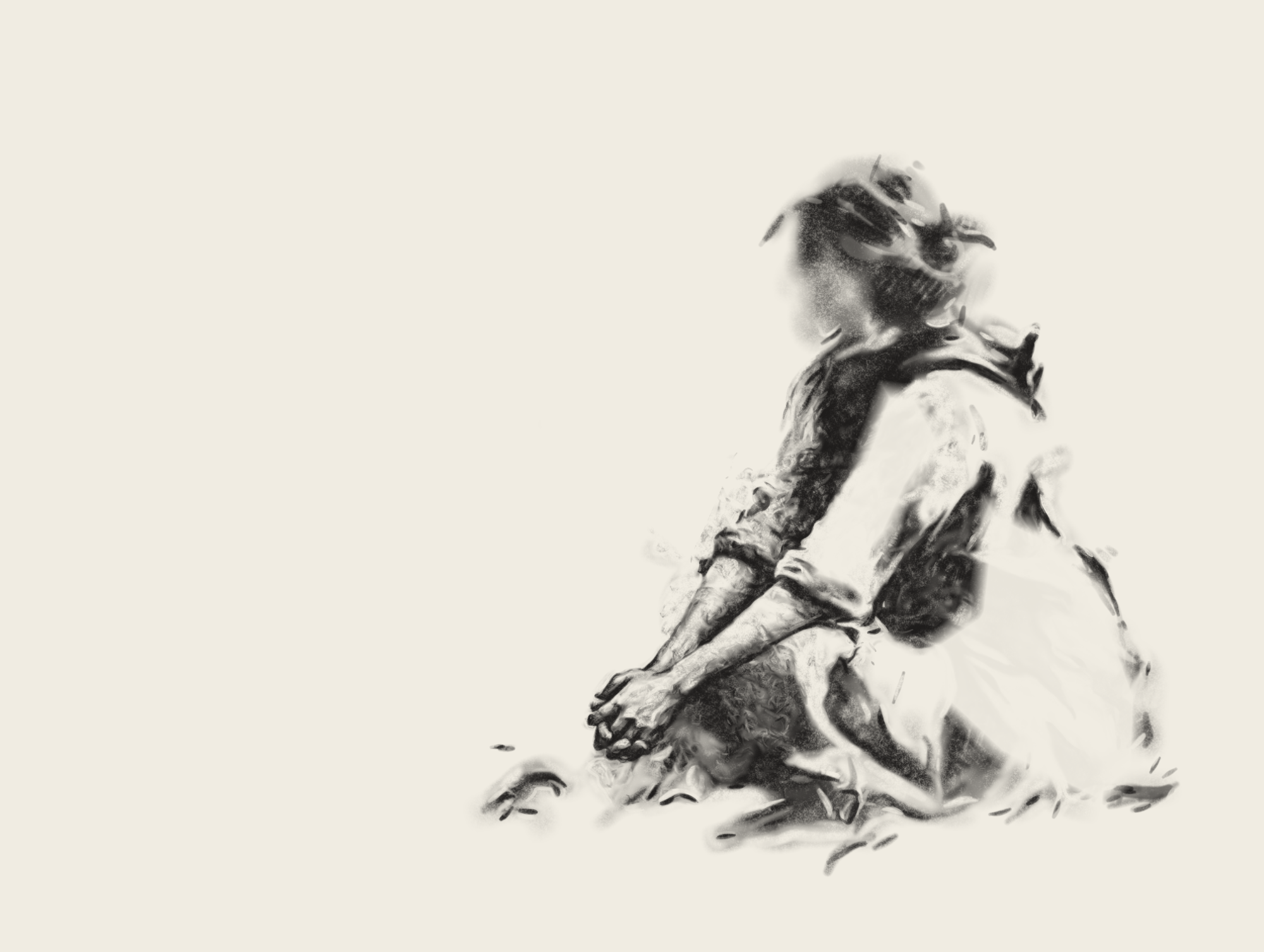
B: the sleeve opens toward paper. The flank becomes a large pale patch, with dark remnants around it. The cuffs and remaining contours are more isolated. The figure loses substance; blankness alone has not made absence intentional.
Process and methods
- Verify and load the retained stage-08 scalar canvas. Each study starts independently from that exact state.
- Select two irregular regions inside the sleeve and along the flank. Protect the head, hands and bottom ground-contact band. These are assistant-selected regions, not semantic detection.
- Apply the recorded digital removal operation at two strengths and feather widths. No generator, new visual target, additional strokes, or crop replacement is used.
- Replay each operation from the saved source, compare exact canvas hashes, and check every changed pixel against keep/release boundaries.
- Read the whole images together using the brief and history. The visual decision can reject a technically successful operation.
Removal moves tone toward the paper value. It cannot by itself decide which crease is expressive, which contour supports weight, or which mass should be rebuilt. The unchanged drawing of the hands is a constraint of this test, not a permanent artistic rule.
Evidence and retention
| Study | Changed pixels | Kept pixels changed | Outside changes | Replay |
|---|---|---|---|---|
| A | 157,153 | 0 | 0 | Exact |
| B | 157,155 | 0 | 0 | Exact |
These checks establish control, not artistic improvement. Both studies are archived. Stage 08 remains retained. The refusal is my visual judgment, not an independently running critic or an automated quality score.
Consequence for the process: stop increasing the eraser strength. The next construction needs to decide which contours carry the body and which descriptive marks can disappear, potentially rebuilding a simpler mass. This experiment tests two parameter choices, not every possible approach to omission.