Visual stages, comparisons and decisions from the original run. Internal prompts, operating documents and downloadable implementation files are omitted. Some interactive comparisons are shown as separate images.
Give the body weight.
Let the hands speak.
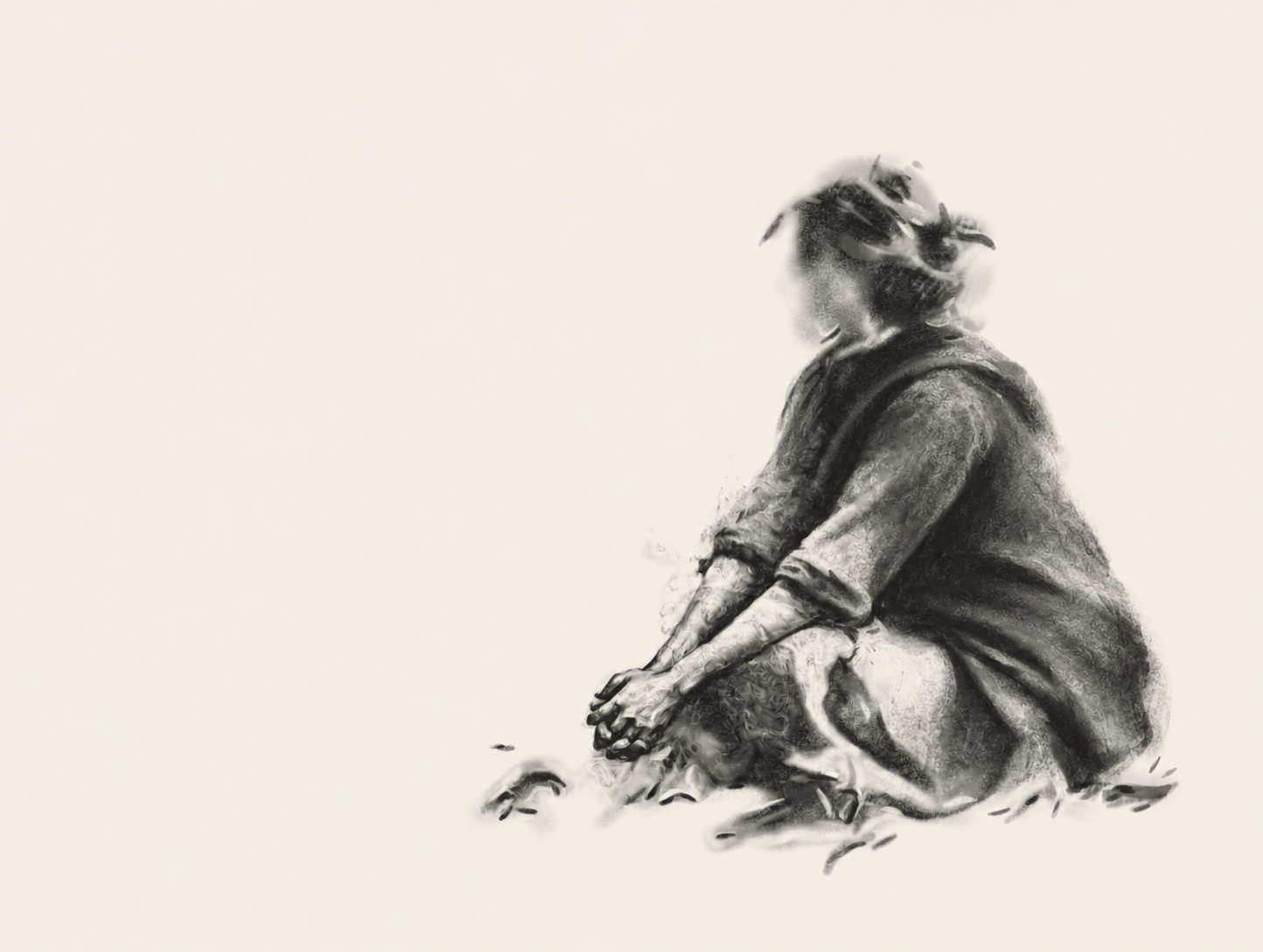
The instrument changes are now integrated into the studio entry point. This sitting resumes the actual retained U03 canvas, changes the clothing region, and ends with a visual retention decision. One external plan, two uninterrupted painter stages, one actual-result critique.
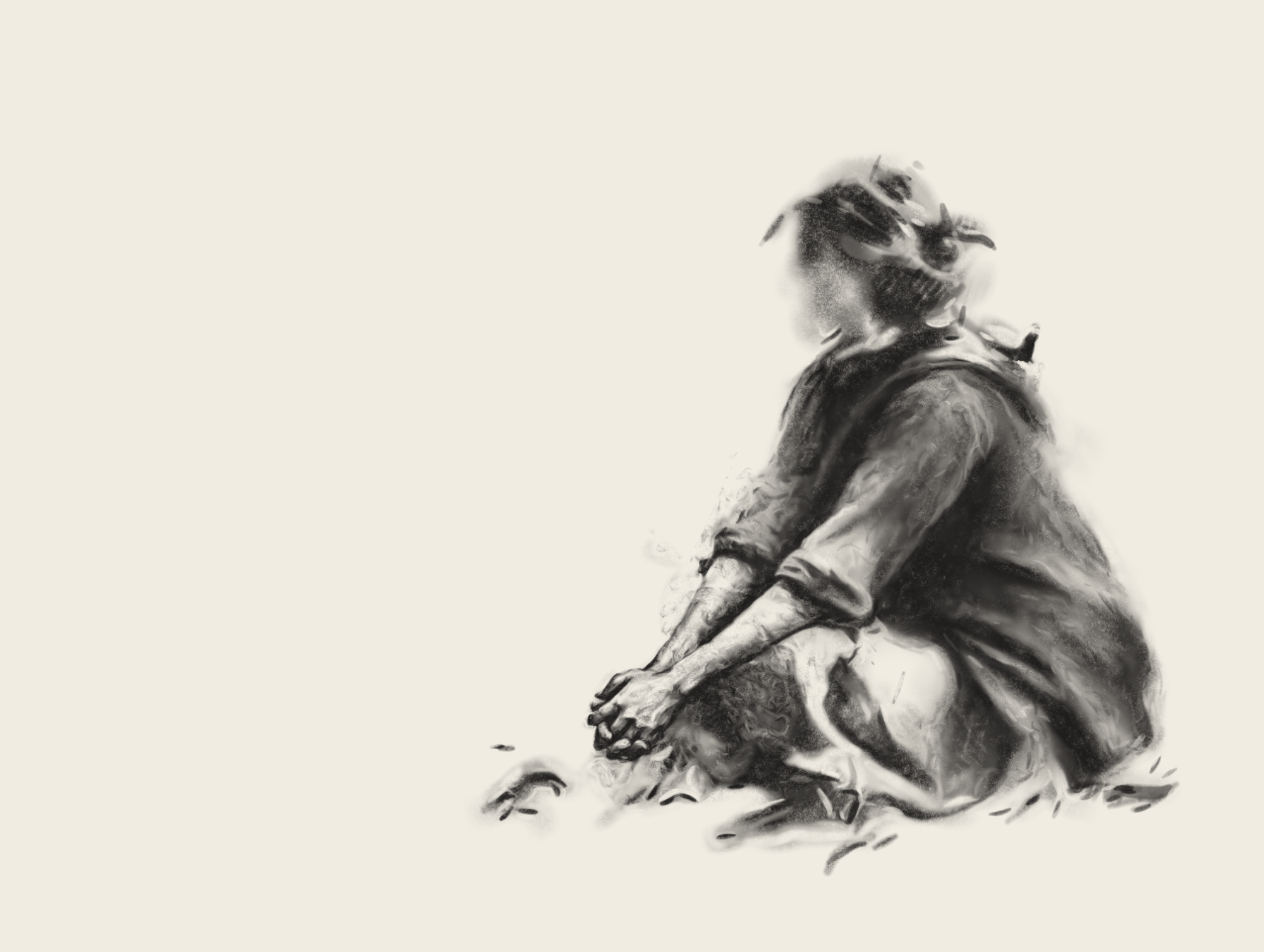
Read the sitting
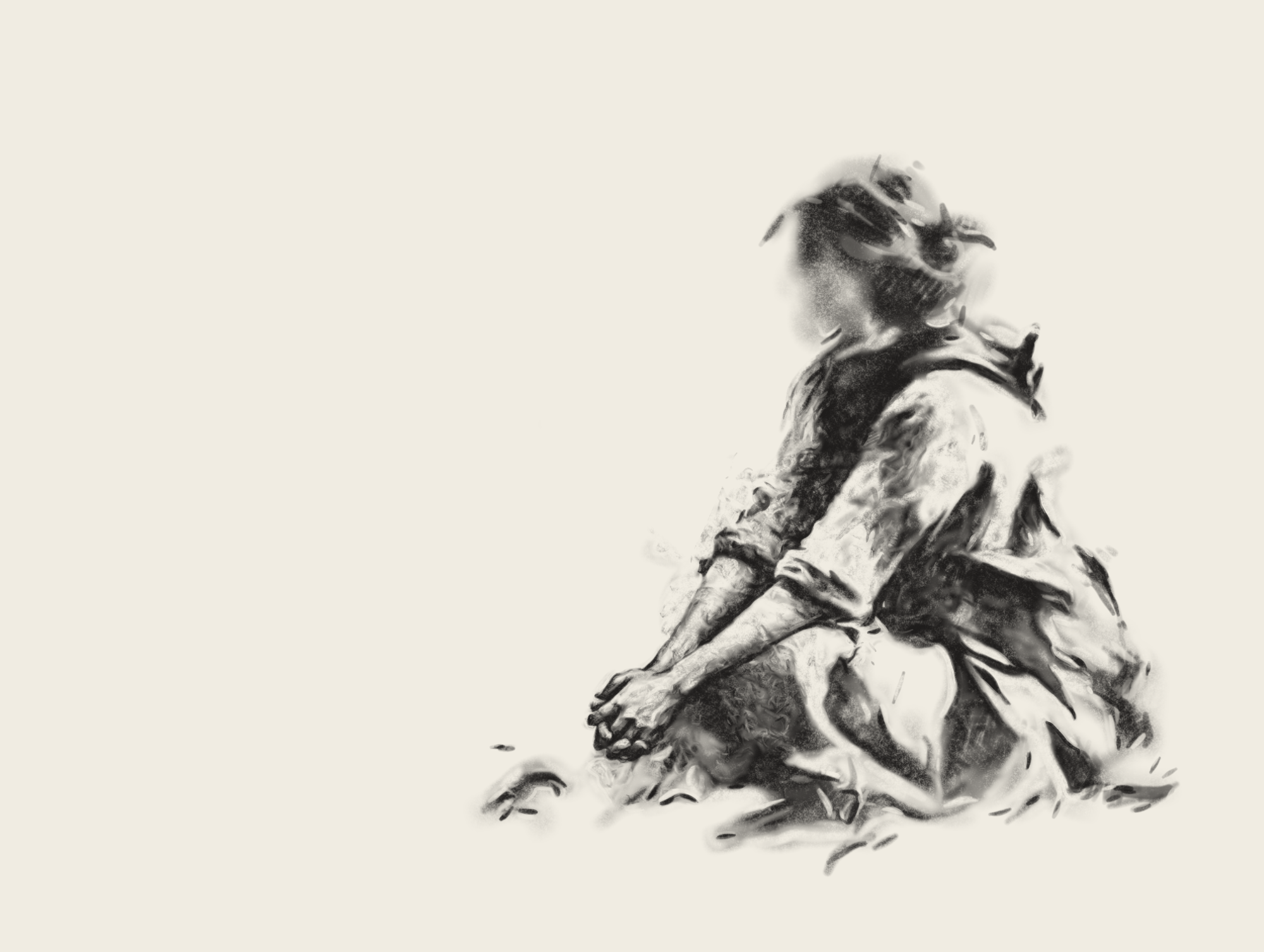
What changed—and why retain it?
The sleeve and flank now hold as connected masses instead of many competing folds. The figure has more seated weight. The lowered clasp stays legible, and the head remains unresolved. This is a clearer execution of the earlier intention than simply fading the clothing.
The tradeoff is real: the torso is more conventionally finished. Its contrast with the fragmentary head and lower contacts may become a mismatch of finish rather than purposeful omission. The broad left field is still largely passive, and the familiar faceless-figure identity remains unresolved.
O — observation, not completion. Retain the new construction and preserve the old version. Do not polish more folds by default. Any next Δ should address the whole relationship—placement, interval or bodily closure—not manufacture progress through detail repair.
Process and methods
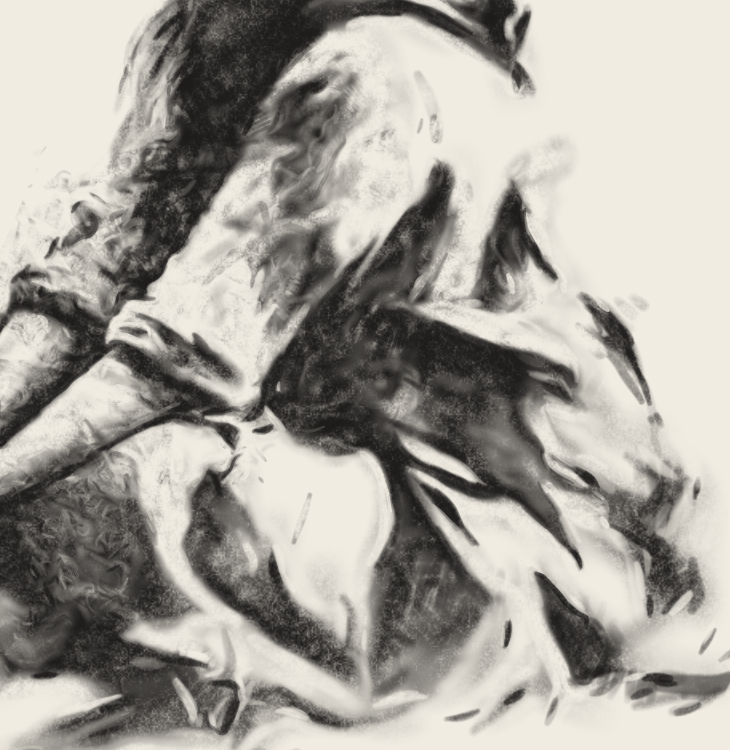
- Plan from the actual canvas. Read stage08 against the brief: hands articulate, torso carries weight, face stays withheld. Define failure tests before rendering. “Quiet” must not mean faded, and “unfinished” must not mean accidental holes.
- Make the change visible. The built-in image generator edits the actual stage08 image into an external plan with fewer clothing masses. It is an intention/reference, not a layer pasted into the canvas.
- Resume verified state. Load the saved 2000 × 1507 scalar canvas and verify its hash. Preserve its earlier provenance. This is continuation of a native canvas, not a fresh reconstruction from the generator image.
- Choose the policy explicitly. Use fixed-display-tone-v1 so pale and middle tones survive. Use hybrid construction for the clothing: a broad 300px local view, then the original mark vocabulary at 600px.
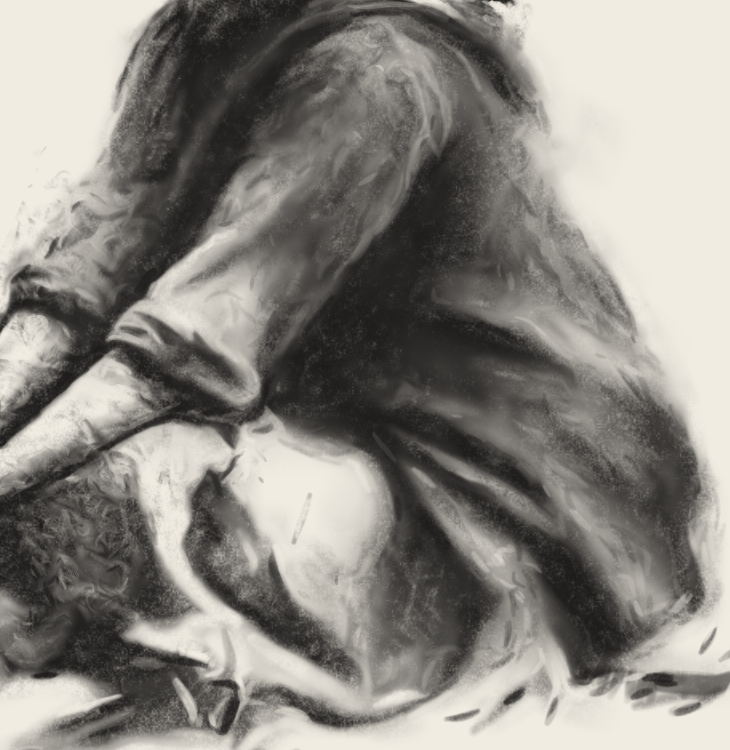
- Let the painter work. Both stages operate inside the same rectangle, x1120–1850 and y570–1320. No intermediate critic restarts the direction. Outside pixels—including the head, clasp and lowest ground contact—stay exactly unchanged.
- Read the result and retain deliberately. The assistant inspects the full native image. Technical gains support retention as working material, while unresolved structural questions prevent a finish claim.
See the external plan and exact prompt
What is now integrated?
The existing drawing-controller/run.mjs entry point accepts vtl-studio-job/2 jobs. They explicitly choose current or hybrid construction and fixed-display-tone-v1 or legacy-sheet conversion. Older jobs keep their original execution path.
V2 checks target/view dimensions, the source canvas hash and output collisions before drawing. Each stage records source identity, conversion, dependency hashes, all new commands and receipts. It verifies replay from the base canvas and checks that pixels outside the passage remain unchanged.
This integrates rendering policies and evidence. It does not yet automate the artist's planning, generator calls, policy selection or VTL critique; those choices are assistant-authored. Planner search state is restarted from the chosen seed at each stage, while canvas state and command ancestry are retained.
Evidence
| Stage | New commands | Of those, lifts | Attempts | Outside changes |
|---|---|---|---|---|
| 10-clothing-broad | 362 | 164 | 8667 | 0 |
| 10-clothing-current | 1078 | 516 | 17333 | 0 |
Both stages replay exactly on this runtime. An independent byte comparison of the base and final canvas found zero changes outside the whole sitting region. The underlying stage08 history and erasure record remain linked through the copied base provenance.
Both painter stages reached their attempt caps. That is an execution stop, not an artistic Hold. The visual critique separately retains the branch for observation. The lowered target error measures execution, not artistic meaning.
Progress
The original 30-output round, tonal correction and plane-building comparison are complete. The recommended policies are now available through the studio runner, and this first integrated sitting is complete. No further benchmark batch is required to continue making work.