Visual stages, comparisons and decisions from the original run. Internal prompts, operating documents and downloadable implementation files are omitted. Some interactive comparisons are shown as separate images.
New: two omission studies and the retention decision →
New: removal calibration and retained drawing →
One canvas,
changing its mind.
Whole figure → closer observation → structural change → renewed articulation. Five initial native stages, followed by a two-pass alternative on the retained canvas. The generator supplies a visual proposal; recorded marks and lifts execute it.
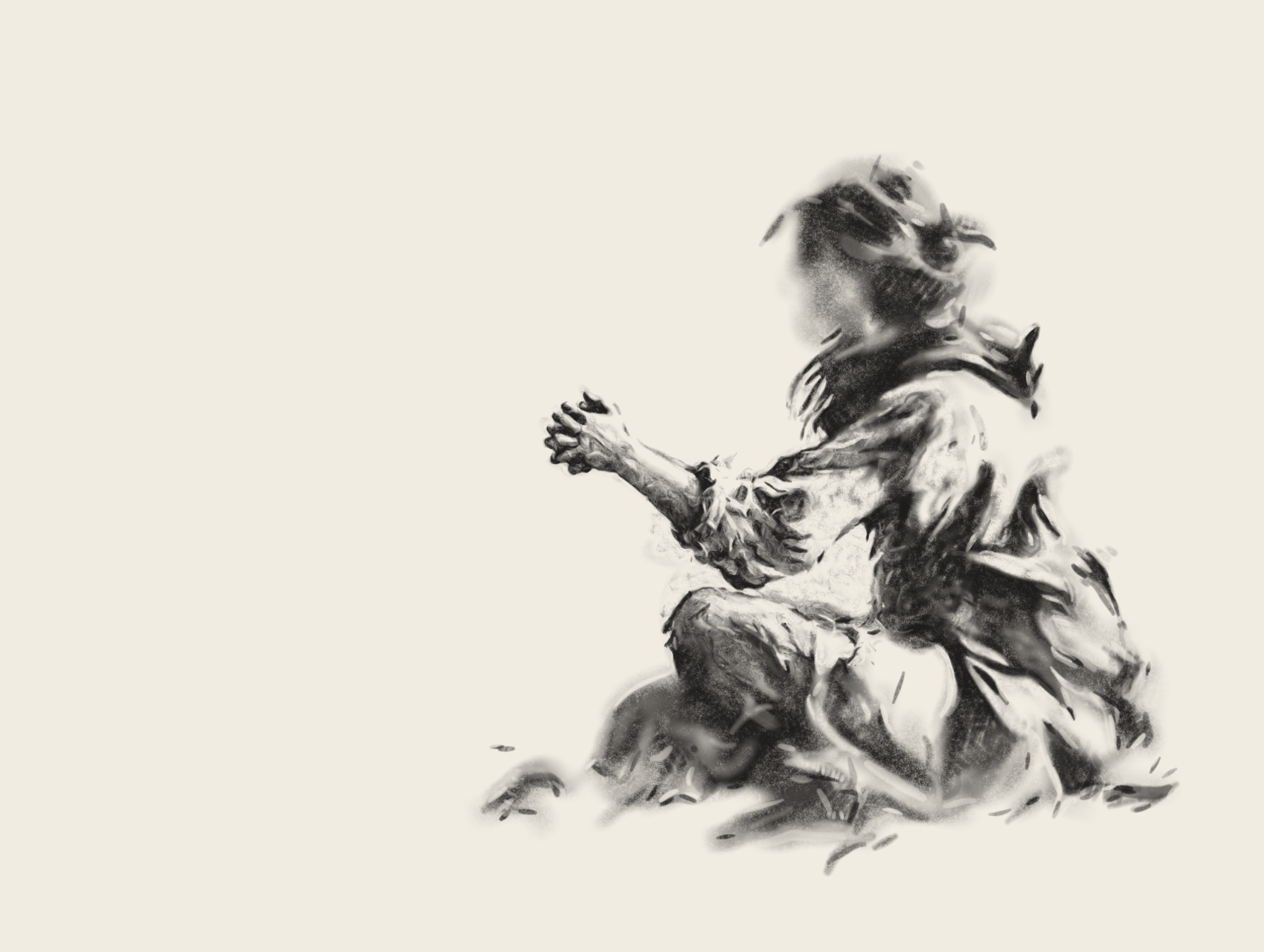
Second direction: let the arms descend
This continuation starts from the saved stage-05 canvas. Both versions remain available. A new external proposal lowers the clasp toward the ground; the controller then lifts and draws on the retained surface.
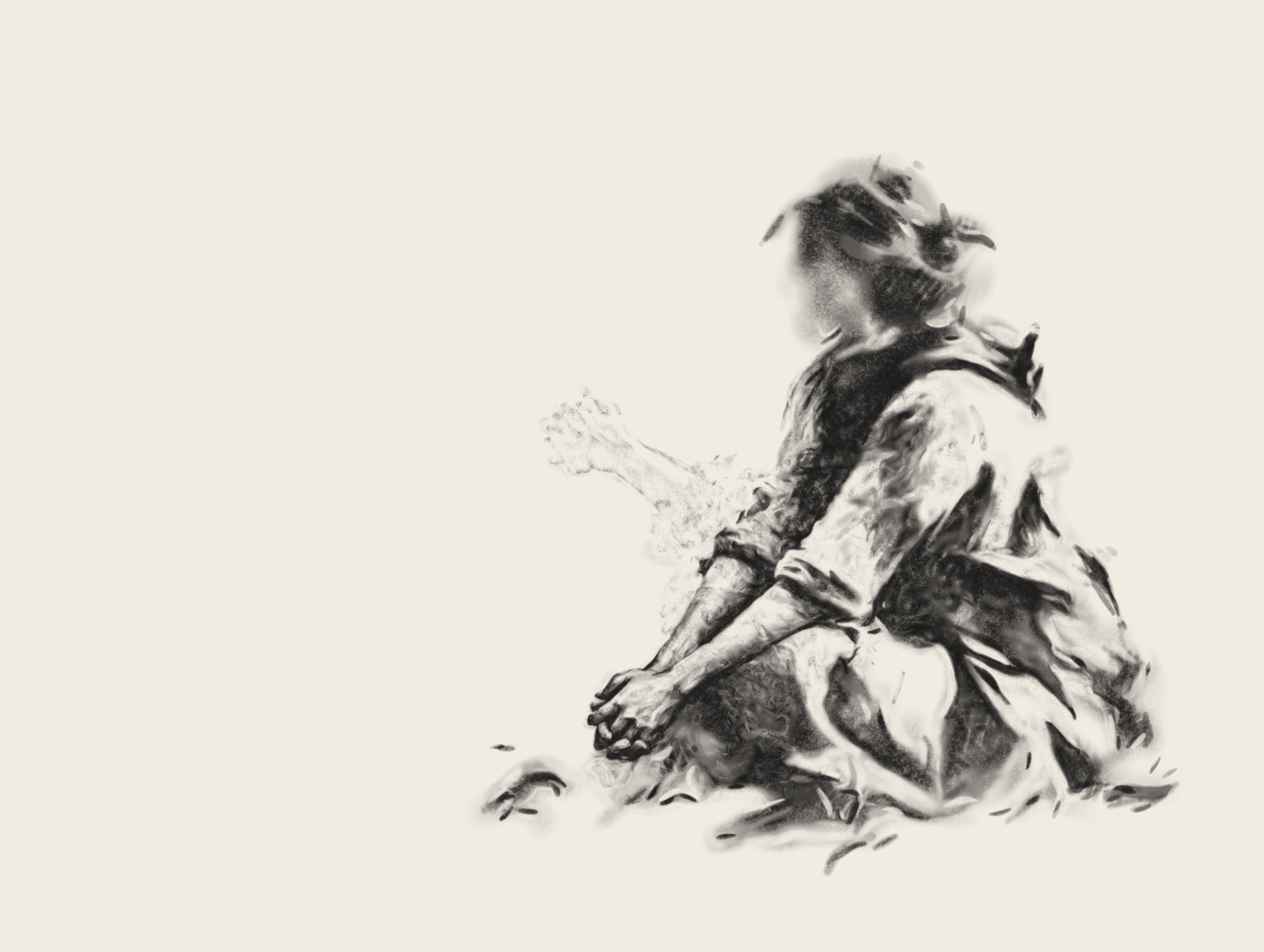
My reading: the lower gesture gives the seated body more weight and reduces the ceremonial reading. But the pale raised arm still reads as a second limb. This is incomplete removal, not intentional ambiguity. Keep the comparison; do not call this finished.
The next useful instrument test is removal: can the controller make an obsolete silhouette stop reading as a limb without damaging the retained drawing? More finger polish would avoid the actual obstacle.
See the external proposal, prompt and native intermediate stage
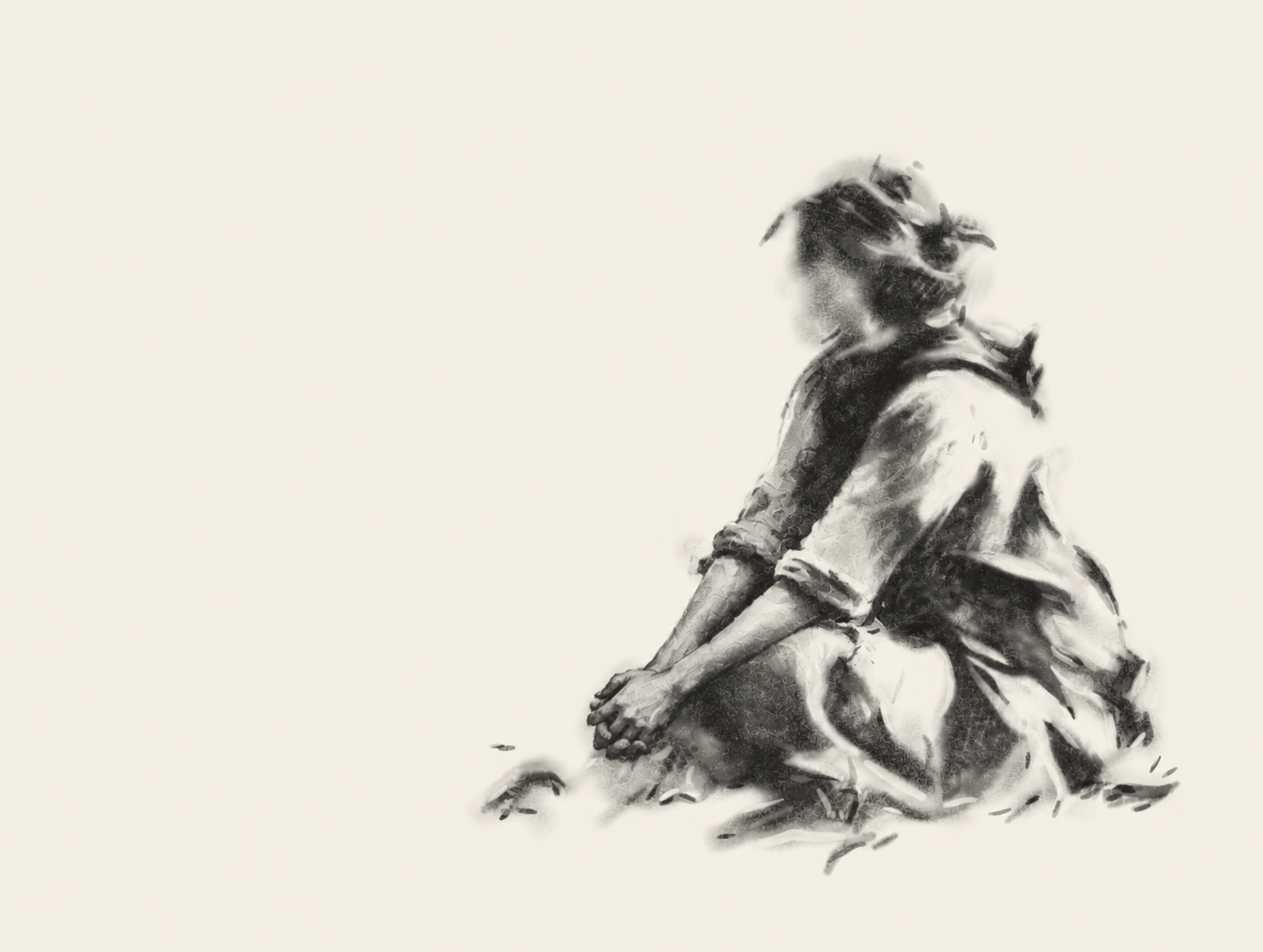
Generated with the built-in image generator. This image is a target only. · Broad native pass ·
2673 additional accepted commands across the broad change and closer clasp pass. Earlier stage-05 commands remain intact in the history. All seven checkpoints pass exact native replay and protected-region checks on this runtime.
How this works: process and methods
There are two kinds of image here. A generator makes a visual reference or a proposed change. A separate drawing controller reconstructs selected relationships using individual marks on its own canvas. The native drawing is the controller's result. The generated proposal is shown separately so you can see what was intended and what survived translation.
- Set the artistic problem. I read the brief and the actual drawing using VTL. I choose a structural question—here, whether changing the arms changes the figure's relationship to the empty space. This decision currently comes from me; there is no unattended critic choosing it.
- Make a visible plan. The built-in image generator receives the actual drawing and a written change request. It proposes a new image. That gives the controller a visible target instead of asking a language model to invent every stroke coordinate. The generator contributes anatomy, pose and many stylistic decisions; it can also introduce defaults.
- Draw the whole at a small working scale. The Hands engine proposes marks from the supplied Kollwitz charcoal vocabulary. Our canvas is 2000 × 1507 pixels, but the initial planner looks at a 700-pixel-wide version. Broad construction becomes affordable before detailed work.
- Look closer without starting a new picture. I select a region and a working scale. The planner reads that area of the existing canvas, enlarged, alongside the corresponding target. It proposes individual marks which are mapped back onto the original canvas. The crop is a view, not a replacement picture.
- Try each mark against the actual surface. The controller renders a candidate's footprint and asks whether it reduces differences in tone and neighboring-pixel changes relative to the target. A mark that fails that test is rejected. A mark touching pixels outside the allowed region is also rejected. After every 32 accepted marks, planning refreshes its view from the actual canvas.
- Remove as well as add. Dark marks deposit tone. Lifts move existing tone toward the paper value. This makes changing a pose possible, though the simplified lifting model can leave fog or produce an overly clean patch. It does not simulate all the physics of charcoal and paper.
- Return to the whole and judge. I inspect the native result, not only the attractive target. Δ builds or changes relationships; Ω can refuse the direction; O pauses to observe. A falling pixel error says the controller followed its target more closely. It cannot tell us whether the picture has tension or identity.
- Keep the evidence. Each checkpoint stores the canvas, every accepted command, the input references and a receipt. Replaying commands checks that the result is reproducible on this runtime. Alternative directions can branch from a saved canvas without deleting the earlier work.
Who does what?
| Component | Responsibility in this experiment |
|---|---|
| Assistant / VTL reading | Interpret the brief, judge actual results, select structural direction and regions, decide retention. |
| Built-in image generator | Produce an external visual proposal for pose and appearance. |
| Hands vocabulary and planner | Propose parameterized marks to approximate the visible target. |
| Persistent-canvas controller | Render, assess, accept or reject marks; preserve boundaries; record and replay. |
This experiment is not running through Rust or MyPaint. It uses the supplied JavaScript Hands engine with our new controller. Earlier engines and experiments remain available. The model is no longer writing every coordinate blindly, but the drawing system is still matching a target rather than independently understanding a hand.
Where the style comes from: the reference contributes pose, shading and clothing detail; the charcoal vocabulary contributes available mark shapes; the tone/edge objective rewards likeness; the chosen scale determines what detail can be reproduced. Their interaction explains the ornate sleeve, soft broad passages and differences in finish. These are implementation choices we can test, not an inevitable drawing style.
What is still manual: choosing viewports, deciding when to ask the generator for a new plan, and making artistic judgments. The run has attempt and mark budgets, so stopping a pass is not proof the picture is complete. Planner randomness and familiarity are not fully saved between invocations, although retained canvas and command history are.
Read the sequence
Switch stages to see the same canvas accumulate changes. The closer passages read the existing drawing. They do not paste in a finished crop.
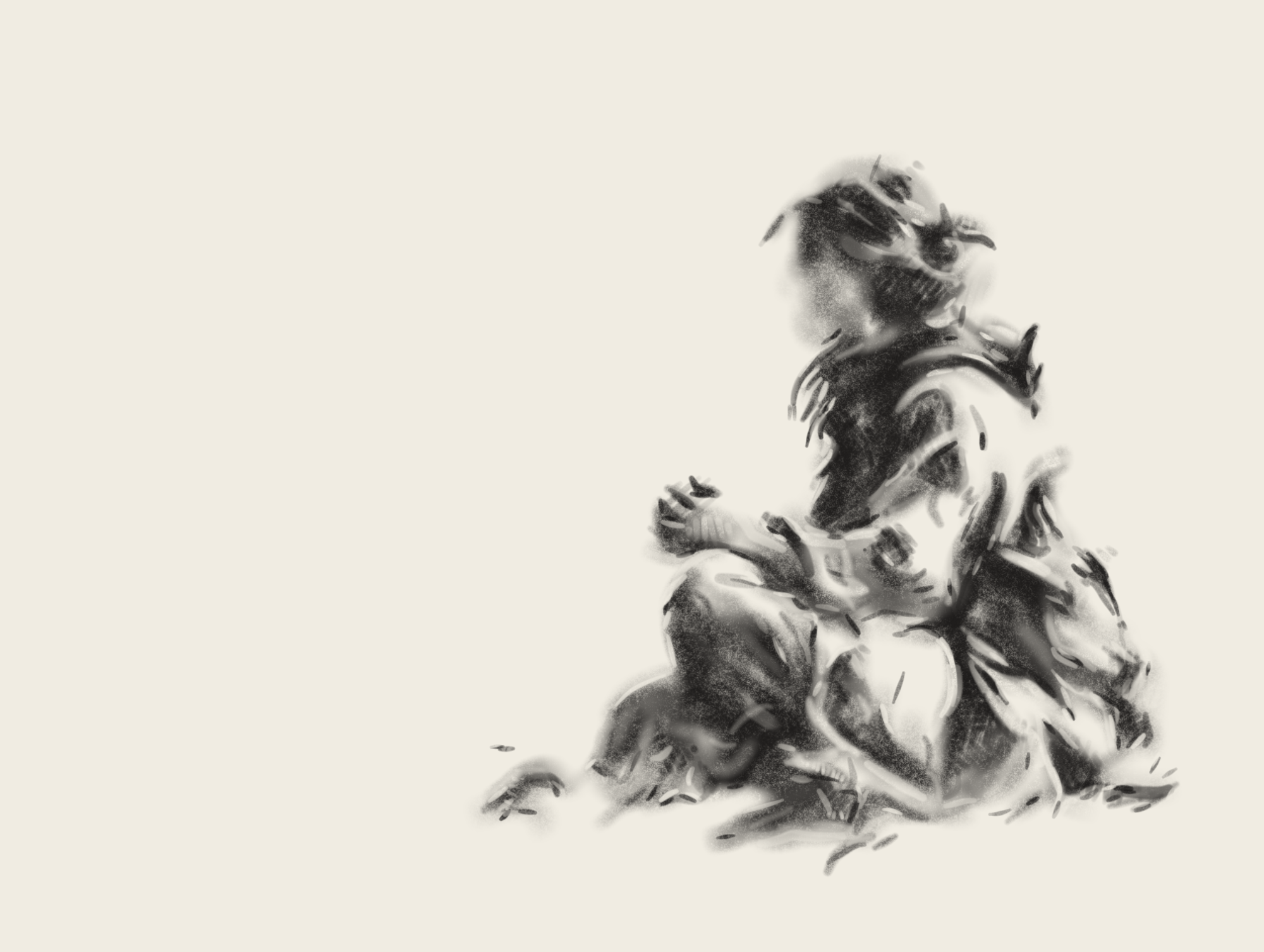
The change in the body
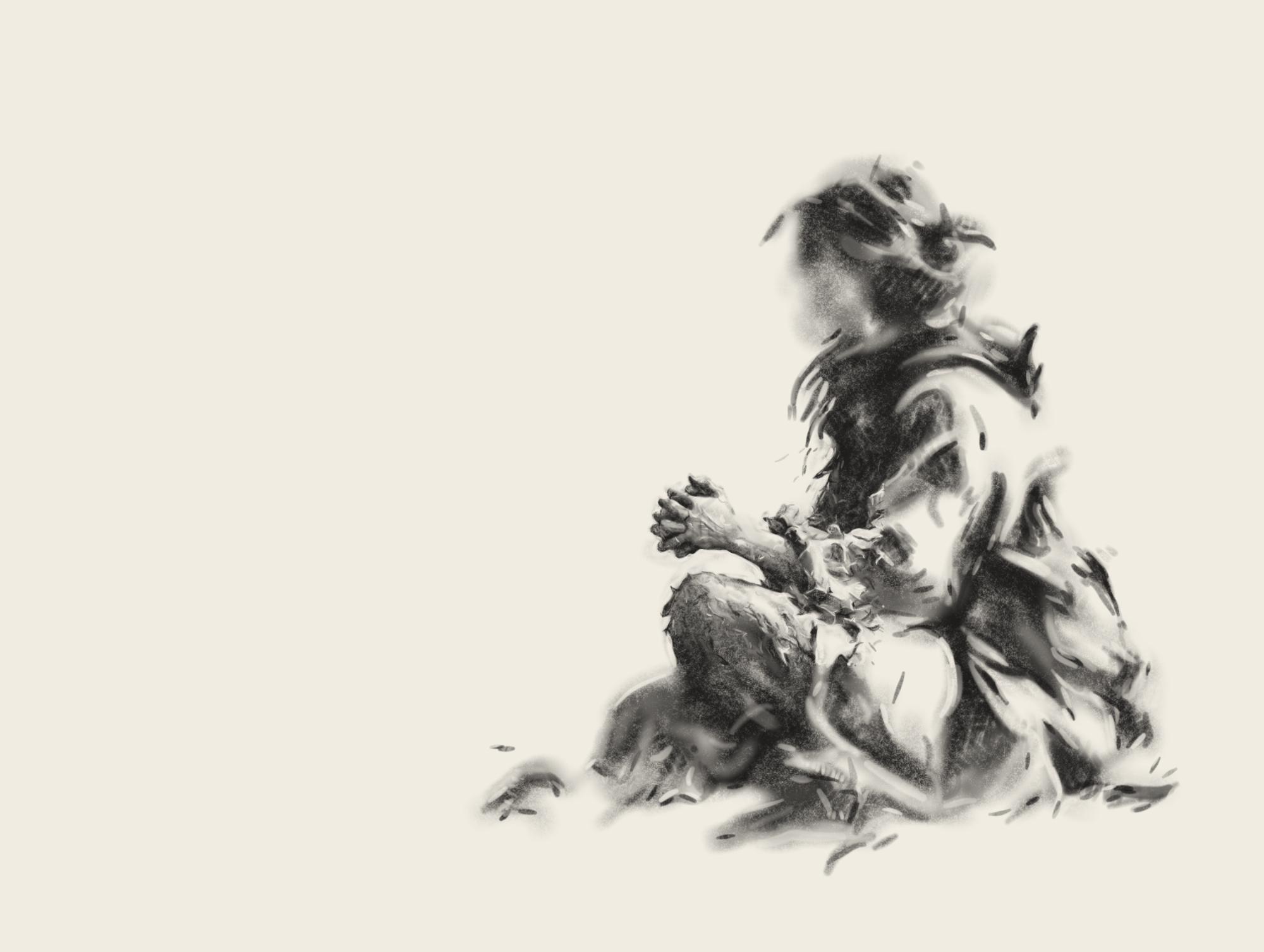
Closer observation can recover construction
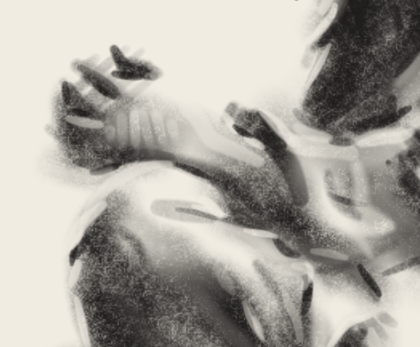
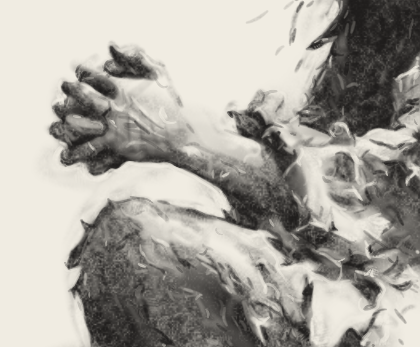
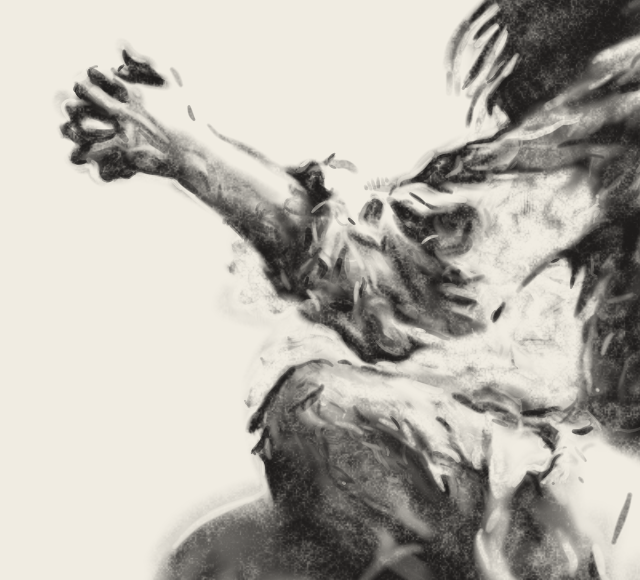
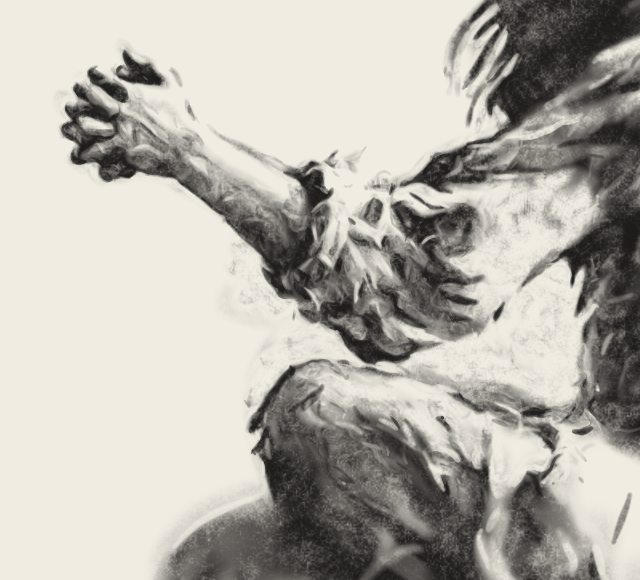
The external plan
This generated image was made from the actual stage-02 render. It proposes the changed arm relationship. It is a separate reference, not a native stage or a layer in the final drawing.
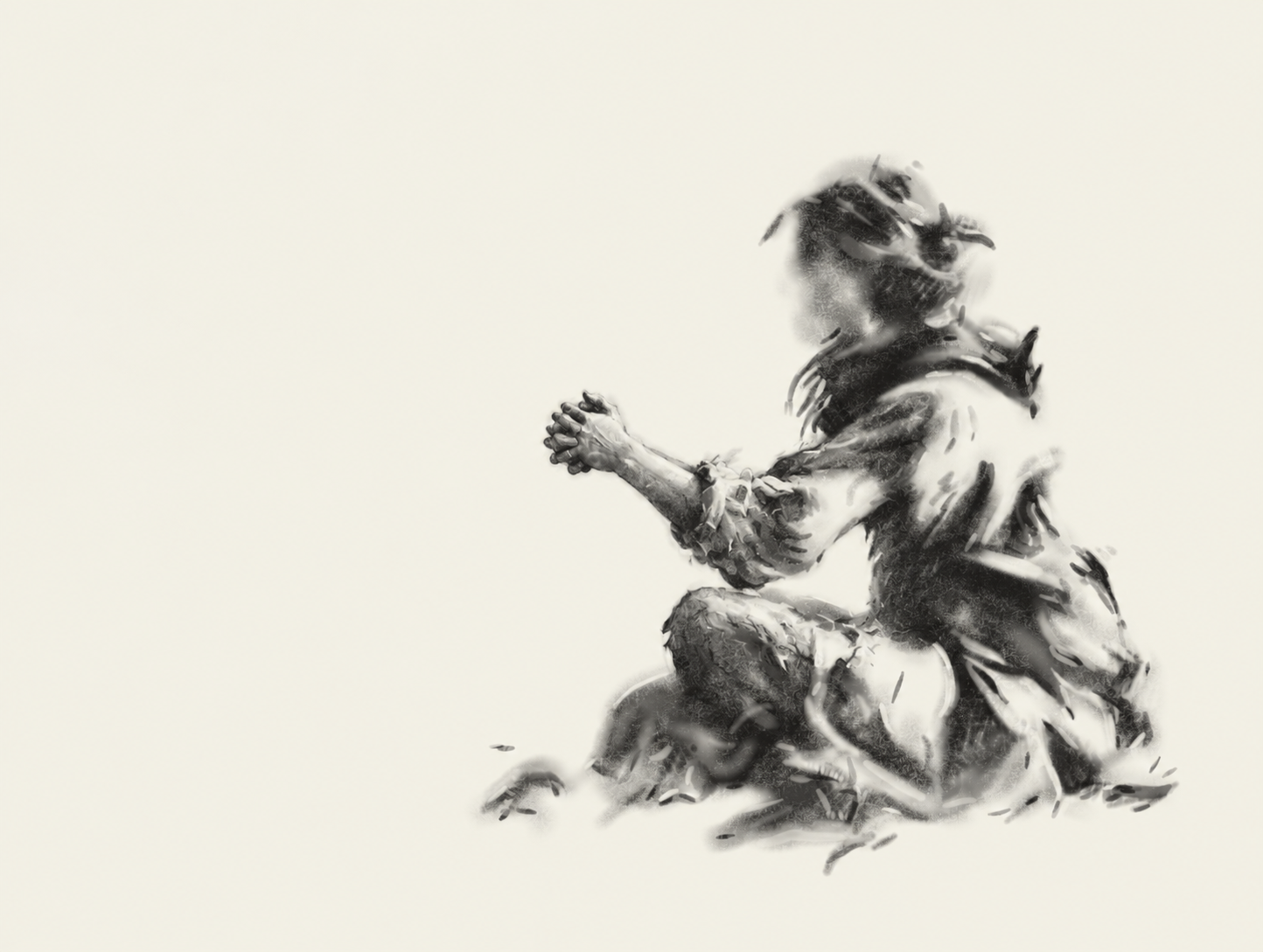
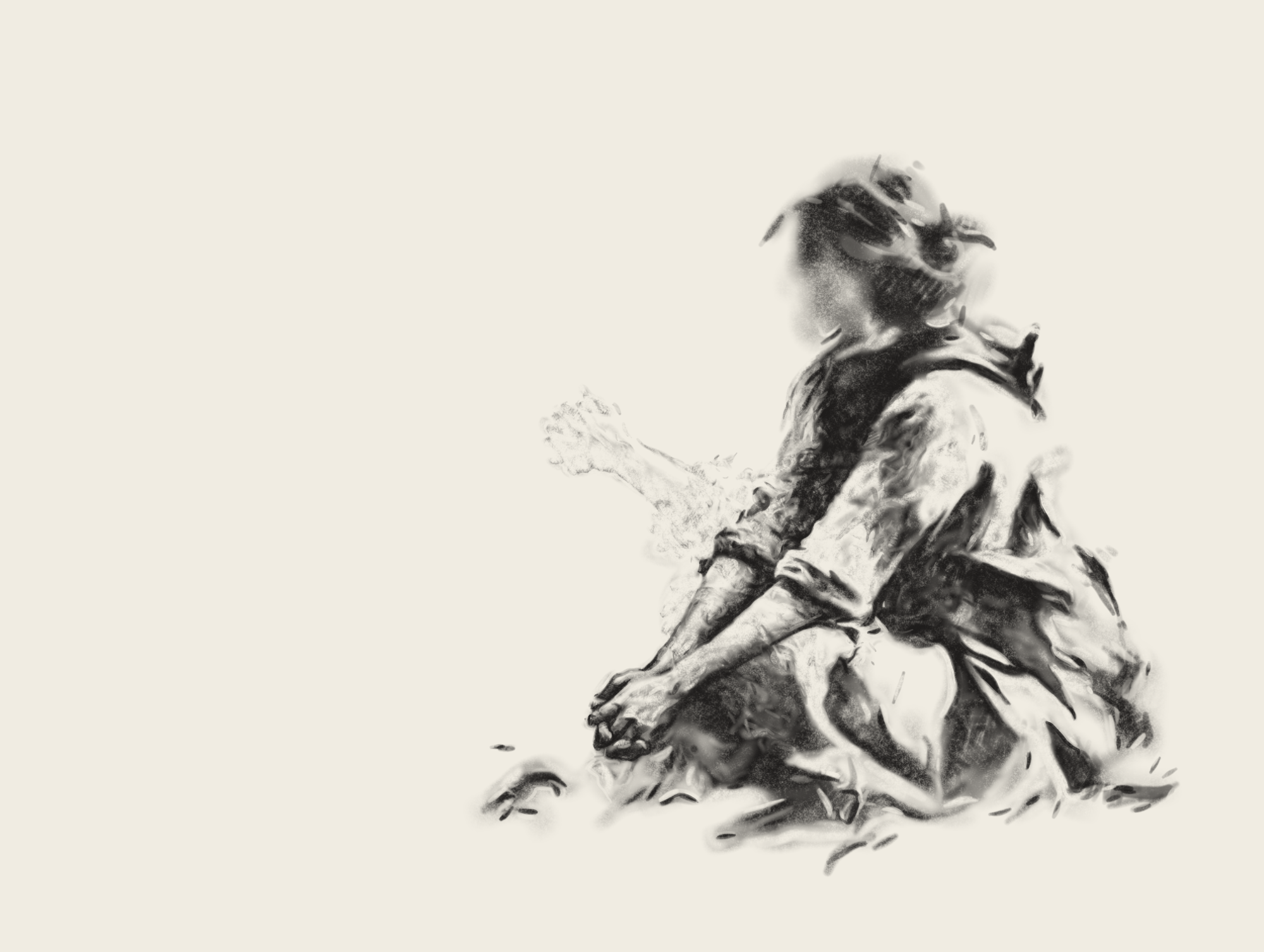
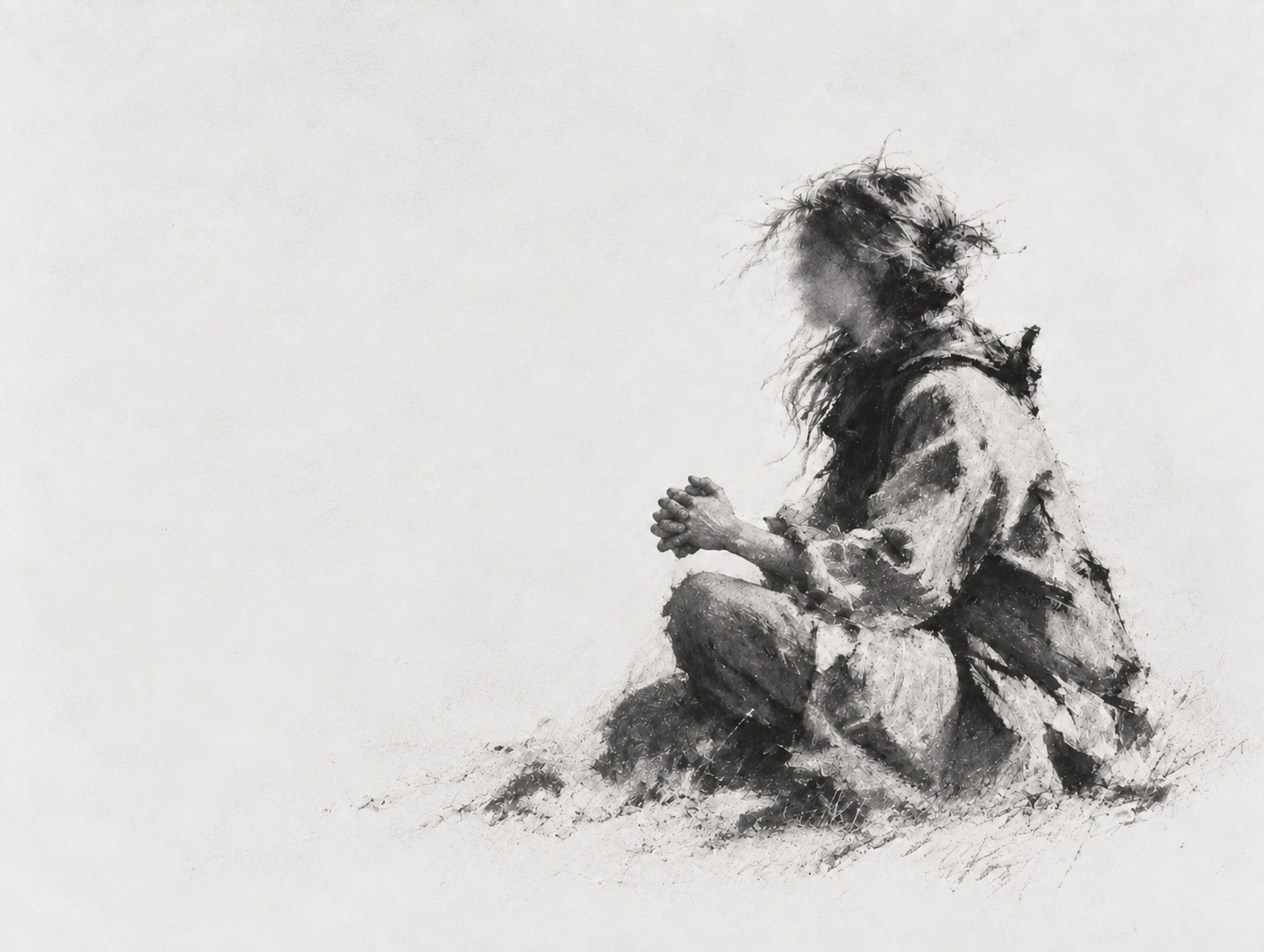
VTL reading: the gesture changed; identity remains unsettled
Δ achieved a structural difference. The arm moves away from the torso and the clasp reaches into the empty field. Returning at a closer scale recovers finger relationships on that changed body.
The direction is only partly convincing. The sleeve is busy enough to compete with the hands. The raised clasp risks becoming a familiar offering or prayer emblem. Bulbous tips, soft marks and the gray opening still confuse deliberate omission with incomplete reproduction.
O — observe, not finish. Retain this as working evidence. Before polishing again, compare a genuinely different structure: a lowered clasp and forearms that carry the body's weight toward the ground. That was the decision at stage 05; the lowered alternative is now recorded above.
These readings are the assistant's visual judgments using VTL, not independent critic consensus. ·
What the controller actually proved
Every retained stage replays to its exact scalar-canvas hash on this runtime. The history remains a prefix of the next stage. Every passage left pixels outside its allowed rectangle unchanged.
| Passage | Accepted marks | Of those, lifts | Outside changes | History |
|---|---|---|---|---|
| Whole figure | 948 | 340 | 0 | |
| Hands at closer scale | 1343 | 664 | 0 | |
| Structural revision | 1648 | 839 | 0 | |
| Return to the clasp | 1000 | 480 | 0 | |
| Open the arm–torso interval | 600 | 387 | 0 |
Acceptance measures pixel and gradient agreement with the visual target. It does not measure artistic quality. Passes ended at resource limits; the observational Hold comes from the visual reading. Lifting is a simplified move toward paper value, not physically accurate charcoal removal.
Viewports and artistic decisions were selected by the assistant. This remains a source-guided prototype using the Hands vocabulary, with a generated structural proposal. It is not yet an autonomous painter with learned anatomy or artistic attention.
One aspect-ratio mismatch was caught and rejected before the retained revision chain. The corrected loader checks canvas dimensions and restored hashes. .