Visual stages, comparisons and decisions from the original run. Internal prompts, operating documents and downloadable implementation files are omitted. Some interactive comparisons are shown as separate images.
VTL STUDIO / ARCHITECTURE PROOF / 07 OCT 2026
Edit relationships
before making marks.
Twelve native constructions across a figure, a still life and an abstract composition. One shared edit contract; different construction rules for each subject.
This is a schematic prototype, not a learned planner or a repair of Reach / Retreat. No raster reference or image generator was used. Existing art and production runners remain separate.
Figure / connected construction
The head and neck move together; changing reach reconstructs the elbow. The result is a pale mannequin. It does not solve the earlier figure’s anatomy, preserve its identity, or make a convincing bowed head. Ground contact is approximate in the drawn contours.
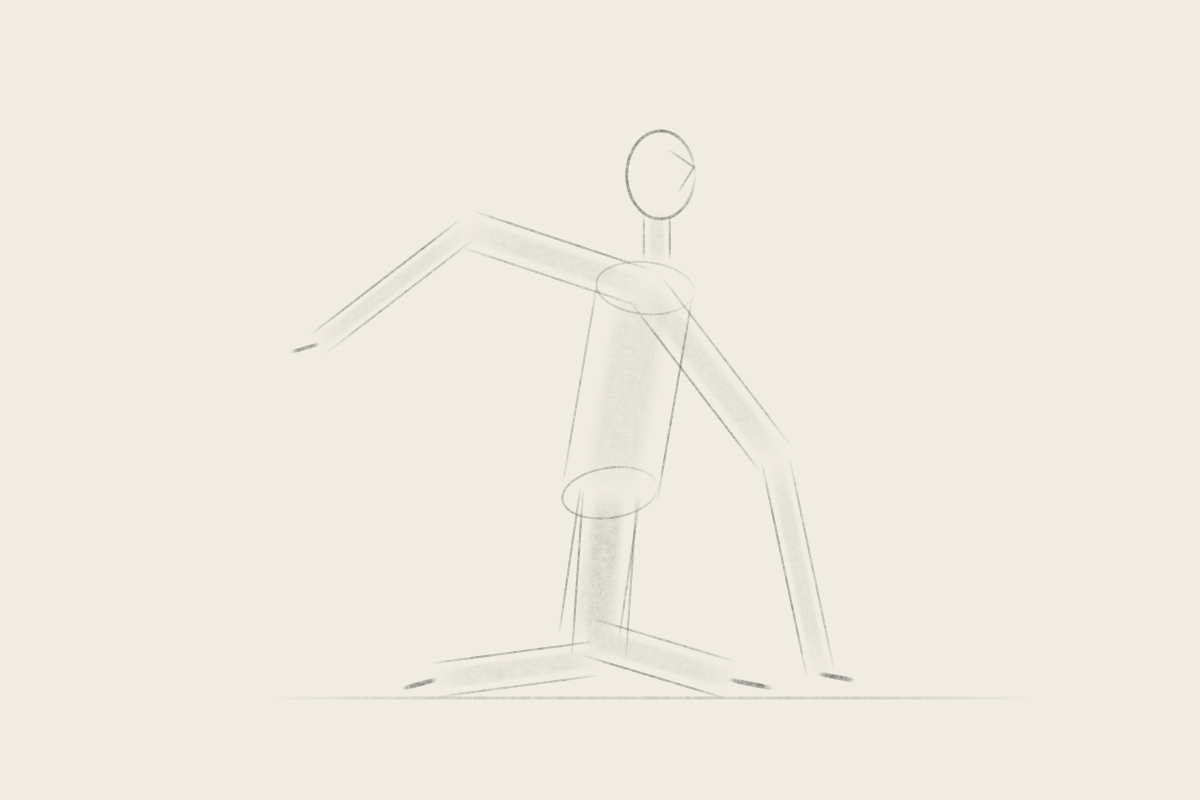
Baseline
Authored starting construction. Each edit below starts independently from this model.
Changed parts: none.
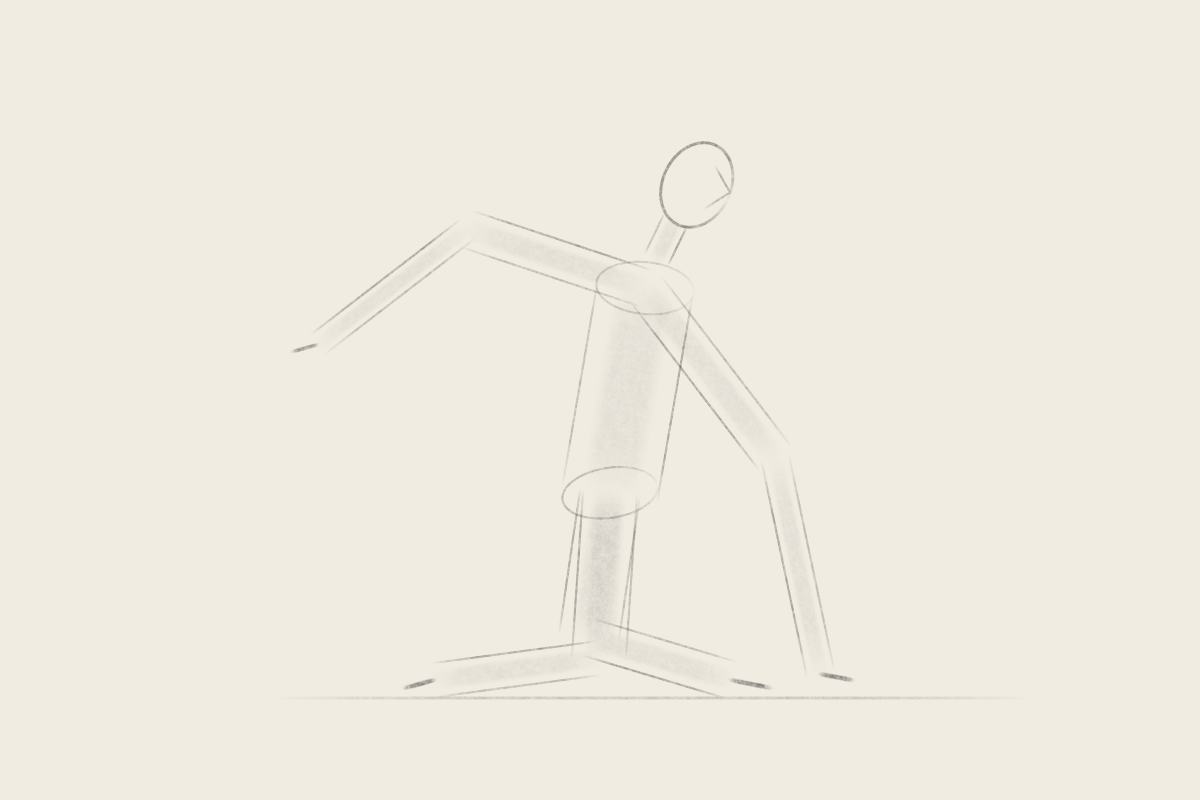
Bow head
Change cervical/head construction angle; regenerate attached head and neck paths.
Changed parts: neck, head.
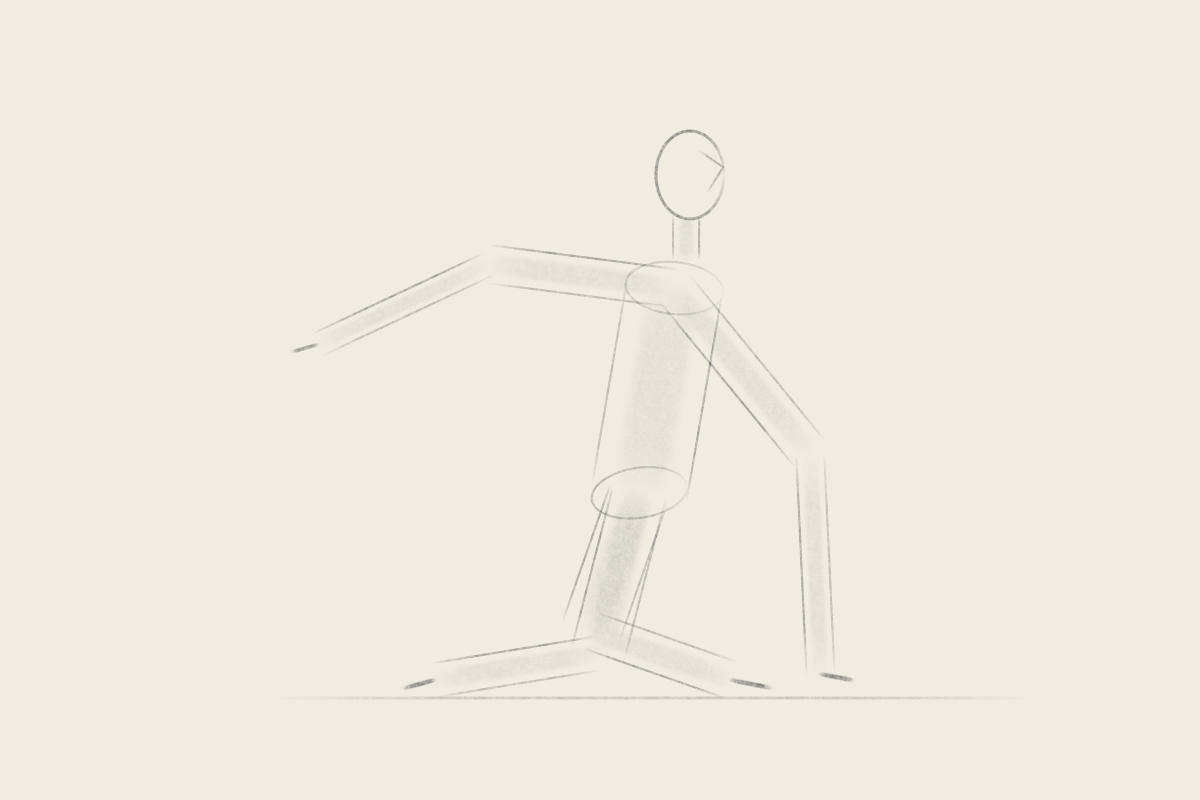
Shift weight
Move pelvis horizontally; solve both knees and supporting elbow at fixed segment lengths and pinned endpoints.
Changed parts: rear-leg, front-leg, torso, support-arm, reaching-arm, neck, head.
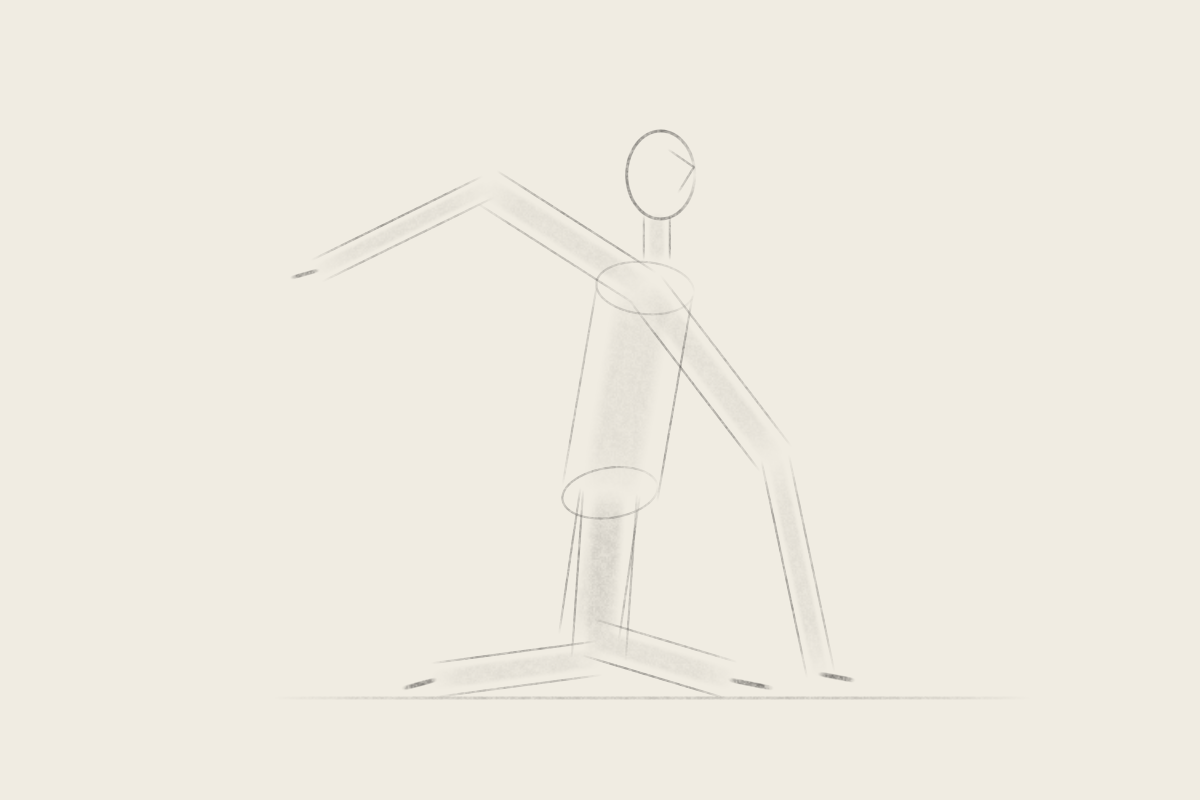
Change reach
Move the reaching wrist vertically and solve its elbow.
Changed parts: reaching-arm.
Still life / assembly and contact
Rim, body and handle follow one assembly. Tipping reseats the lowest outline point. The handle remains a schematic overlapping ellipse; the shadow is authored. No perspective, physical balance or lighting solver is involved.
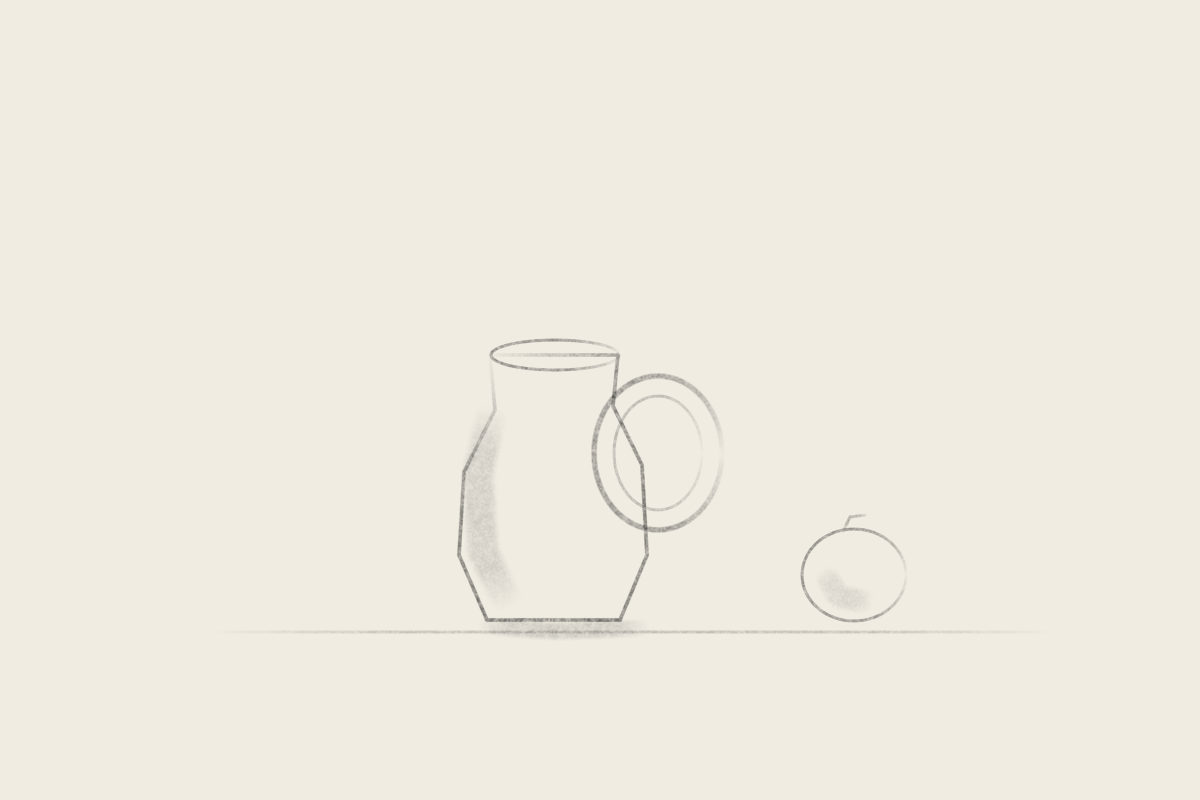
Baseline
Authored starting construction. Each edit below starts independently from this model.
Changed parts: none.
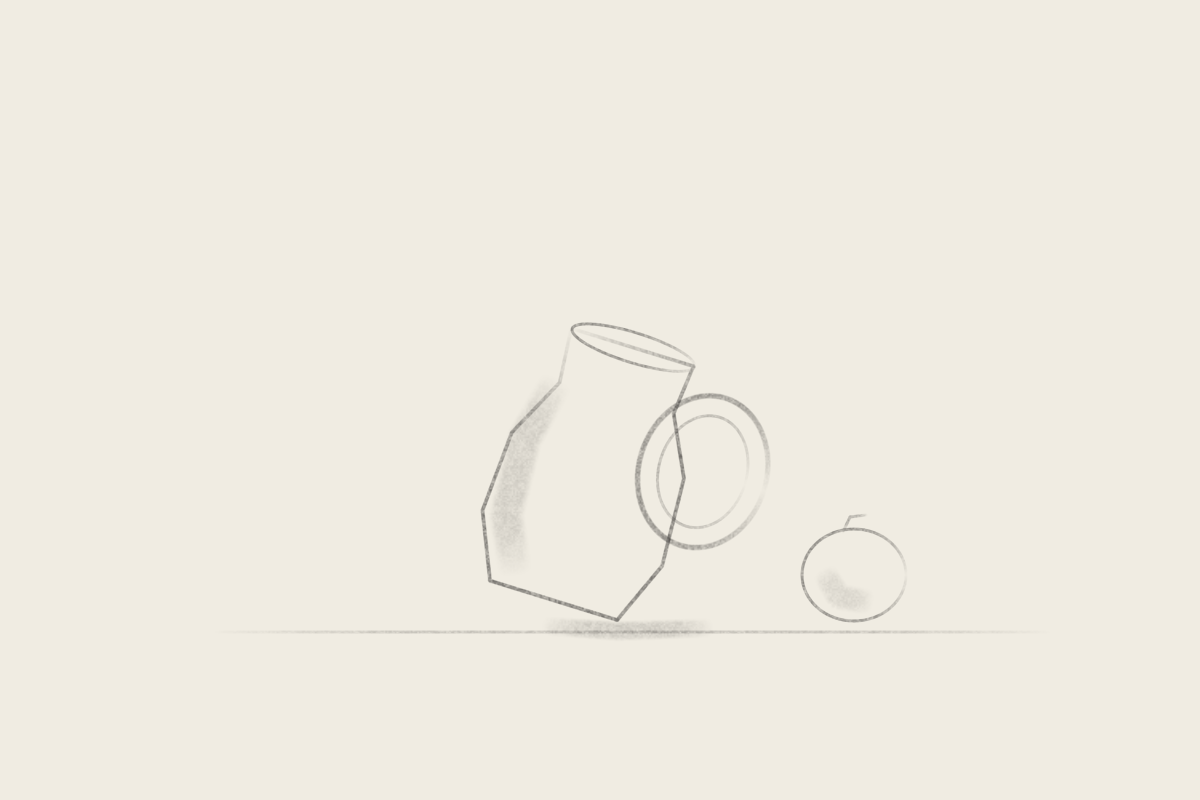
Tip vessel
Rotate vessel assembly, reseat its lowest outline point on the table, regenerate contact shadow.
Changed parts: handle, vessel-body, rim, contact-shadow.
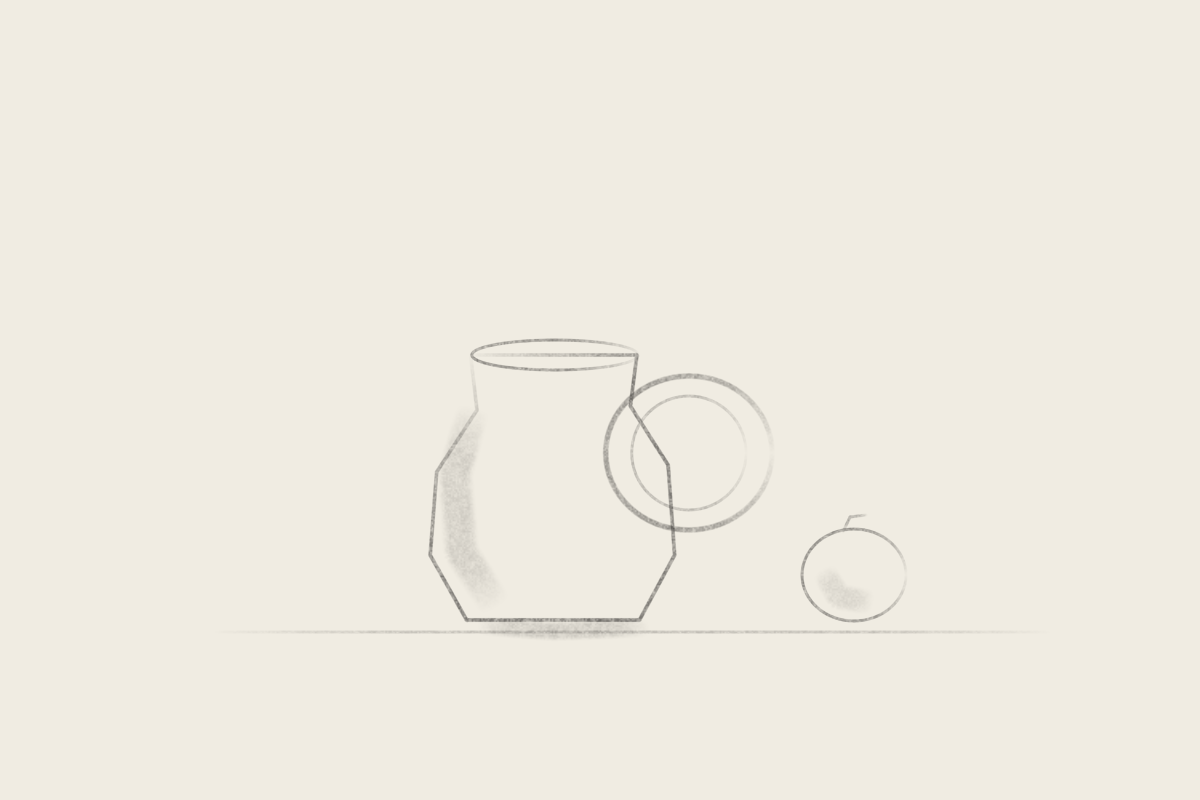
Widen vessel
Change body width; derive rim, base and handle attachment from the new width.
Changed parts: handle, vessel-body, rim, contact-shadow.
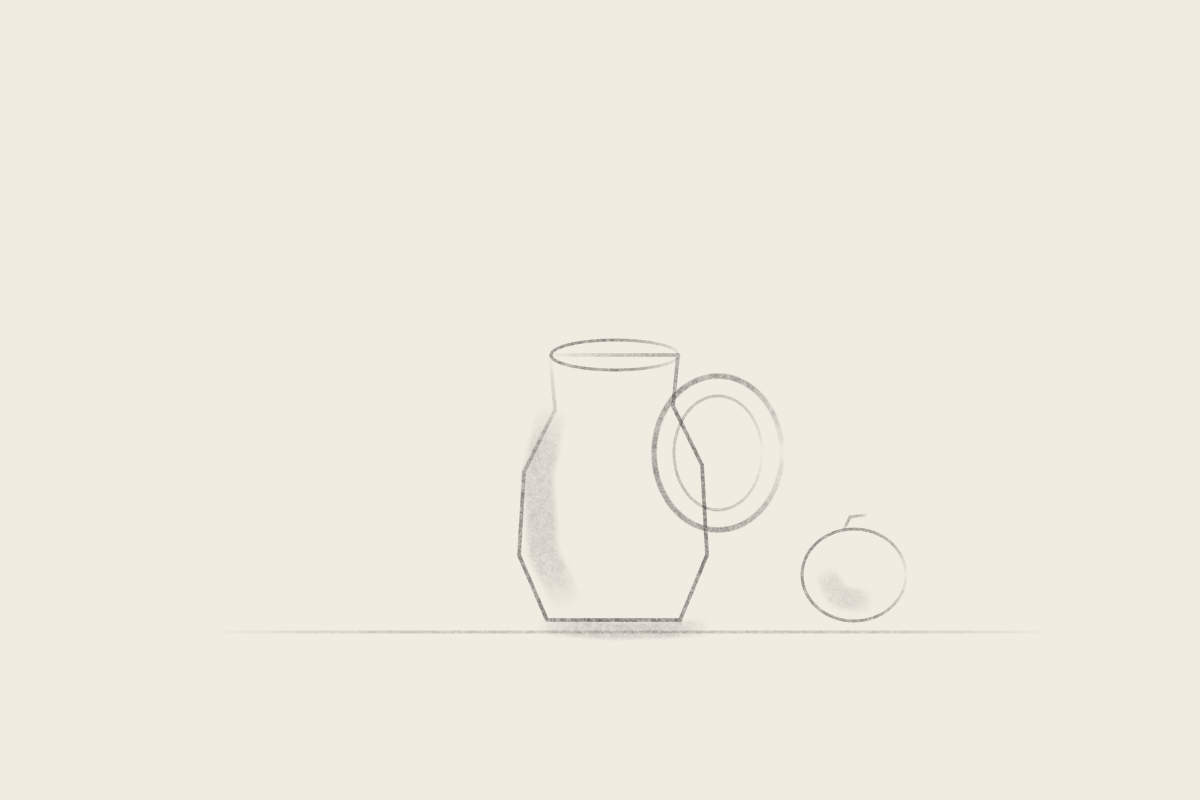
Move vessel
Move vessel and its contact shadow; preserve the separate fruit.
Changed parts: handle, vessel-body, rim, contact-shadow.
Abstract / intervals and hierarchy
Opening the gap, shifting the accent and tilting the plane are distinct edits. The tilted plane preserves its area and declared spacing. These measurements do not determine whether the composition has tension.
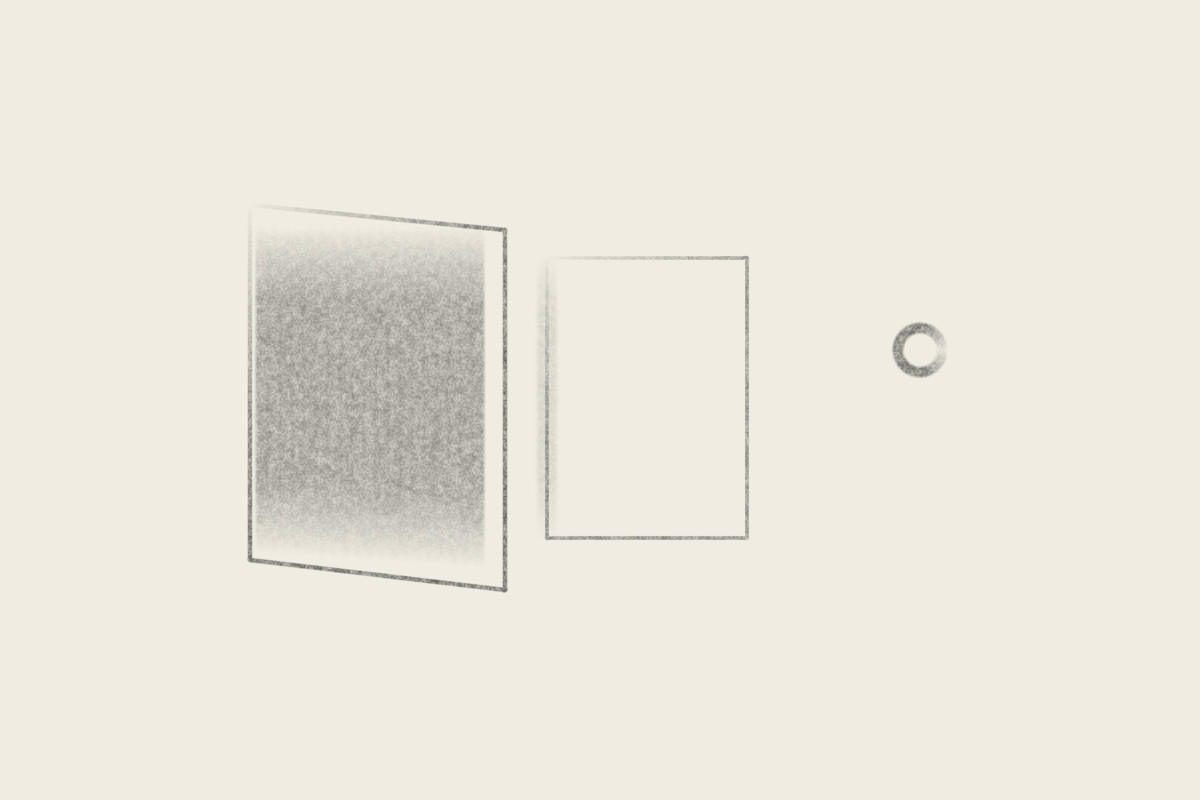
Baseline
Authored starting construction. Each edit below starts independently from this model.
Changed parts: none.
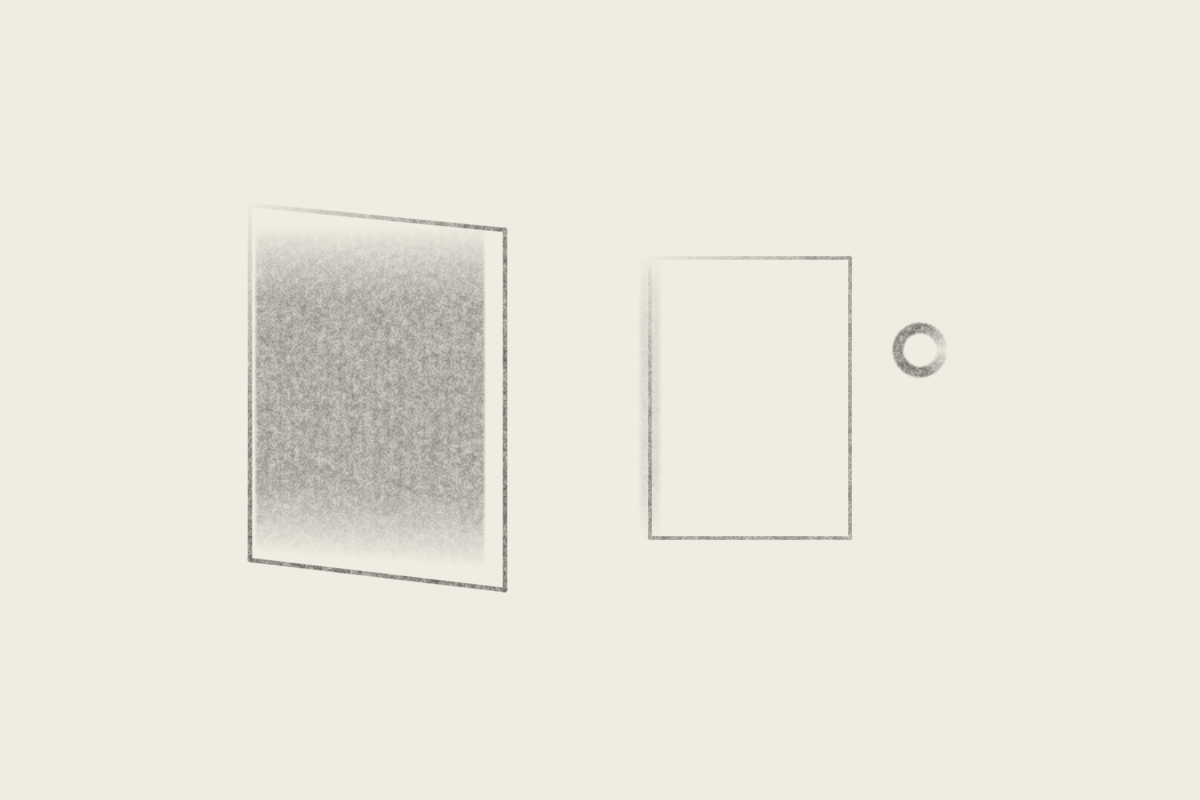
Open interval
Move the right shape to set the minimum horizontal gap from the left mass.
Changed parts: right-plane.
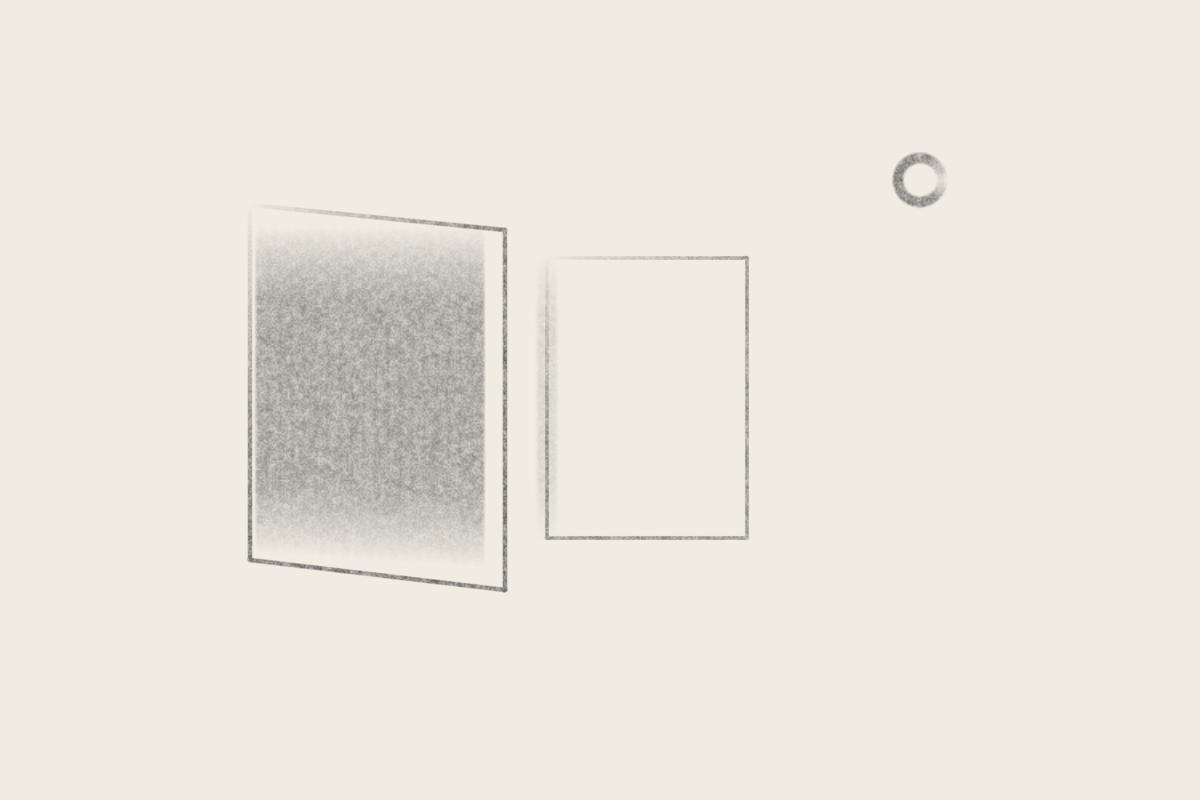
Move accent
Move the small accent vertically without changing the two main shapes.
Changed parts: accent.
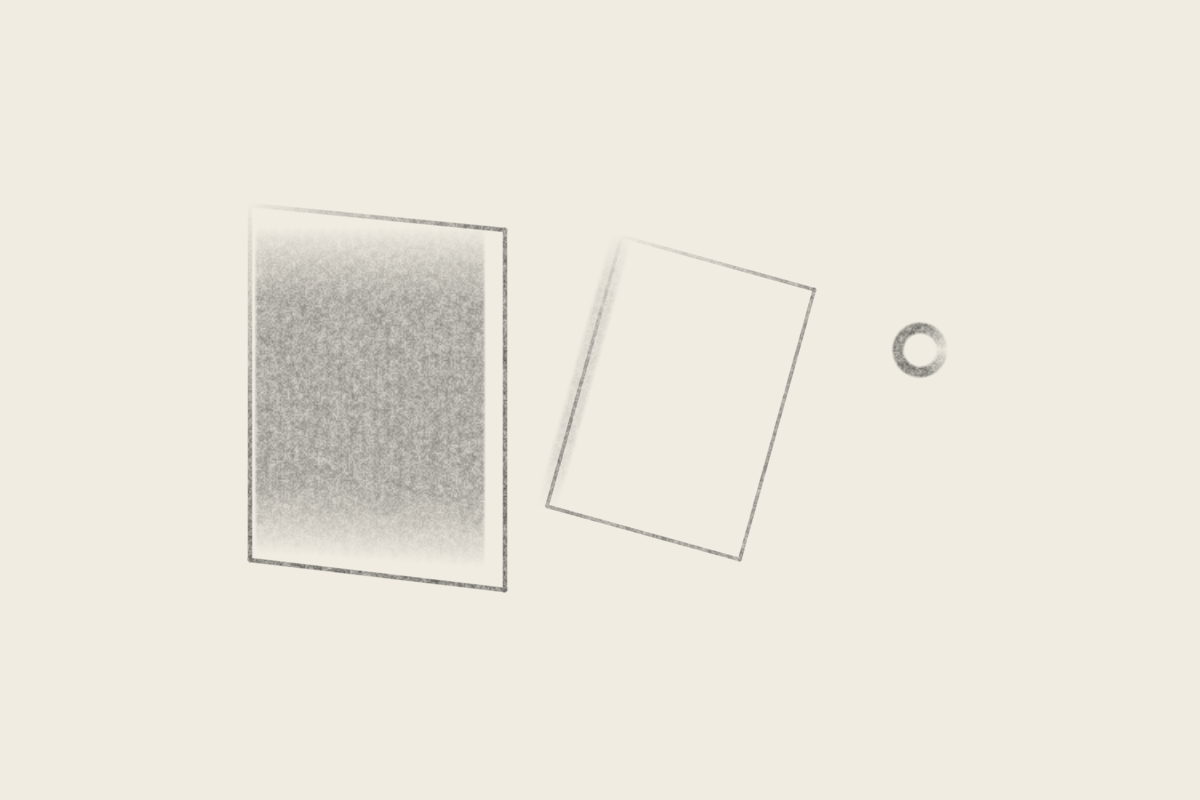
Tilt plane
Tilt the right plane; re-seat its leftmost extent to retain the declared gap.
Changed parts: right-plane.
What happens between the instruction and the image?
- Author the structure. The operator supplies parts and parameters. This prototype does not infer them from a picture.
- Translate the request. Choose a registered edit and value. “Bow the head” currently changes a planar construction angle; it does not invoke anatomical understanding.
- Reconstruct related parts. Solve limb endpoints, transform an object assembly, or recompute a spatial interval. Invalid or unreachable configurations are rejected.
- Draw from the new construction. Sample the paths and deposit native marks on blank paper. This is rerendering from structure, not repainting an existing canvas.
- Check and read. Verify relationships and replay. Separately judge the visible result. No geometric test certifies a good drawing.
Evidence and limits
All 12 renders replayed exactly on this runtime. The tests passed 185 valid sweep configurations; four additional pelvis positions were rejected because the support arm could not reach its pinned endpoint. Parameter limits alone do not guarantee feasibility.
- Inverse kinematics preserves both lengths across endpoint directions
- Unreachable and degenerate endpoints are rejected
- All operation sweeps preserve declared geometric constraints
- Head and reaching-arm edits leave unrelated geometry exactly unchanged
- Vessel translation moves every assembly path by exactly 60 pixels
- Edits are immutable; reversing a parameter restores the source geometry
- Composed figure and abstract edits retain constraints
- Invalid operations, cross-domain edits, invalid parameters and nonfinite input are rejected
- All twelve persisted records match reconstruction and report successful replay
Fixed segment lengths are not anatomical joint limits. “Shift weight” is currently a pelvis translation, without mass or balance. Contact planes and rendered ground strokes are approximate visual conventions. Unchanged part geometry does not imply identical pixels everywhere outside an edit.
Research leads, with the actual barriers
| Candidate | Relevant capability | What remains unproven here |
|---|---|---|
| Teaching an Agent to Sketch One Part at a Time | Part-based sketching with visual feedback. | The paper reports failures on unfamiliar categories. Repository training uses Tinker; its substituted base model is explicitly untested. A usable trained checkpoint was not verified. Not run locally. |
| PoseFix / PoseScript | Text-guided 3D pose editing. | Figure-specific; not a drawing planner. CC BY-NC-SA code and separate asset terms. Not installed or tested here. |
| SMPL-X | Articulated body representation. | Subject-specific construction support, not artistic judgment or mark selection. Not integrated. |
| SketchAgent | Language-driven vector drawing and editing. | Useful comparator. No local benchmark or quality claim established. |
Sources inspected; no external model training or inference performed. This is not a ranking of proven winners.
The decision
Keep the structural contract. Do not promote these drawings as an artistic upgrade. The shared approach extends beyond figures, but each subject still requires an appropriate representation. The missing capability is forming and revising convincing structure from an unfamiliar brief or image.
The next substantial gate is to connect a planner or fitter to this contract and test consequential edits on unseen inputs. Evaluate preserved identity, connected form and the requested change alongside artistic quality. More brush tests or parameter sweeps alone cannot answer that question.