Visual stages, comparisons and decisions from the original run. Internal prompts, operating documents and downloadable implementation files are omitted. Some interactive comparisons are shown as separate images.
VTL Studio / first native sitting
Reach / Retreat.
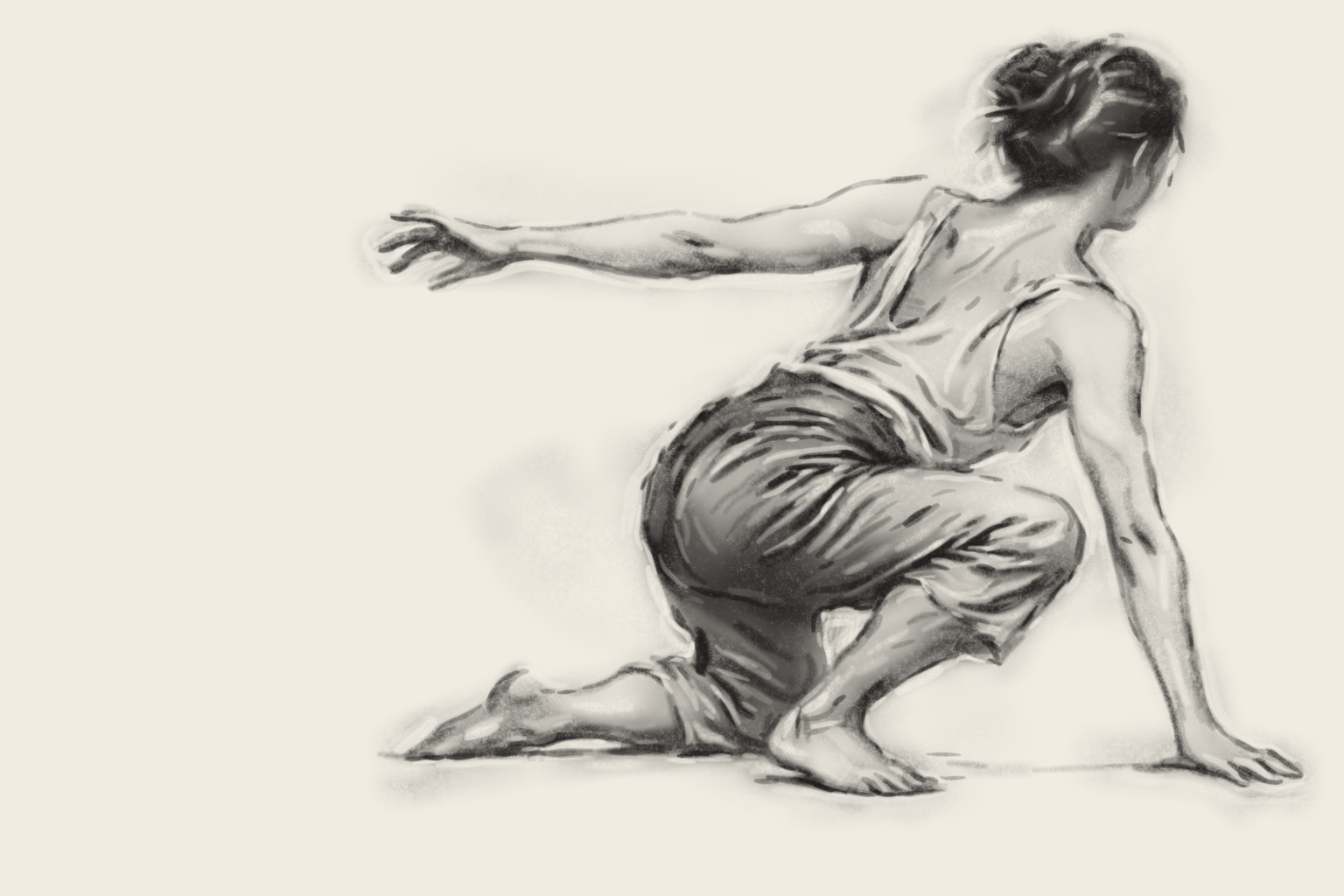
Now drawn through marks.
Retained: 1,696 local native commands on a blank 1536 × 1024 canvas. No new image generation. A 30-command revision was rendered, inspected and rejected despite passing its numerical checks.
From reference to construction
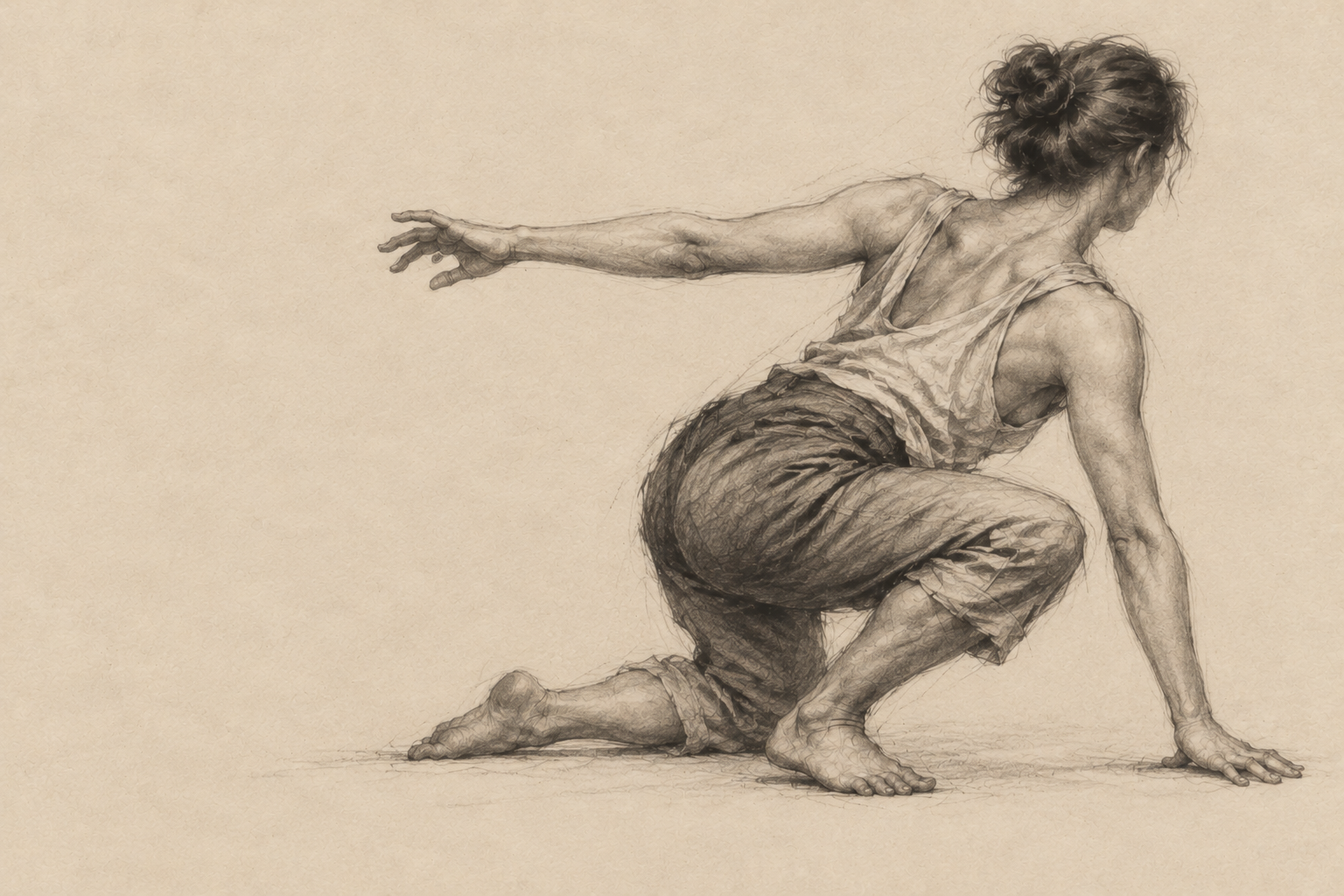
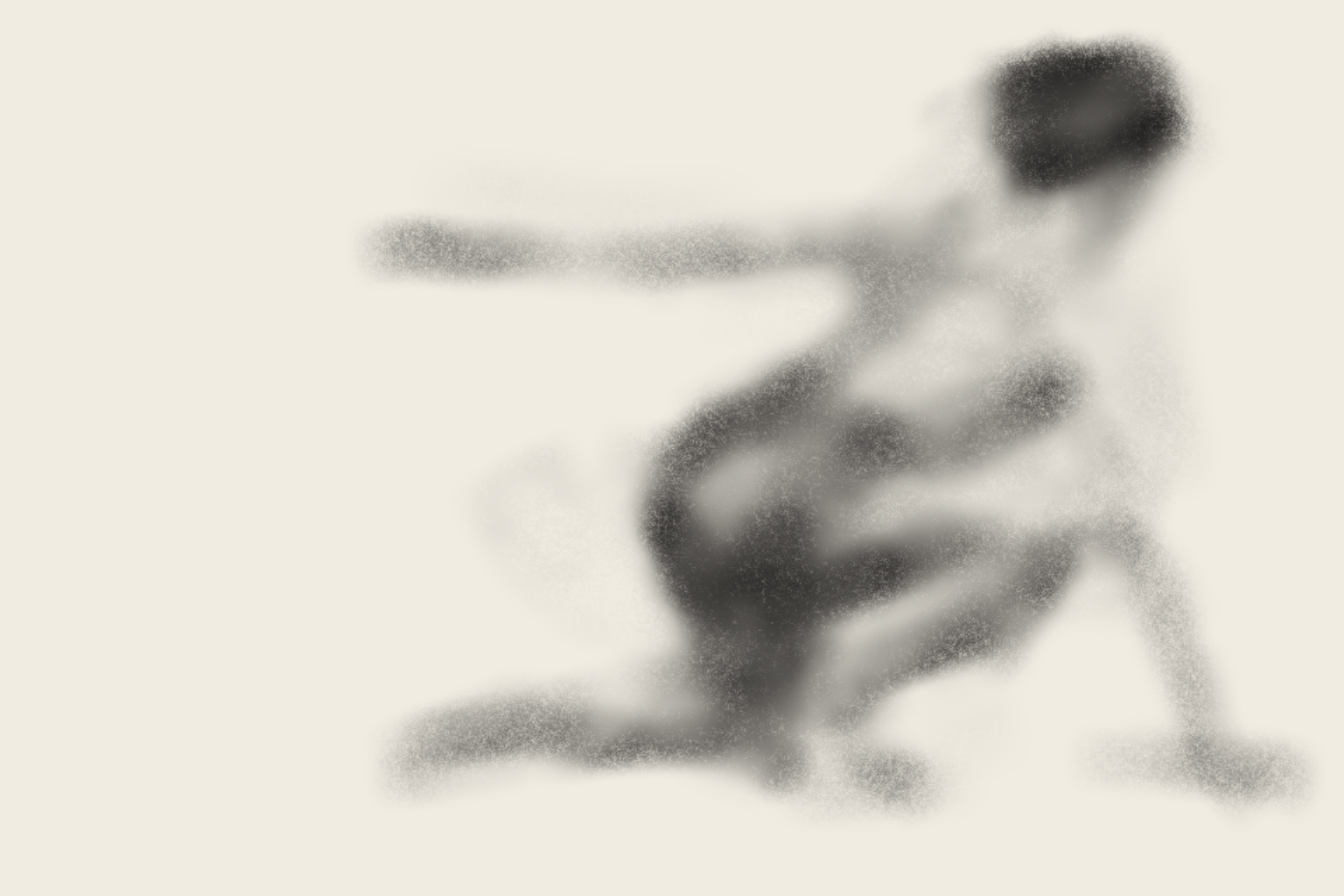
The controller starts from paper, not from reference pixels. A broad vocabulary establishes masses; finer native proposals then respond to the actual canvas. A pixel-and-gradient objective accepts marks that better execute the reference inside an authored figure region. A further 1,412 accepted marks produce the retained drawing.
The existing adaptive paper normalization translates the warm reference into the local neutral medium. It does not reproduce the yellow paper or perform physical charcoal transfer. The leftmost interval remains outside the drawing region. These controls preserve an authored spatial intention, not autonomous compositional understanding.
The native revision did not earn retention
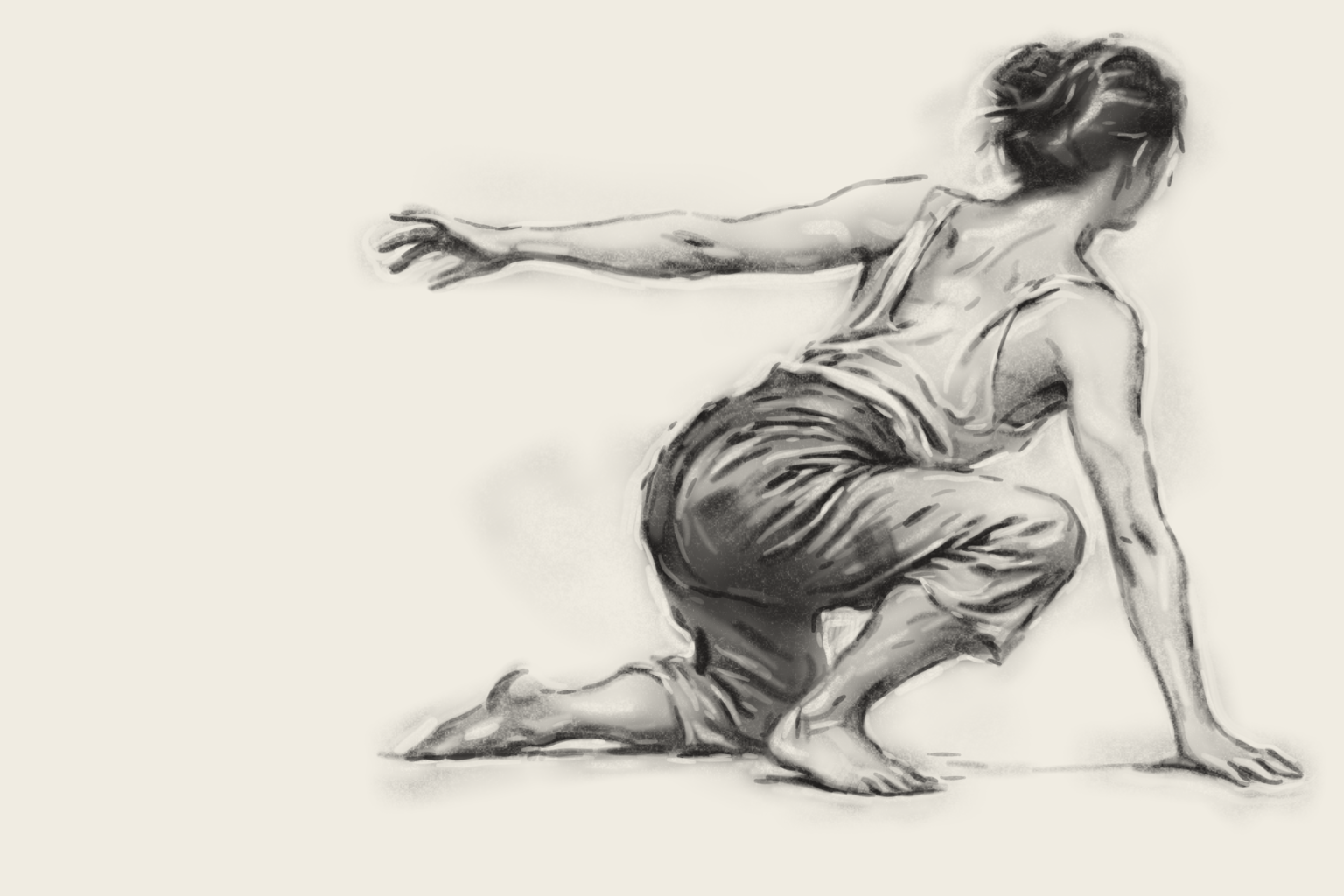
The second plan sought a more connected compressed hip mass and a quieter torso. It used the native intention runner without a raster target, with hands, head and ground contacts protected. Both local proxies improved; exact replay and protection passed.
On the actual image, the hip deposits add patchy darkness without resolving the repeated fold bands. The torso lift is modest. Those changes do not justify replacing the first construction. The rejected branch remains part of the record.
What the drawing carries—and loses
The body turns away while the arm reaches back; the compact support and empty left interval remain legible. The engine simplifies the fingers and turns many clothing folds into repeated lines and pale grooves. Those are execution limits, not claimed expressive choices.
This is a working native drawing and an observation checkpoint. The remaining issue is the hierarchy of marks across the whole body, not a request to polish a finger. Further work should address that relation rather than keep adding dark accents.
Process and evidence
Reference-guided native construction → assistant visual reading → target-free native revision → assistant comparison → retain earlier native state. No independent critic model call occurred. Attempt limits are compute checkpoints, not artistic completion.
· · · · · · · Earlier generated studies