Visual stages, comparisons and decisions from the original run. Internal prompts, operating documents and downloadable implementation files are omitted. Some interactive comparisons are shown as separate images.
Less contrast.
Without biting into the form.
The new optional edge-integrity guard rejects light pockets inside an edge and excessive inward retreat of its tonal boundary. It separates the diagnostic good and bad examples, and selects gentler native changes across all three test canvases.
A score must distinguish these

Old contrast loss: 0.607

Old contrast loss: 0.057

Old contrast loss: 0.485

Old contrast loss: 0.000
These are analytic diagnostic fields, not generated artwork. All three altered fields lower the old contrast loss. Only the smooth transition preserves a coherent progression from dark to light and keeps the boundary in place. The new guard permits that example and rejects both negative examples. Tests also verify rejection of a native-rendered notch.
Same proposals, different acceptance rule
| Canvas | Rule | Old loss reduction | Max added reversal | Max inward shift, px |
|---|---|---|---|---|
| figure | contrast-only | 32.3% | 0.183 | 2.78 |
| figure | integrity-guarded | 17.0% | 0.045 | 0.17 |
| field | contrast-only | 17.1% | 0.275 | 0.44 |
| field | integrity-guarded | 13.5% | 0.058 | 0.44 |
| interior | contrast-only | 39.7% | 0.193 | 7.68 |
| interior | integrity-guarded | 34.8% | 0.039 | 1.53 |
Limits: added reversal ≤ 0.06 normalized ink; inward shift ≤ 2 canvas pixels. Same source, discovered guide, curved-pressure proposals, protection, change caps and six decision rounds. Each branch accepted six three-segment actions. The unguarded outputs match the preceding round exactly; the guard changes selection, not the old contrast objective.
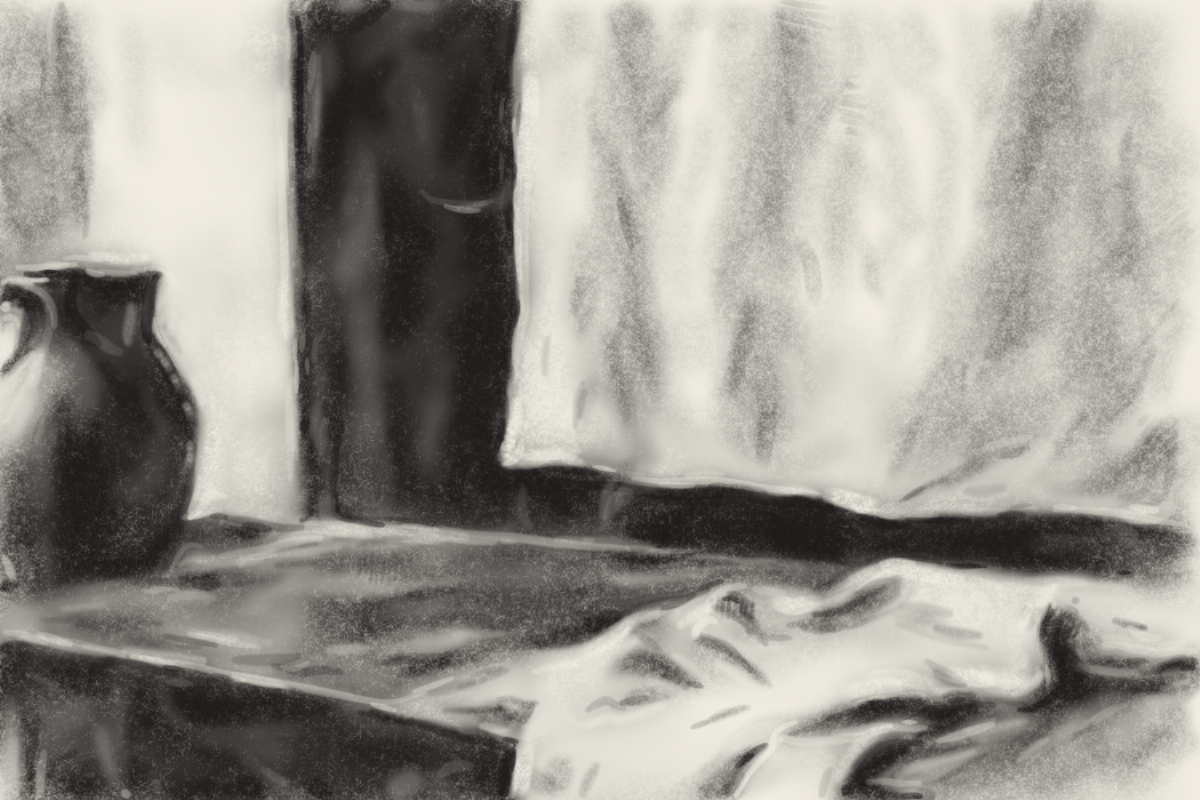
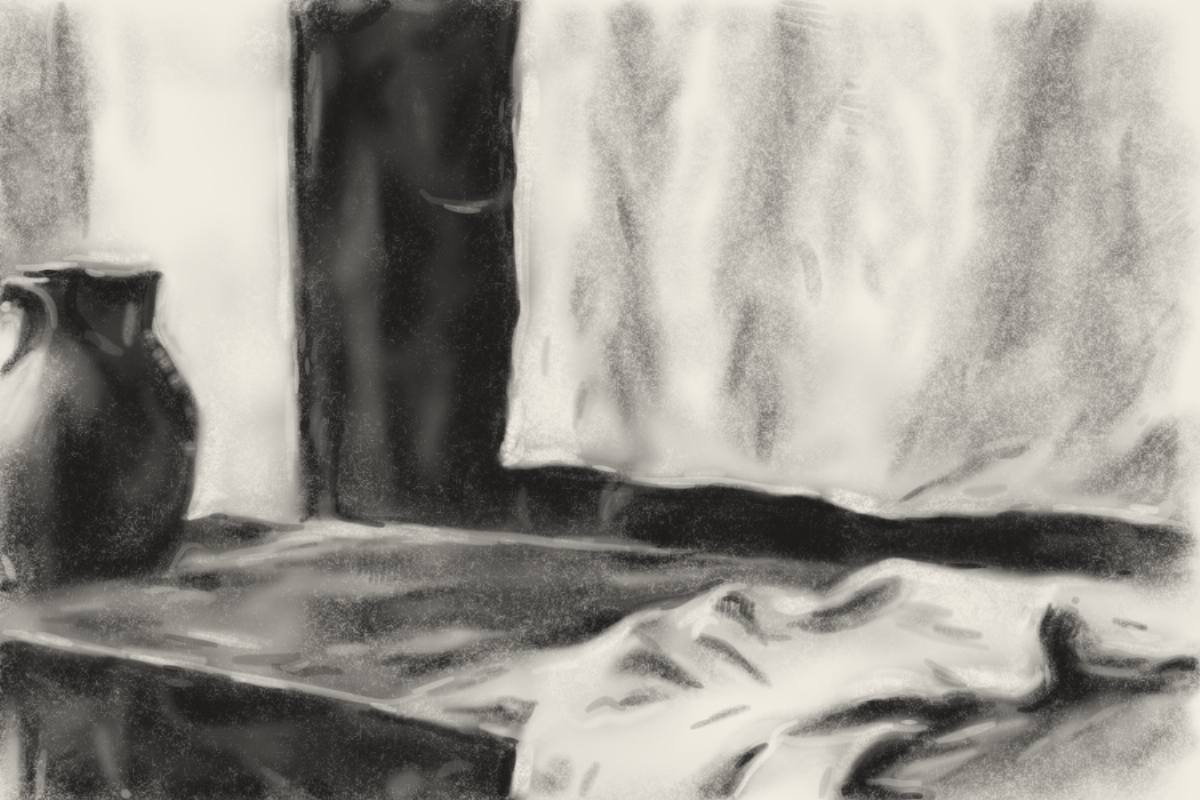
Figure
Full contrast-only result · Full guarded result · ·
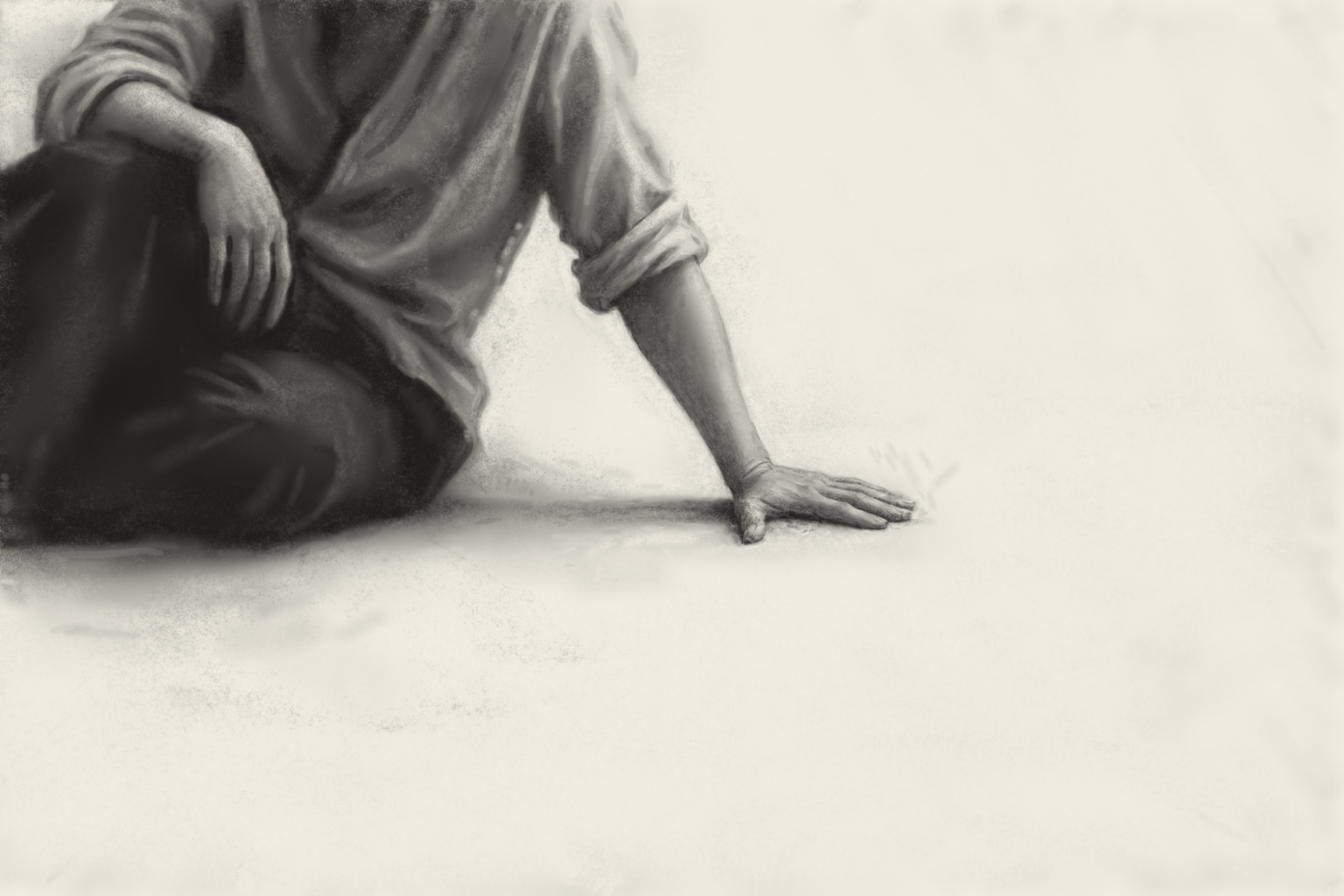
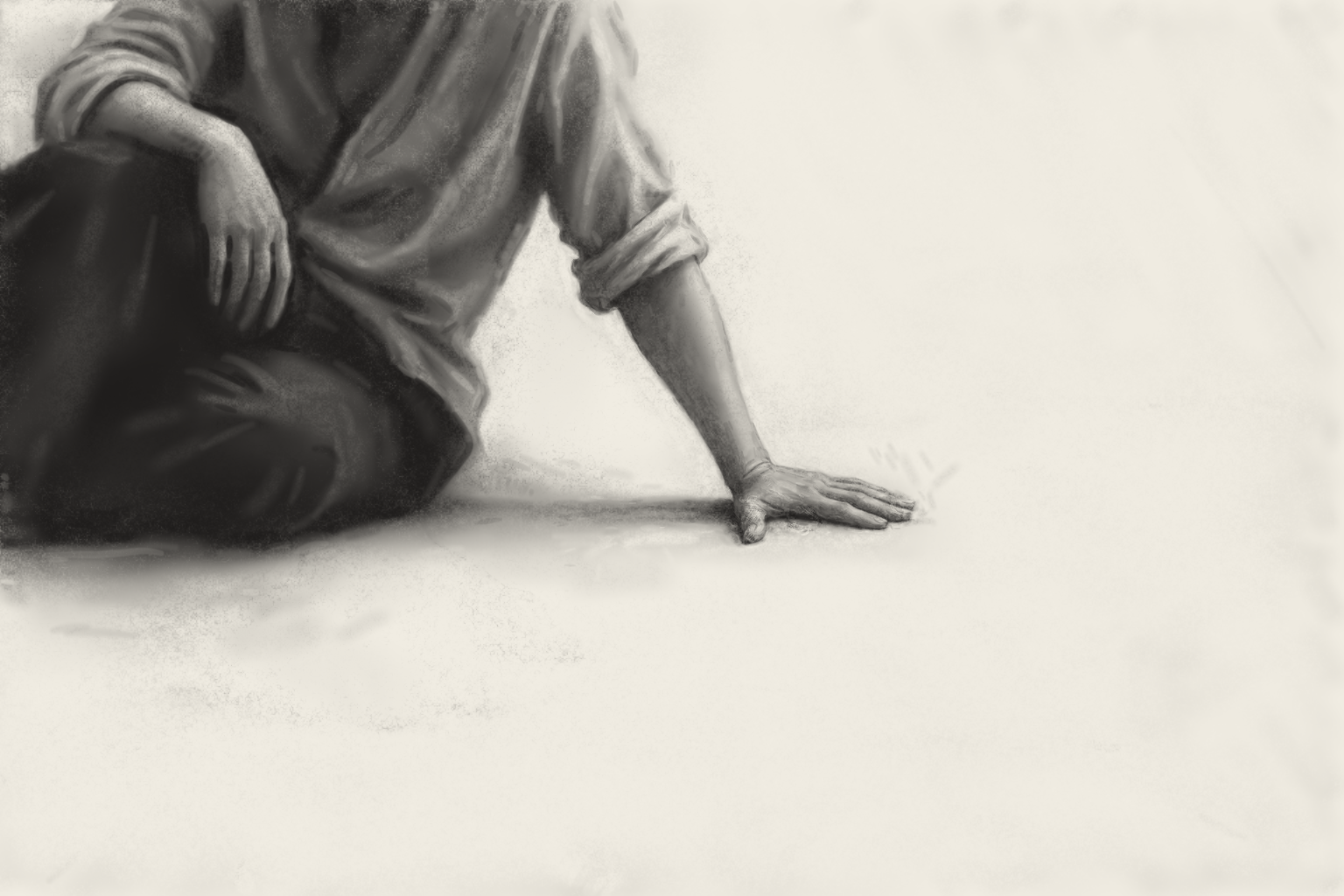
Field
Full contrast-only result · Full guarded result · ·
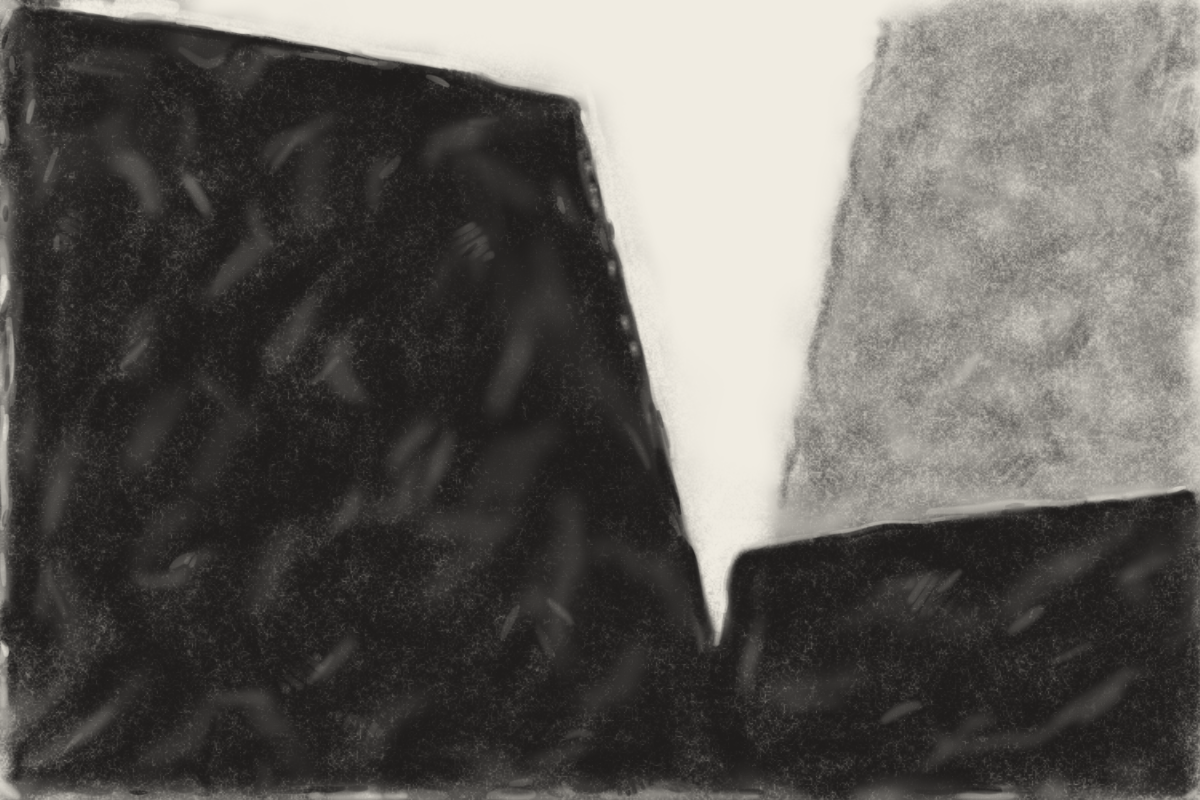
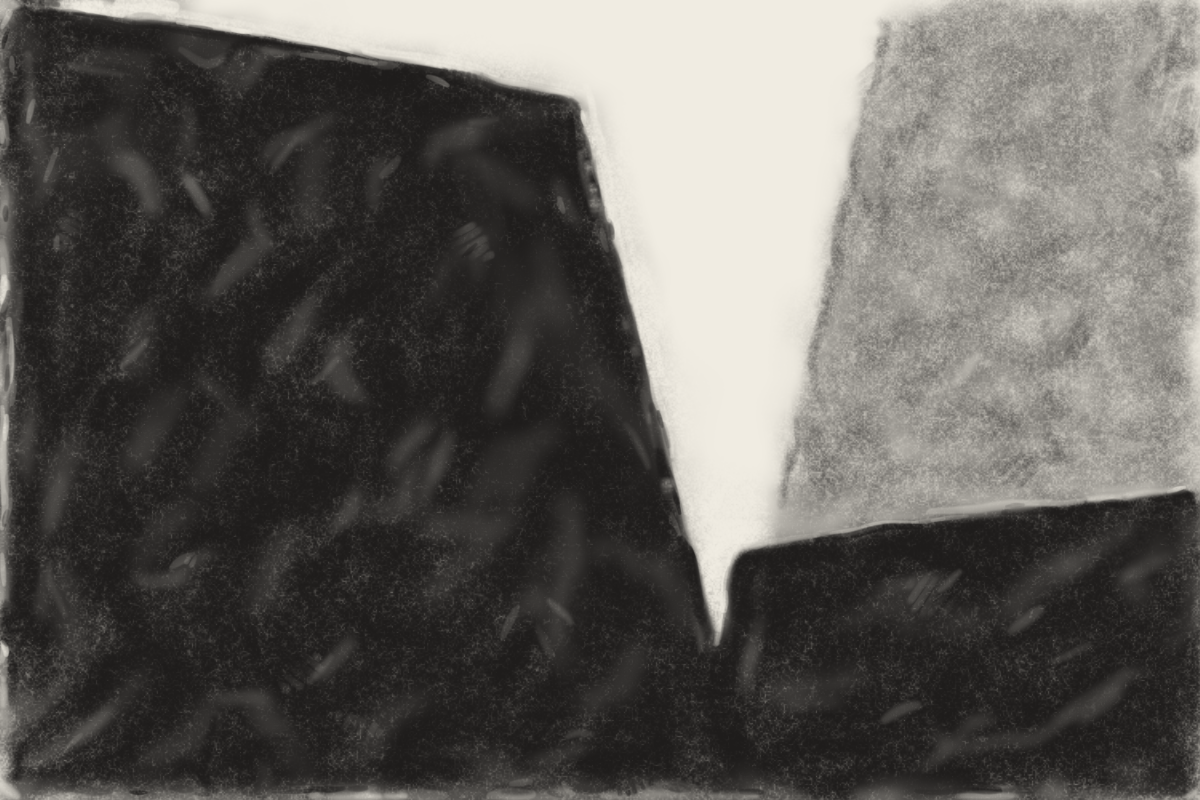
Interior
Full contrast-only result · Full guarded result · ·
Process & methods
At fixed stations along the discovered guide, the evaluator samples a cross-edge profile extending three probe radii to each side. Baseline values determine which side is darker. Bilinear sampling and a three-sample average along the edge reduce sensitivity to individual grain pixels.
New pocket: moving from dark toward light should not acquire substantially more upward excursions back into darkness. Increased non-monotonic variation is measured relative to the starting canvas. This detects many local light bites that the old two-point contrast objective rewarded.
Retreat: the evaluator fixes a midpoint level from the baseline profile and compares where that level is crossed. An excessive move into the dark form is rejected. Profiles without clear baseline contrast/crossing are counted as ambiguous; displacement is not inferred there. None was ambiguous in these six runs.
Both checks use the intention’s starting canvas, preventing a sequence of small actions from resetting the damage baseline. They apply to the actual rendered trial before commitment. Their explicit translation, units and limits are recorded in candidate evidence. Pixel tolerances are resolution-dependent; this is not a calibrated perceptual or anatomical metric.
A useful guard, not a complete critic
The visual comparison supports retaining this optional safeguard: the selected actions are gentler, with weaker local notches and less boundary retreat. Residual pale interruptions remain. Improving this measure has not established expressive edge handling or better artwork.
The next development is to propose native transitions that spread tone without nibbling the dark side, then evaluate them on unseen regions. The smooth positive fixture proves that the evaluator can admit that kind of result; it does not prove the current stamp proposals can create it.
The closed drawing remains on sitting 05. These branches are development evidence only.
Verification and records
All five test suites passed. Coverage includes smooth-transition acceptance, notch/erosion rejection despite contrast gain, transactional native veto, cumulative baseline checks, prior locator/gesture behavior, protected areas, replay and existing studio compatibility.