Visual stages, comparisons and decisions from the original run. Internal prompts, operating documents and downloadable implementation files are omitted. Some interactive comparisons are shown as separate images.
Finding an edge.
Learning what not to reward.
Automatic contrast-path location and curved pressure bundles are implemented and tested. Six native branches across three canvases expose a clear limit: better local contrast scores can produce pale notches instead of a convincing softened edge.
One comparison across three canvases
| Canvas | Policy | Trials rendered | Decisions | Native commands | Proxy loss reduction |
|---|---|---|---|---|---|
| figure | straight | 72 | 6 | 6 | 32.51% |
| figure | curved | 72 | 6 | 18 | 32.27% |
| field | straight | 72 | 6 | 6 | 16.84% |
| field | curved | 72 | 6 | 18 | 17.10% |
| interior | straight | 72 | 6 | 6 | 39.80% |
| interior | curved | 72 | 6 | 18 | 39.71% |
Each pair starts from the same source and uses the same located guide, measurement, constraints and six decision rounds. A curved action is three connected stamp commands; a straight action is one. This is not a stamp-count or compute-matched benchmark. Small differences in this proxy do not establish better drawing.
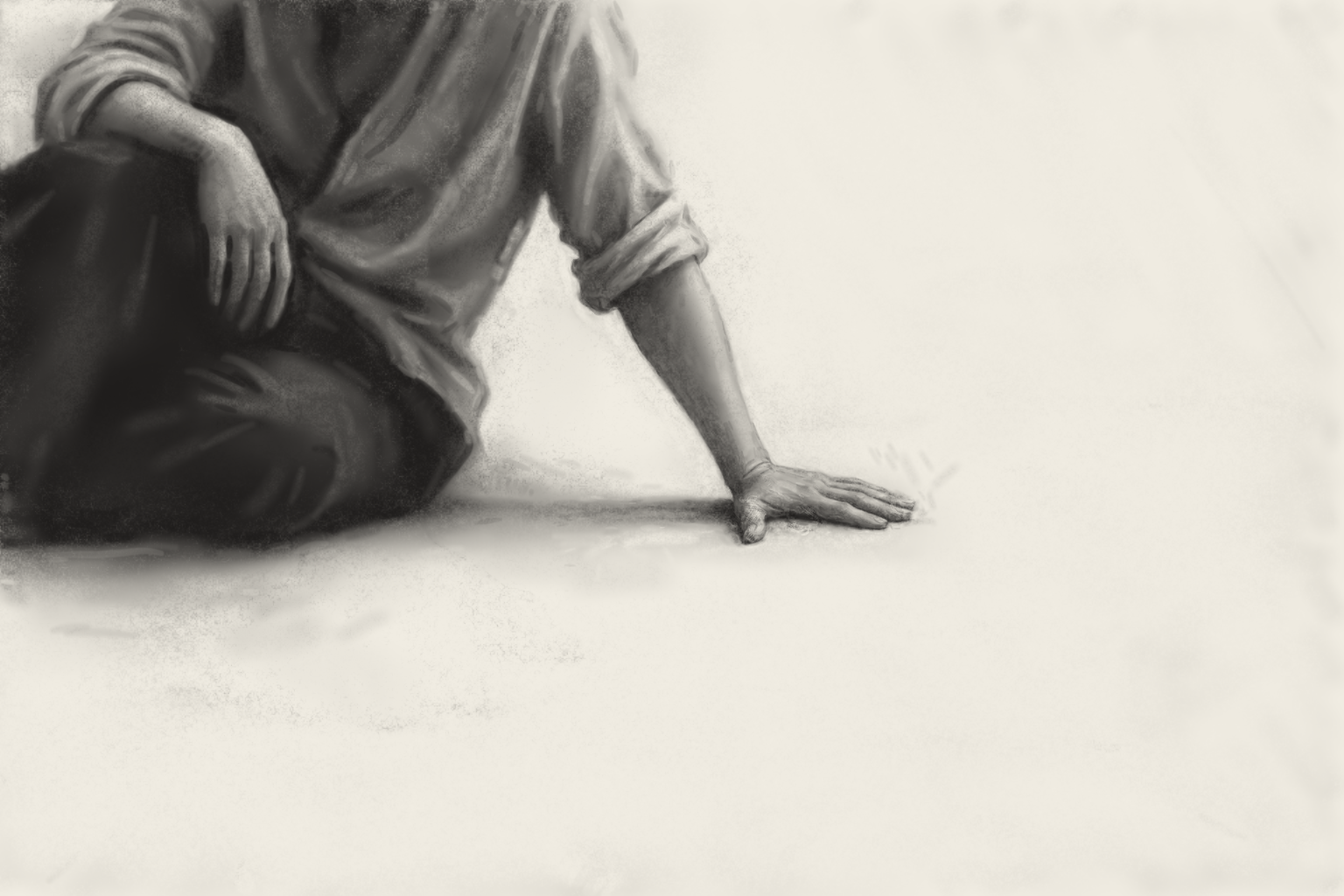
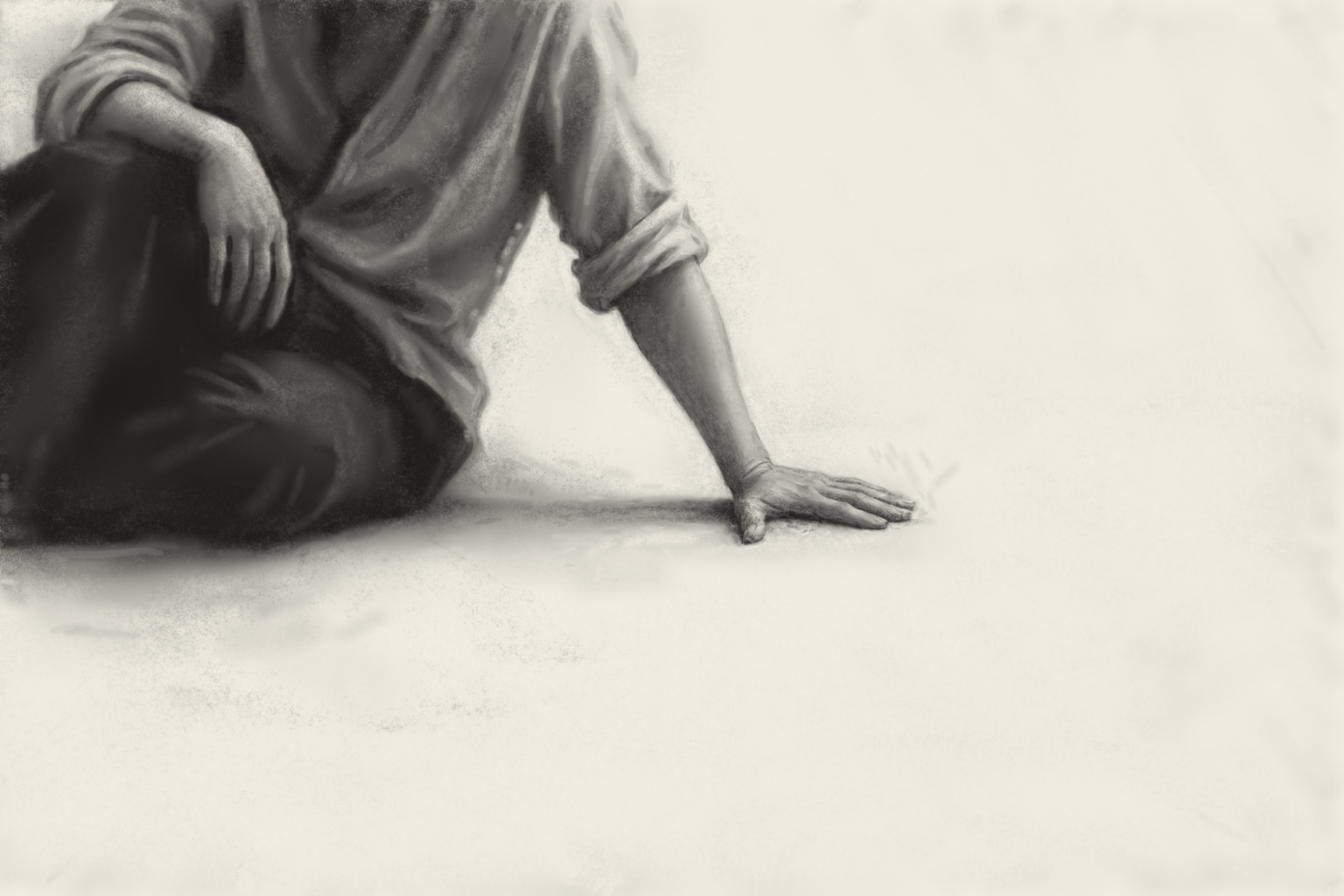
Figure
The locator follows the torso edge facing the open triangle. Both policies leave isolated pale interruptions rather than an intentionally lost edge. The supporting hand is protected and unchanged.
Located path on the whole source canvas
Box authored by assistant; orange path computed from canvas contrast. Median probe contrast 0.530; supported path fraction 100%.
Field
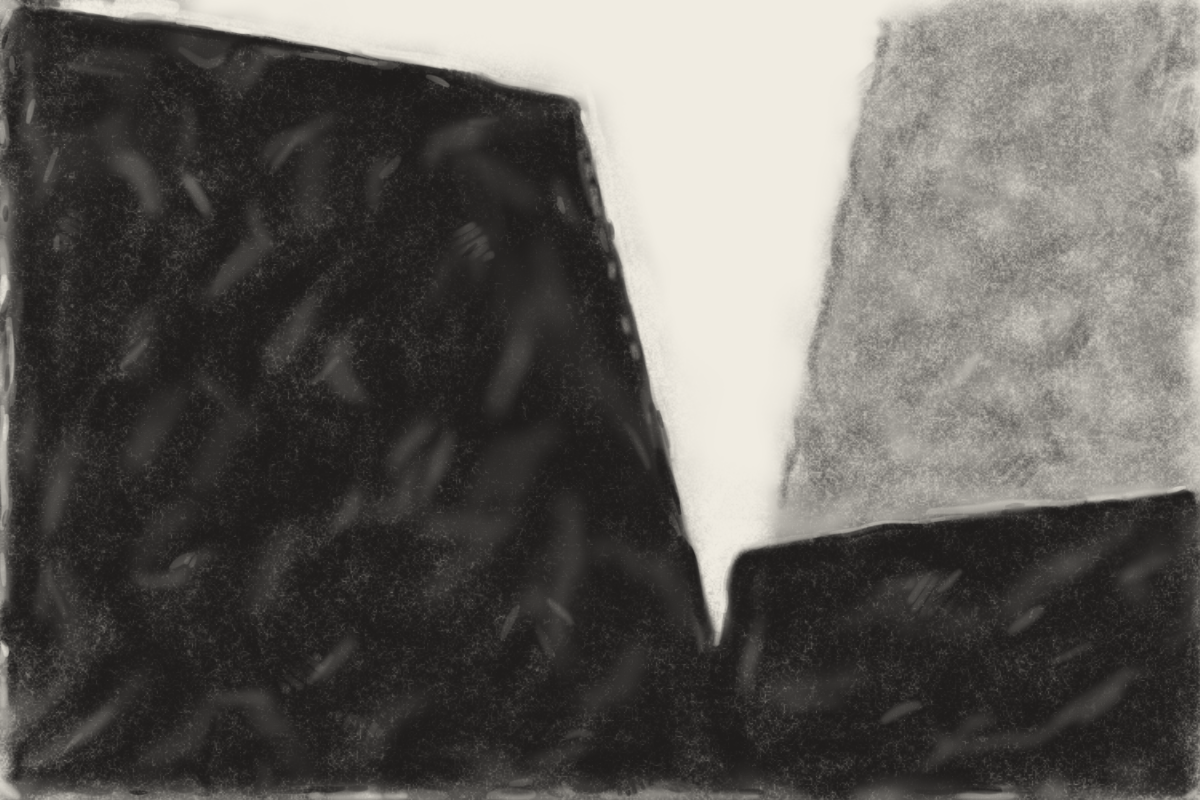
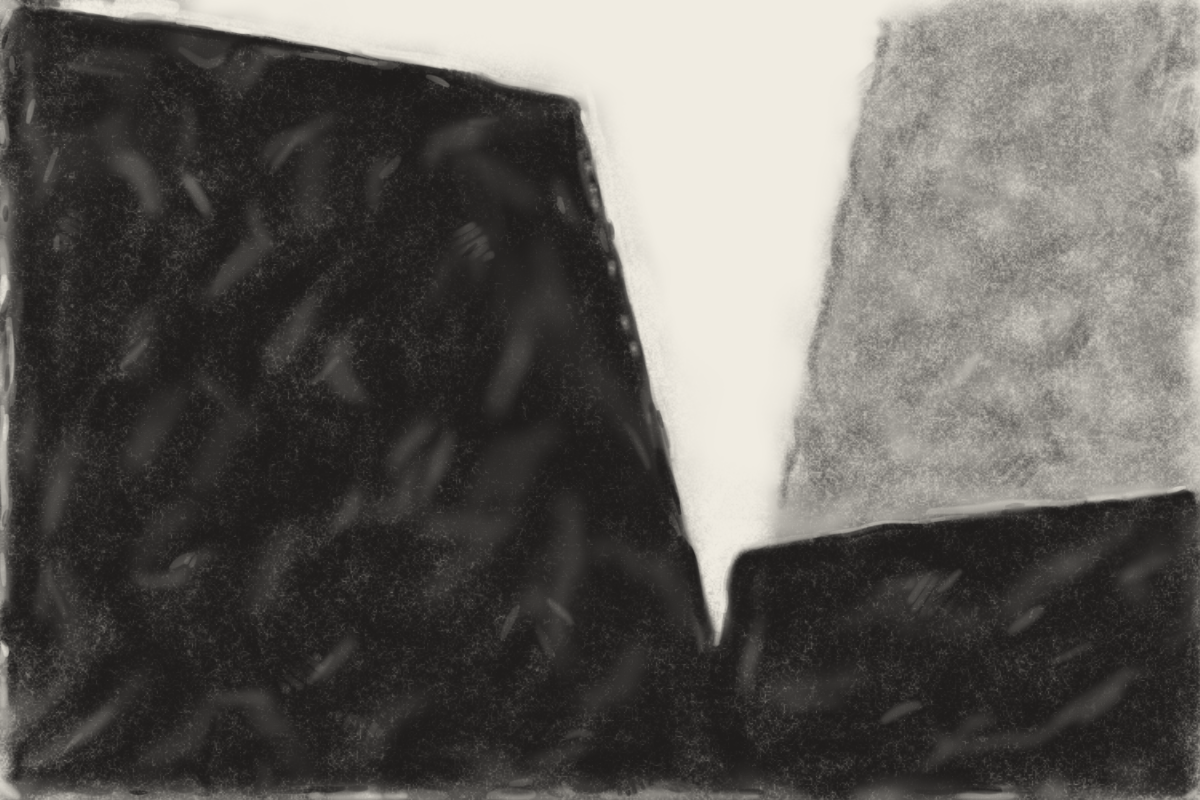
The locator follows the sloping edge of the dark field. Curves achieve a slightly larger proxy reduction, but pale beads along the boundary remain conspicuous. This does not earn an artistic preference.
Located path on the whole source canvas
Box authored by assistant; orange path computed from canvas contrast. Median probe contrast 0.880; supported path fraction 100%.
Interior
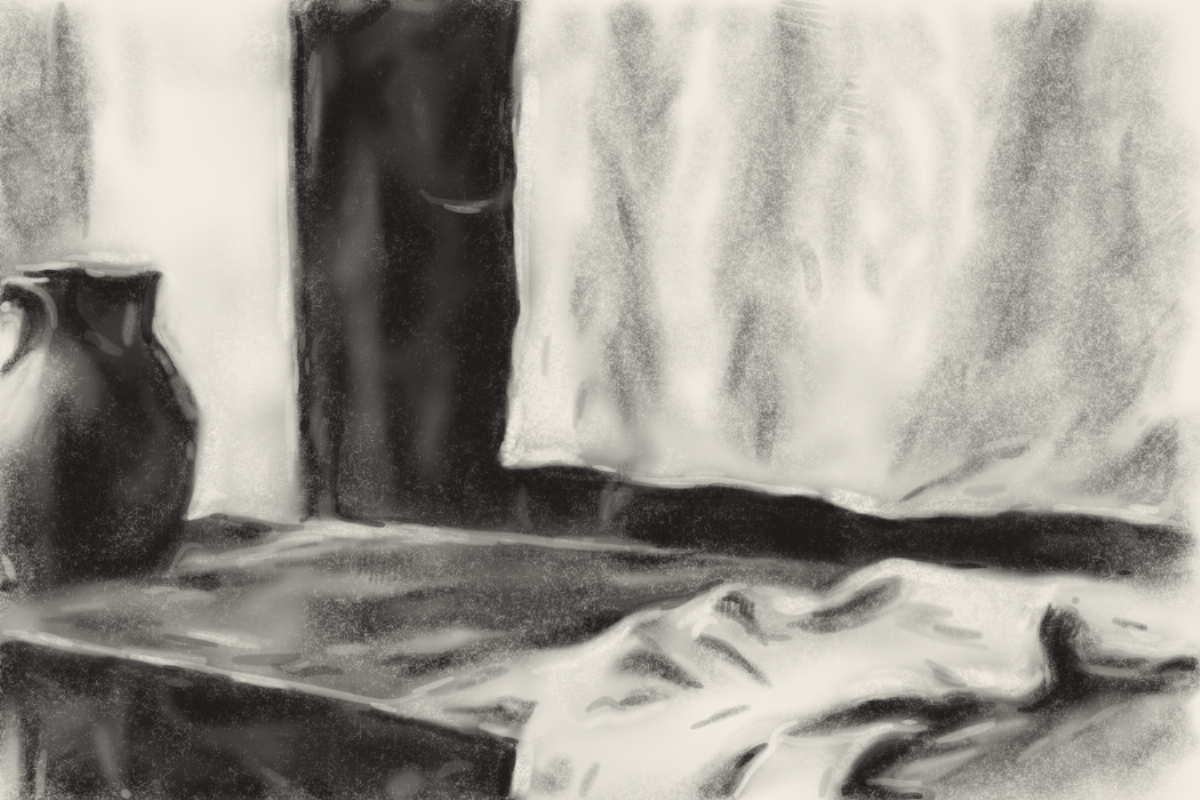
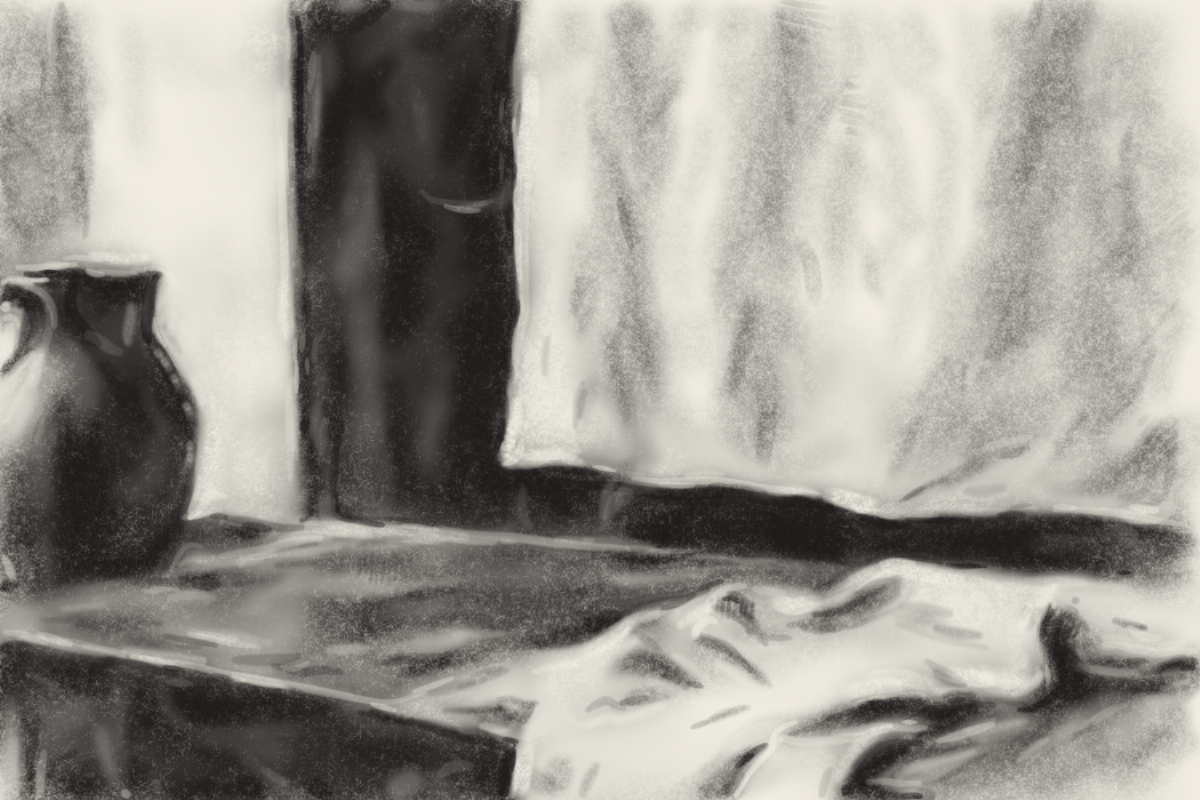
The locator follows the jug silhouette. Both policies make local light bites into that silhouette. Numerical softening has not demonstrated better volume or edge character.
Located path on the whole source canvas
Box authored by assistant; orange path computed from canvas contrast. Median probe contrast 0.760; supported path fraction 100%.
Process & methods
Location: the assistant supplies a broad search rectangle, orientation and contrast thresholds. The locator samples paired ink values across possible edges and follows a continuous high-contrast path using a movement penalty. It requires adequate median contrast and path coverage. A weak field produces an explicit refusal and an unchanged checkpoint. The path is fixed before action selection, so it cannot move during scoring to chase easier gains.
Gesture: the optional curved policy samples an arc-length neighborhood of that guide, fits a local quadratic, and renders three connected segments with different pressure levels. This is piecewise pressure, not continuous pressure or learned human motor control. Segment overlaps can create seams. The default straight policy is unchanged.
Selection: both policies render alternatives on trial canvases, measure actual results, enforce protected areas and cumulative change caps, then commit the best admissible proxy gain. Every committed branch replays exactly from its source. No new image-generation target was used for this development round.
Translation: edge-ridge/1 means locating visual contrast inside an authored scope. curved-pressure/1 means a quadratic path with three native pressure segments. Neither implies anatomical knowledge, compositional intent or artistic merit. Full definitions are stored with every checkpoint.
The acceptance rule is now the more revealing problem
The visual review rejects all six branches as artwork upgrades. Both stroke policies can lower the contrast metric through isolated light bites. The metric does not adequately distinguish a useful transition from damage to a silhouette. This is evidence against treating proxy improvement as artistic progress.
The next development should test preservation of edge continuity and form, including negative examples that lower local contrast while making the drawing worse. More elaborate brushes or more iterations against this same score would not answer that.
Scope remains limited: three canvases, one seed, six decisions per policy. Location inside a known area has improved; choosing which area matters is still the assistant’s task. The study remains closed on sitting 05.
Verification and records
New gesture tests and all previous intention, controller and studio tests passed. They cover horizontal and vertical location, weak-signal refusal, actual curved geometry, pressure variation, whole-bundle veto, replay, validation and the existing studio paths.