Visual stages, comparisons and decisions from the original run. Internal prompts, operating documents and downloadable implementation files are omitted. Some interactive comparisons are shown as separate images.
Give the mark a reason.
The Floor Takes It is closed as a study on sitting 05. Neither final generated alternative strengthened it enough to earn further native development. Separately, the studio now has a tested intention layer that can choose native actions without a new target image.
Intent → native alternatives → actual rendering → selection
The assistant authors the region or guide, the intention, thresholds and areas to protect. The code reads current canvas values, proposes up to twelve native width/pressure/location alternatives per round, renders them on trial canvases and measures what actually changed. Forbidden changes are rejected. The best positive scoring action is committed; the changed canvas is observed before another round. If none qualifies, it does nothing.
The trials below use the existing native canvas as a reference for reporting drift, with reference weight explicitly zero. There is no new generated image driving these marks. Each trial starts independently from the same source; their changes are not combined or promoted into the artwork.
Score = improvement in the declared proxy − weighted reference regression − weighted amount of change. Reference weight may be enabled in other jobs, so resemblance can be one consideration without being the sole requirement. The thresholds and weights are authored policy choices; they are not calibrated aesthetic measures.
Three real-canvas trials
| Intention | Rendered candidates | Accepted | Proxy loss, before → after | Accepted away from reference |
|---|---|---|---|---|
| reserve-floor | 96 | 8 | 0.000452 → 0.000404 | 8 |
| join-clothing | 20 | 2 | 0.004858 → 0.003677 | 2 |
| release-inner-edge | 0 | 0 | 0.000000 → 0.000000 | 0 |
Do not compare loss magnitudes across kernels: they measure different things. The reference-only control began exactly at its reference, so rejecting changes is expected. It isolates the selection difference; it is not an artist-quality benchmark.
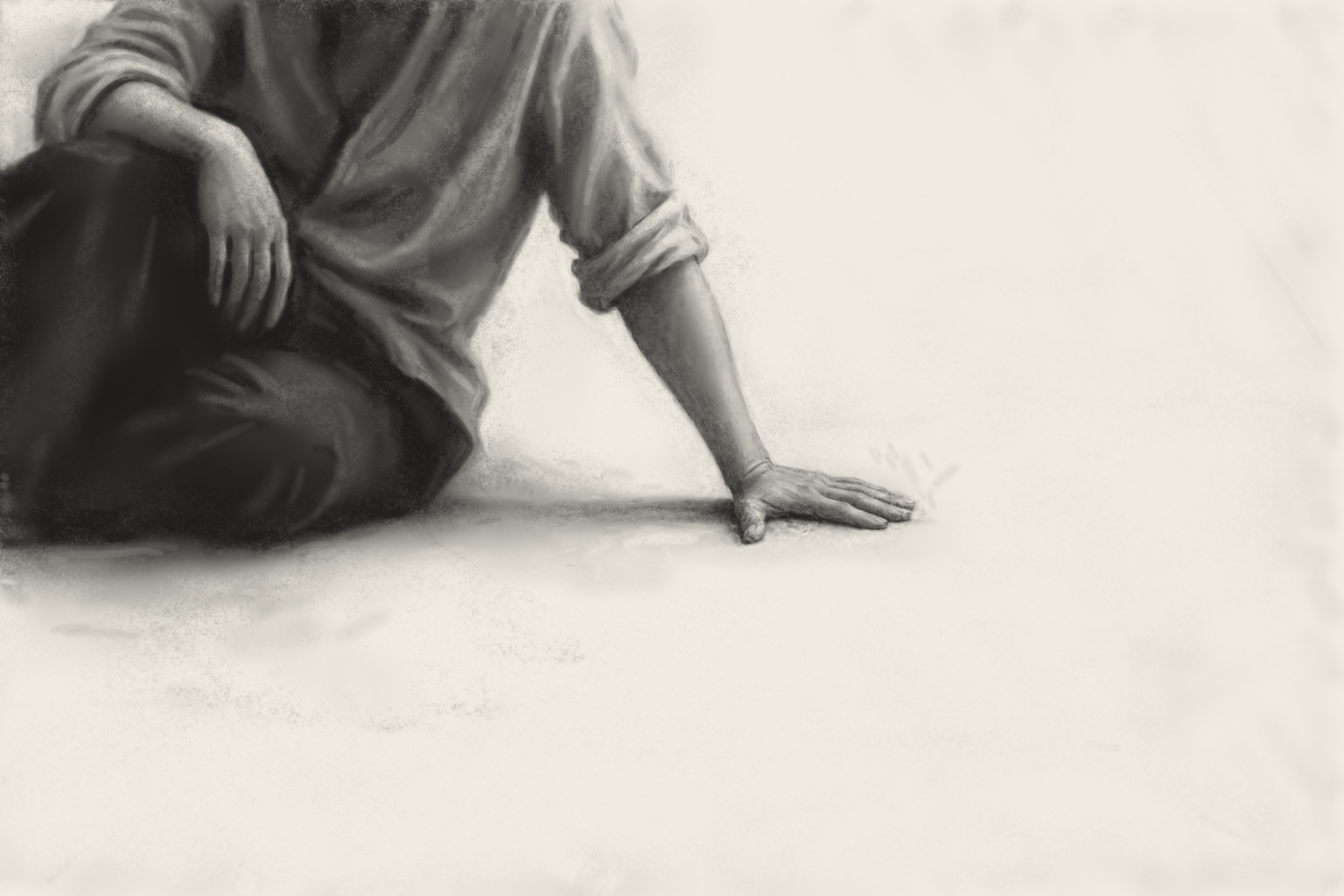
reserve-floor
Eight lifts locally reduce residual floor pigment. The visual difference is modest; it is an execution demonstration, not evidence that the whole drawing improved.
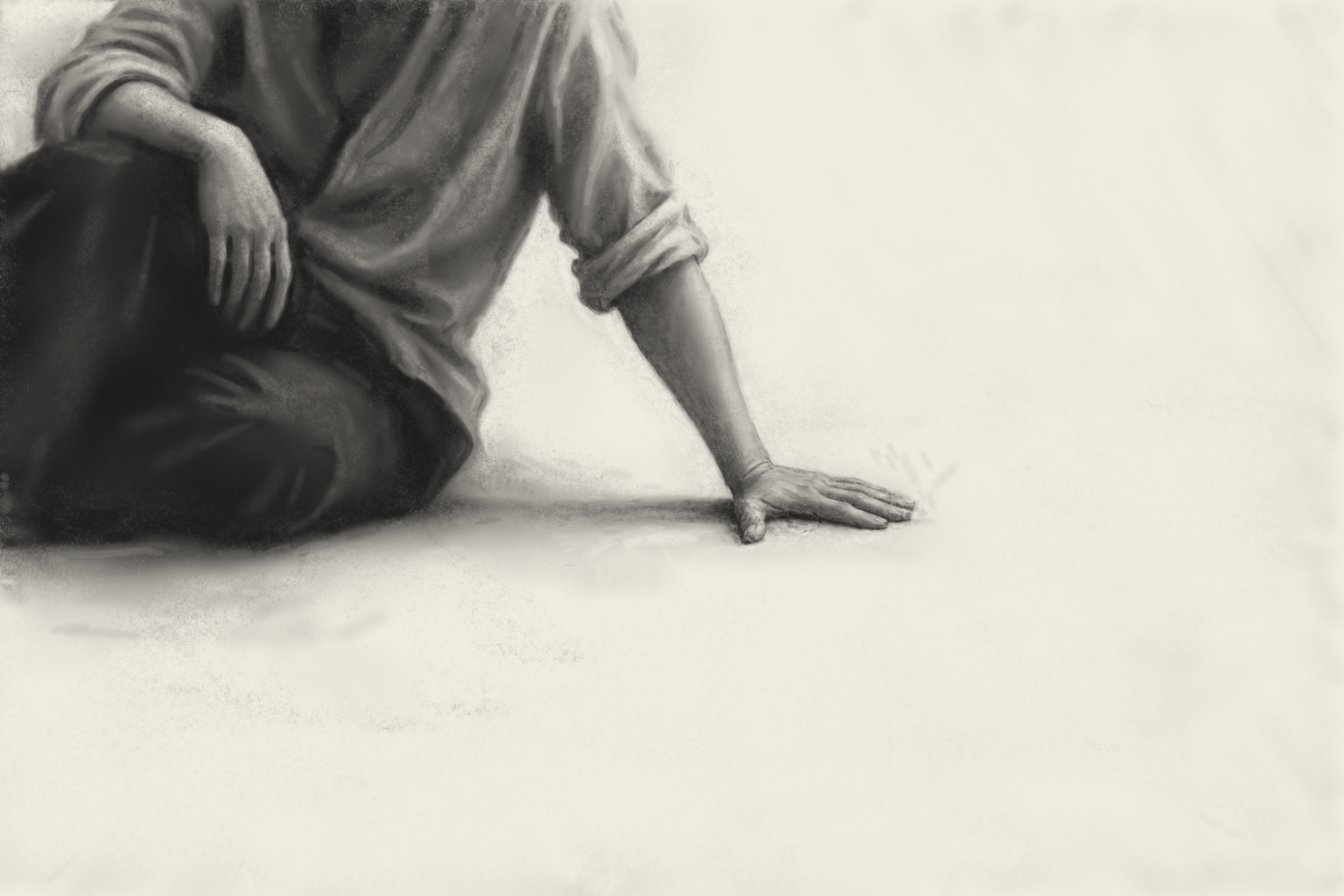
First-round alternatives, actually rendered
join-clothing
Two deposits darken the authored corridor. That improves the declared proxy but does not prove coherent clothing or form. No artwork promotion.
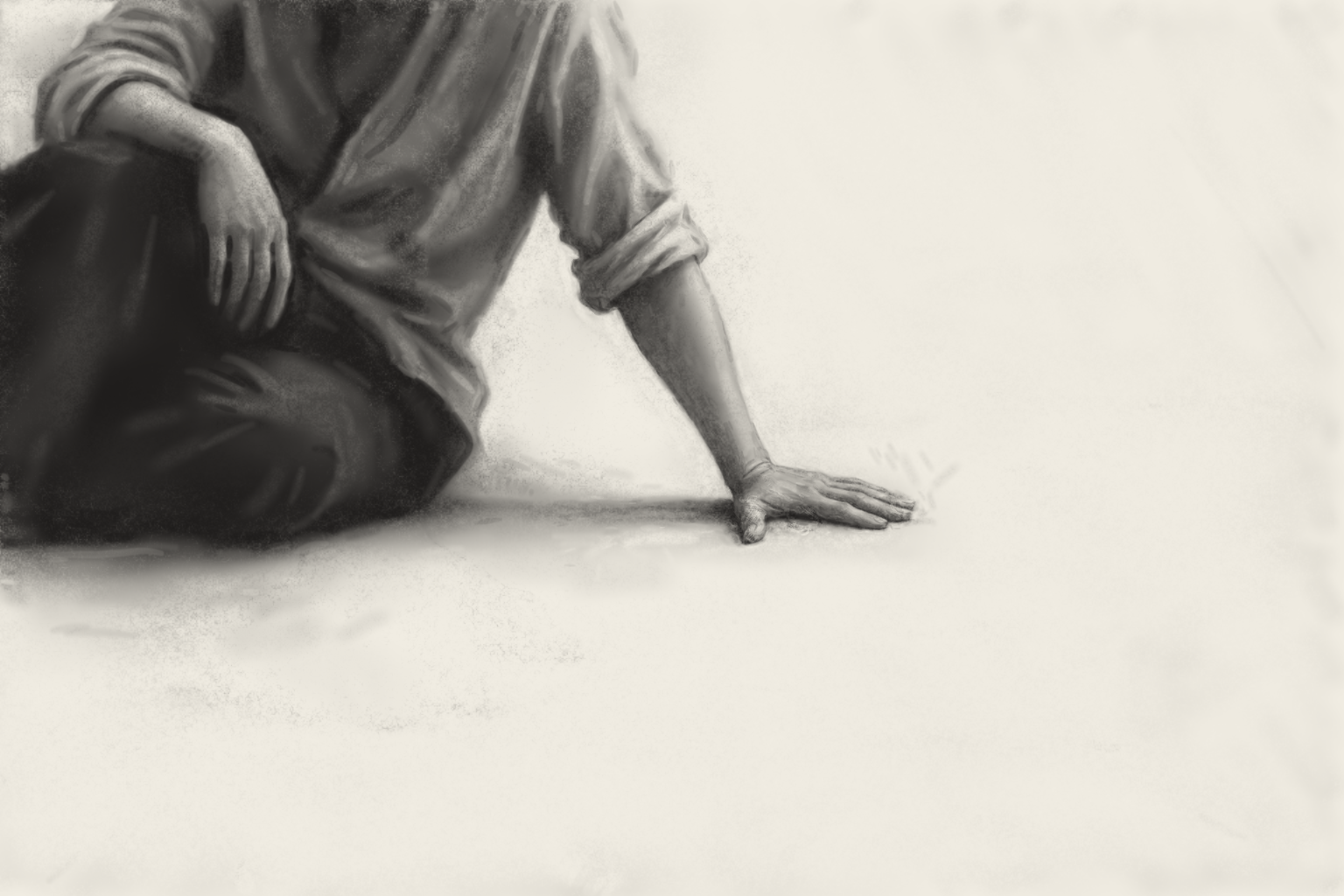
First-round alternatives, actually rendered
release-inner-edge
No change. The chosen probes already satisfy the contrast threshold. This is a useful refusal, but also a warning that the authored guide may not locate the edge we meant.
Every kernel has a declared meaning
Normalized ink ranges from zero for paper to one for the medium’s dark value. These versioned translations are stored with each checkpoint. Unknown kernel names and versions are rejected.
| Kernel | Translation and measurement | Cannot establish |
|---|---|---|
| reserve-paper / v1 | Reduce pigment in an authored rectangle toward a declared maximum. Mean squared excess normalized ink over maxInk; all pixels in the rectangle. | Does not know whether an empty area is expressive or whether it removes needed form. |
| connect-mass / v1 | Strengthen a sampled dark corridor along an authored guide. Mean squared ink deficit below minInk at guide and lateral probes. | A sampled corridor proxy, not topological connectivity or understanding of a body. |
| soften-edge / v1 | Reduce contrast at paired probes across an authored edge segment. Mean squared excess paired-probe contrast over maxContrast. | Local contrast reduction, not proof of an expressive broken or lost edge. |
Hard constraints protect pixels outside the allowed rectangle and inside explicitly protected areas. Change limits accumulate from the intention’s starting canvas, so repeated small marks cannot bypass them. The winner’s commands replay exactly from the recorded source.
What this still needs
This is a narrow action-selection prototype. Guides and semantic placement remain authored numeric geometry. The repertoire is small and can still make bands, stripes or patchy erasures. A better proxy score can be a worse artistic decision. The actual-result readings above therefore keep all three trials as experiments.
The next development round should improve how intentions are located and how curved, pressure-varying action bundles are proposed, then test whether visual critique agrees with their measured gains across several images. A future system may author those choices; this one does not yet do so.
Verification and methods
The intention tests and existing controller/studio tests passed: rendered gain, lifting, synthetic edge reduction, replay, hard protection, cumulative limits, strict kernels, and CLI validation. The original studio current/hybrid paths still pass their integration tests.