Visual stages, comparisons and decisions from the original run. Internal prompts, operating documents and downloadable implementation files are omitted. Some interactive comparisons are shown as separate images.
Body. Brace. Floor.
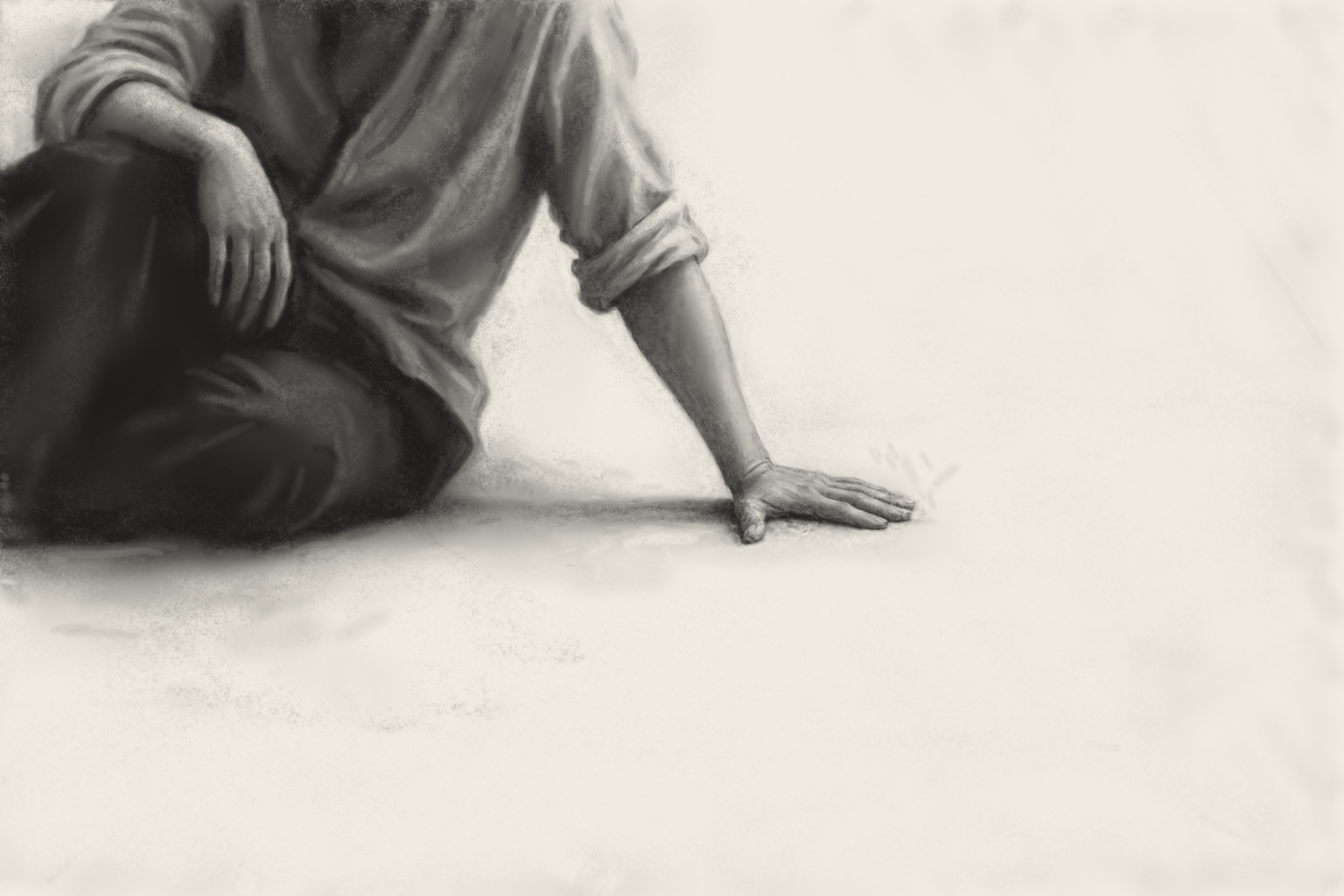
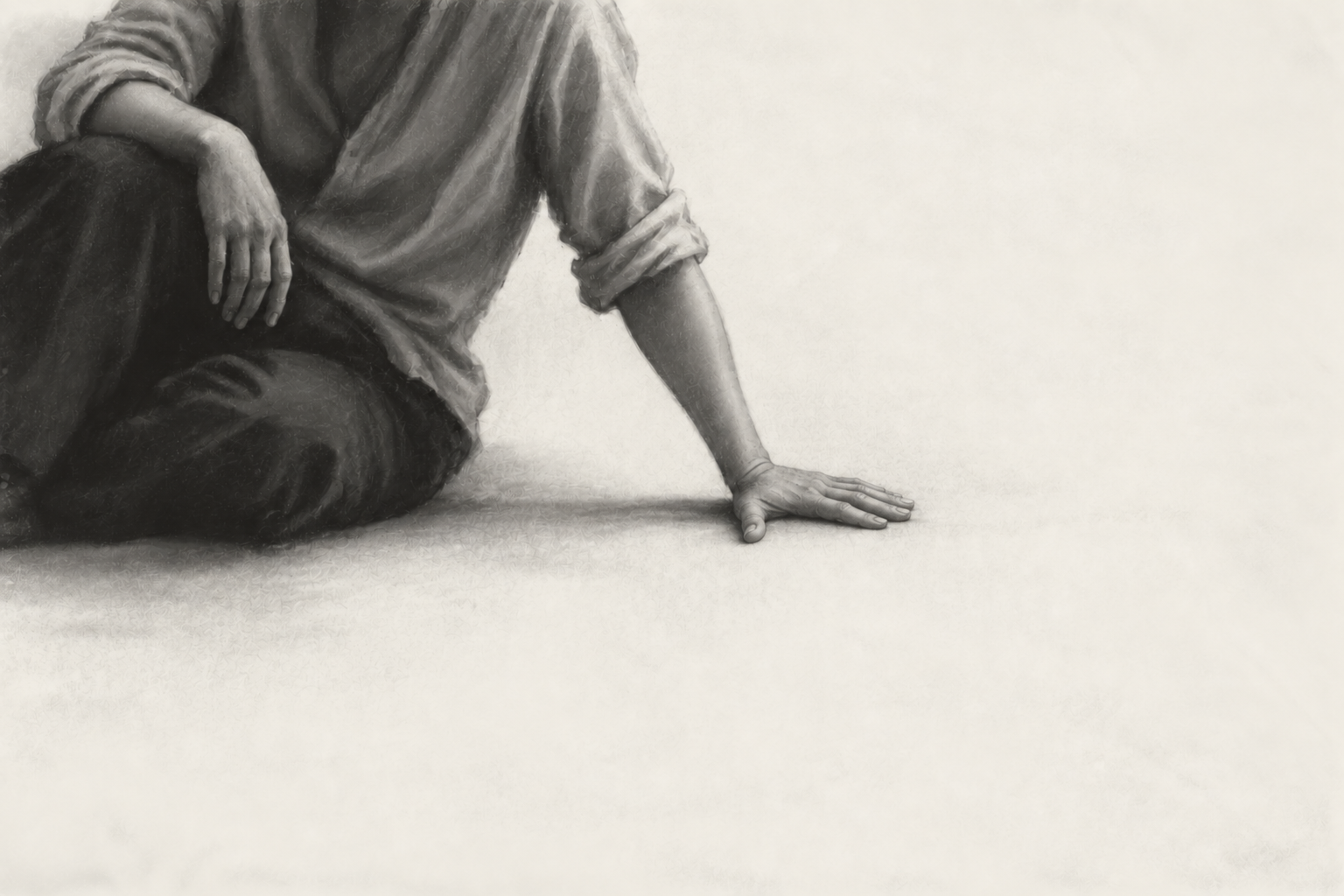
A diagonal arm now braces the seated body. The triangular interval beneath it participates in the image; the hand is one support point within a larger relation. This is the new working direction, with unresolved execution and expressive questions recorded below.
Observation led to a compositional change
The observation of sitting 04 was that quieting surfaces had not changed the foreground hand’s dominance. Two independent generated proposals tested different spatial relations using the actual native image as subject reference.
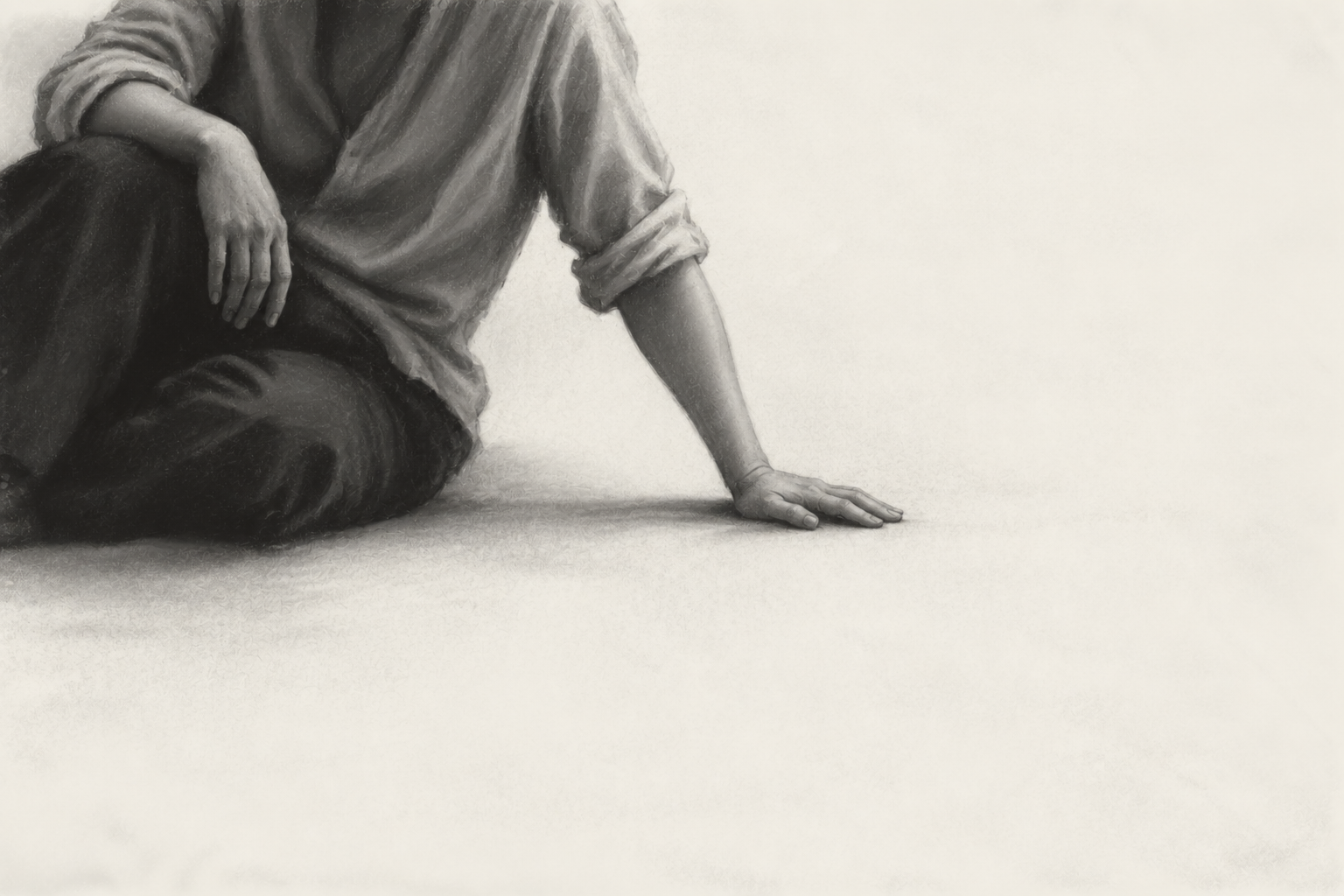
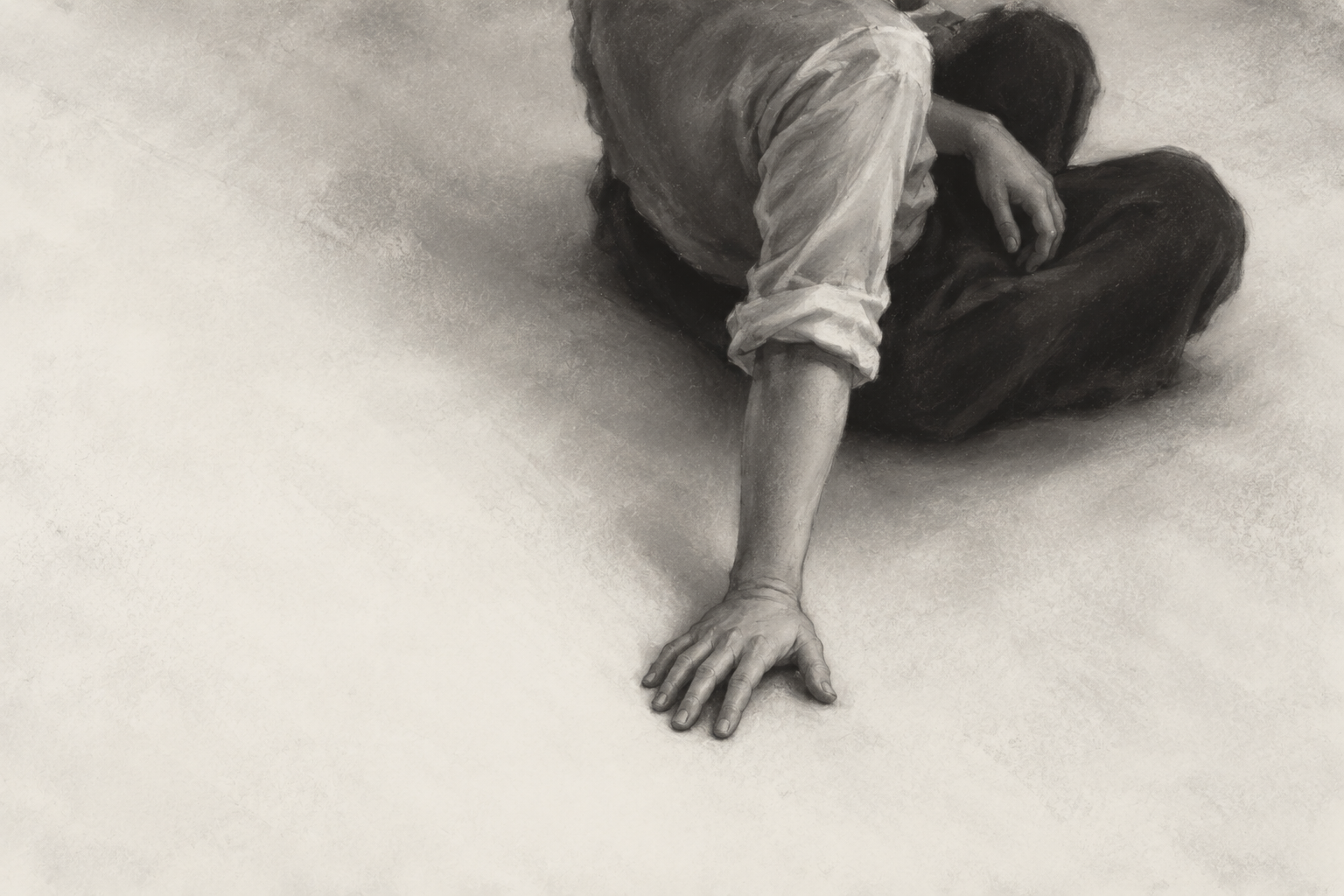
The generated alternatives change body presentation and clothing. This is a same-brief exploration, not an identity-preserving portrait edit. A was selected for the relation of support and space, not for its clothing detail.
The retained direction changes
Δ — a direction worth pursuing
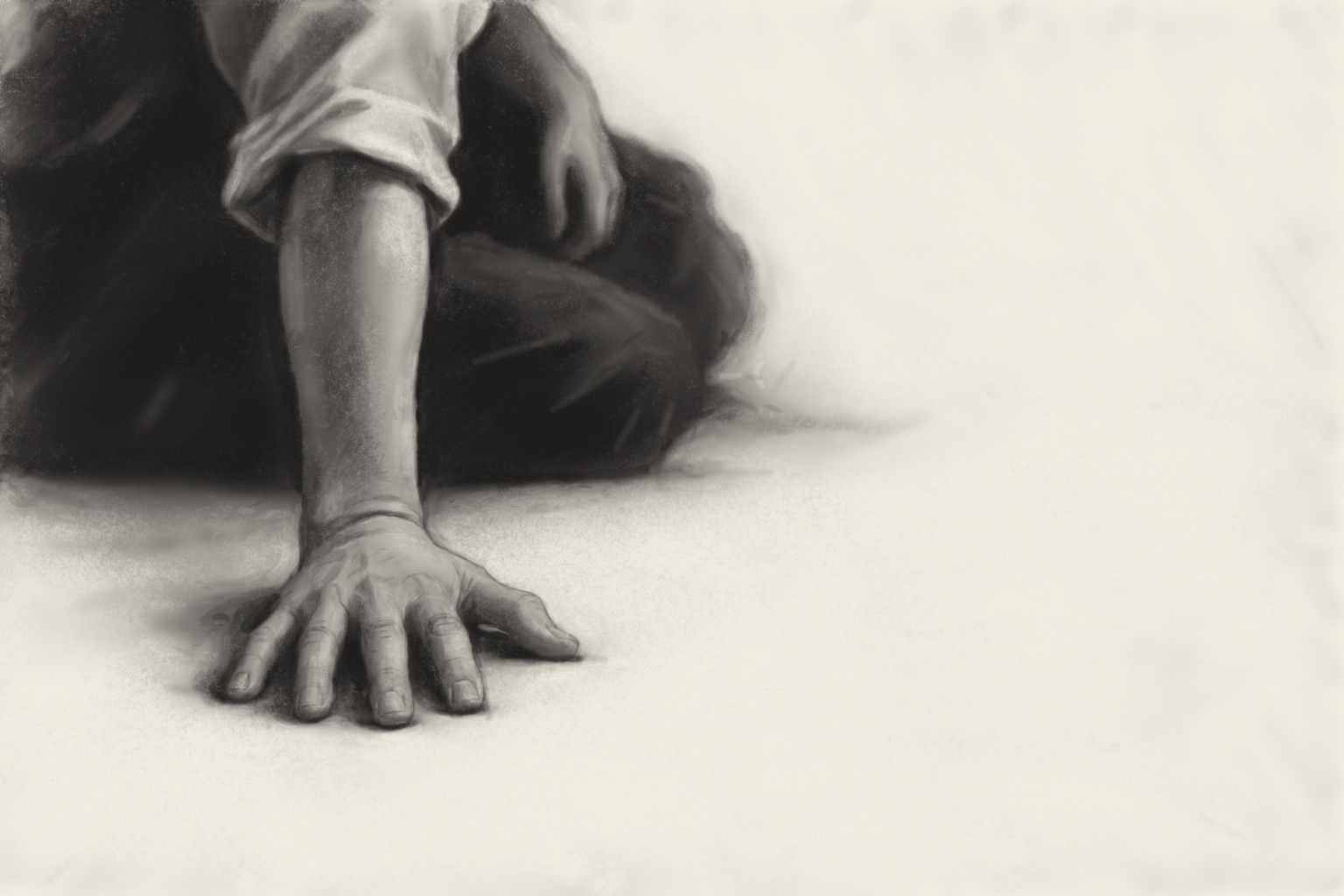
The native drawing carries the new spatial organization. The old vertical arm and foreground hand have largely disappeared through lifting. The support hand is smaller relative to the visible body, and the opening beneath the arm gives the empty floor a more specific role.
The first native result left the supporting finger overlaps uncertain. A targeted proposal clarified thumb and four fingers; the native clarification makes them easier to account for, although the fingertips remain soft and stray marks surround them. This is a visual check with limitations, not proof of solved anatomy.
Clothing has become busy again. The pose is stable and composed; the intended tension of weight is more explicit spatially, but restrained. These are remaining issues in the proposal and result. The next meaningful question is whether the torso and brace create enough contrary force, rather than whether we can polish the hand further.
Decision: promote this spatial branch as the working direction. Preserve sitting 04 and all intermediate checkpoints. Route Δ, not completion.
Process & methods
The local Hands-based runner restored sitting 04 by hash on a separate branch. A whole-field hybrid passage reconstructed the image using broad 300-pixel and finer 600-pixel planning views. A planned closer view then covered the supporting forearm, wrist, hand and ground. Critique read the actual output after these stages.
Because the supporting digits remained uncertain, the built-in image generator revised A’s hand. Only a 300 × 200 native rectangle at (780, 480), spanning the hand and nearby floor, was allowed to follow that clarification. All pixels outside that rectangle were checked unchanged. The full generated edit was not pasted or substituted into the native canvas.
Supporting-hand clarification and intermediate native result
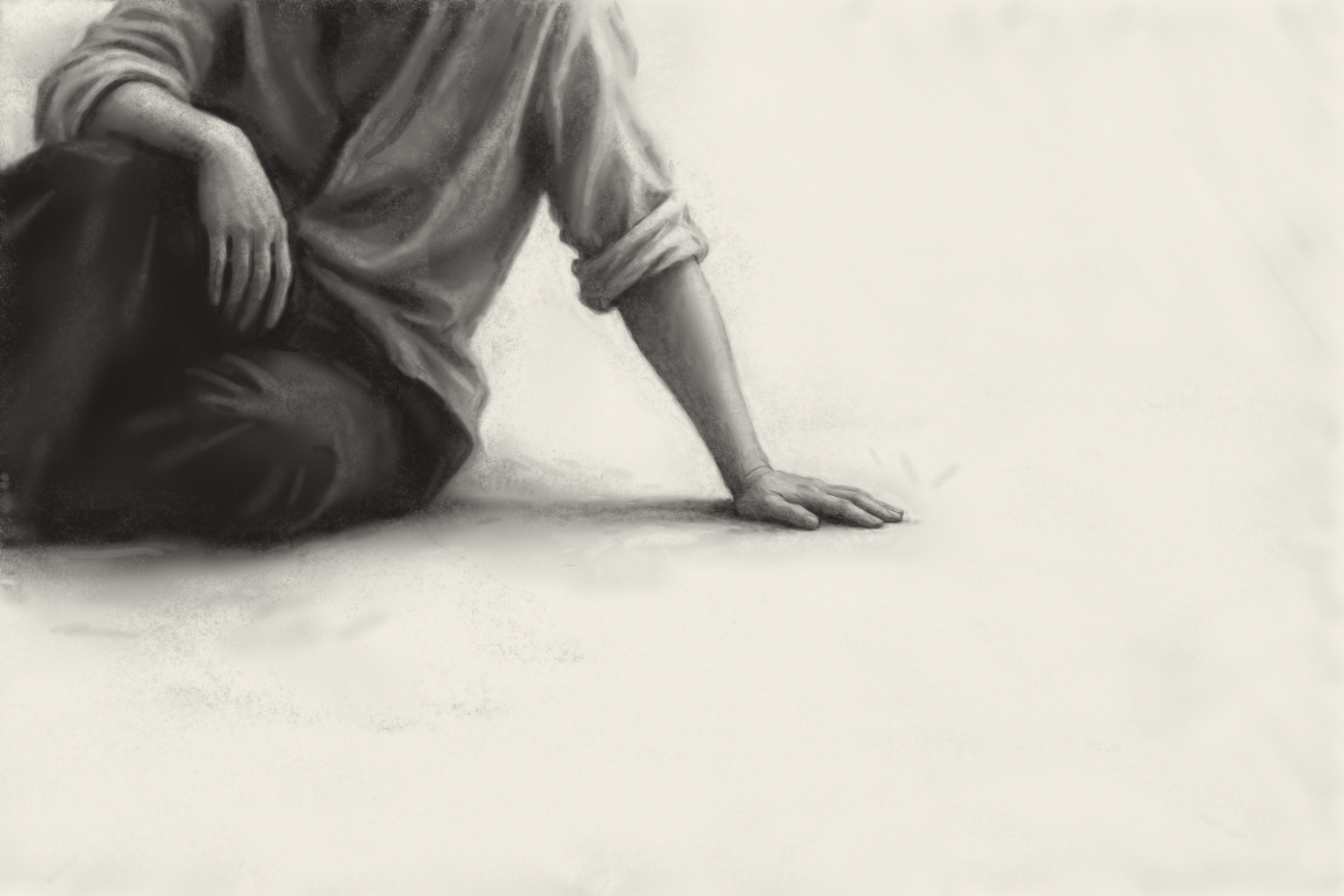
Every accepted command deposits or lifts pigment on the scalar canvas. Candidate acceptance follows actual pixel and gradient error, which measures target execution rather than artistic quality. Every checkpoint replayed exactly from its recorded source on this runtime. No renderer code changed.
| Stage | Accepted | Lifts | Execution stop |
|---|---|---|---|
| 06-counterweight-broad | 377 | 234 | no-useful-actual-marks |
| 06-counterweight-current | 1272 | 684 | attempt-budget |
| 07-brace-current | 839 | 465 | attempt-budget |
| 08-accounted-contact-current | 677 | 343 | no-useful-actual-marks |
Stop reasons are controller limits, not artistic conclusions. The assistant authored the selection and critiques; no independent critic agent ran.