Visual stages, comparisons and decisions from the original run. Internal prompts, operating documents and downloadable implementation files are omitted. Some interactive comparisons are shown as separate images.
Keep the weight.
Quiet the field.
The dimensional hand survives. The floor and seated mass compete less for attention. This branch earns retention over sitting 02, with an observation pause rather than a claim of completion.
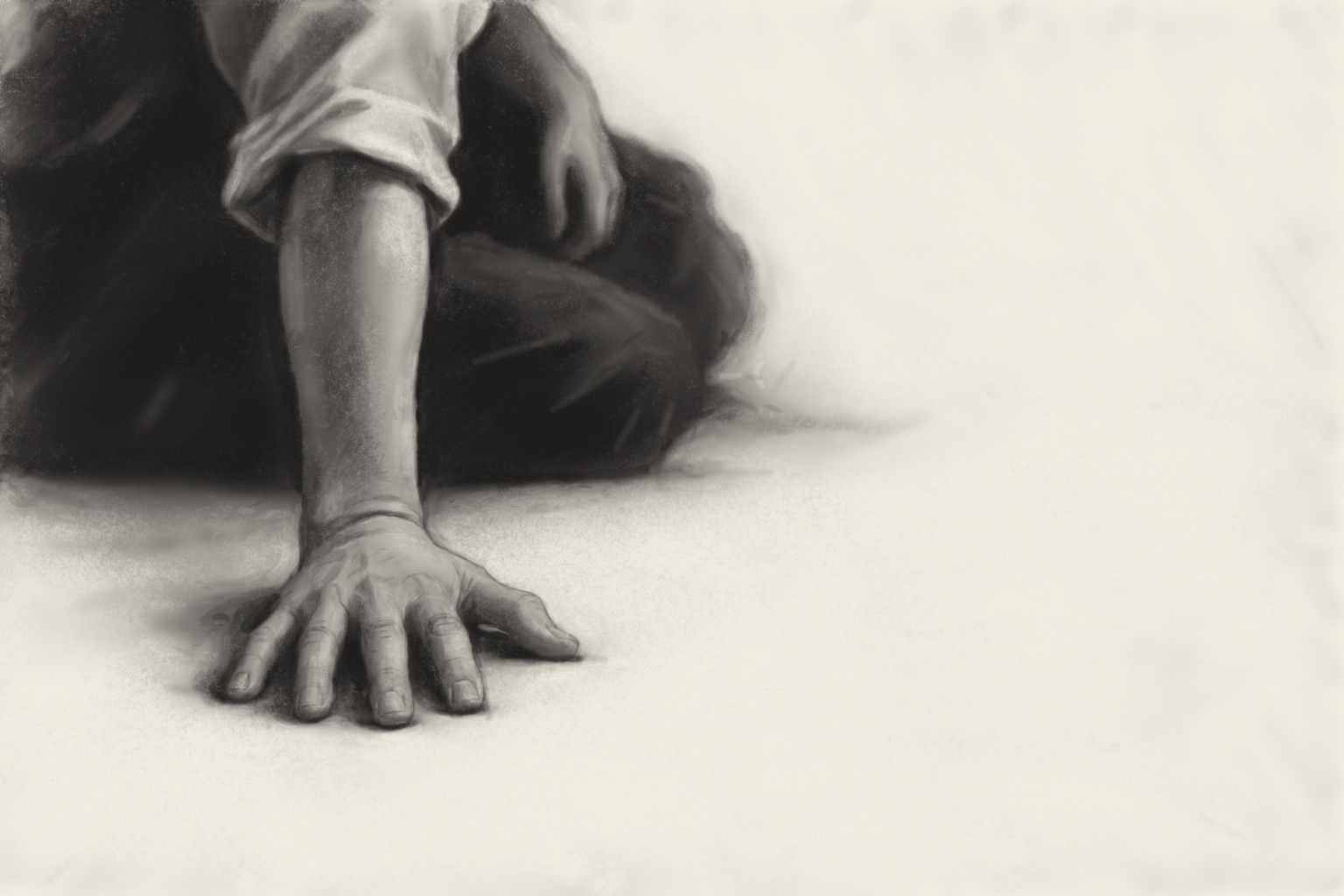
What this version keeps
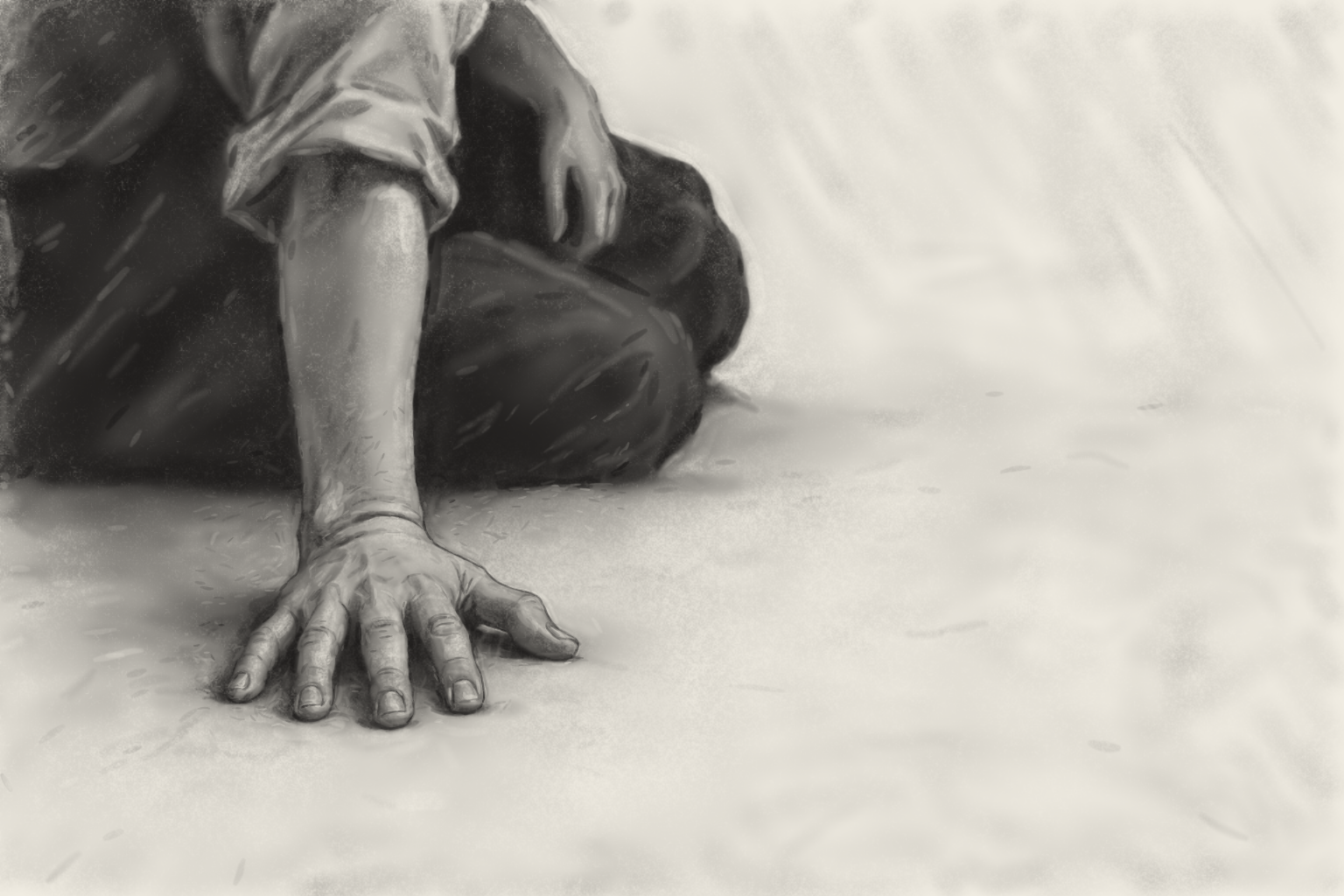
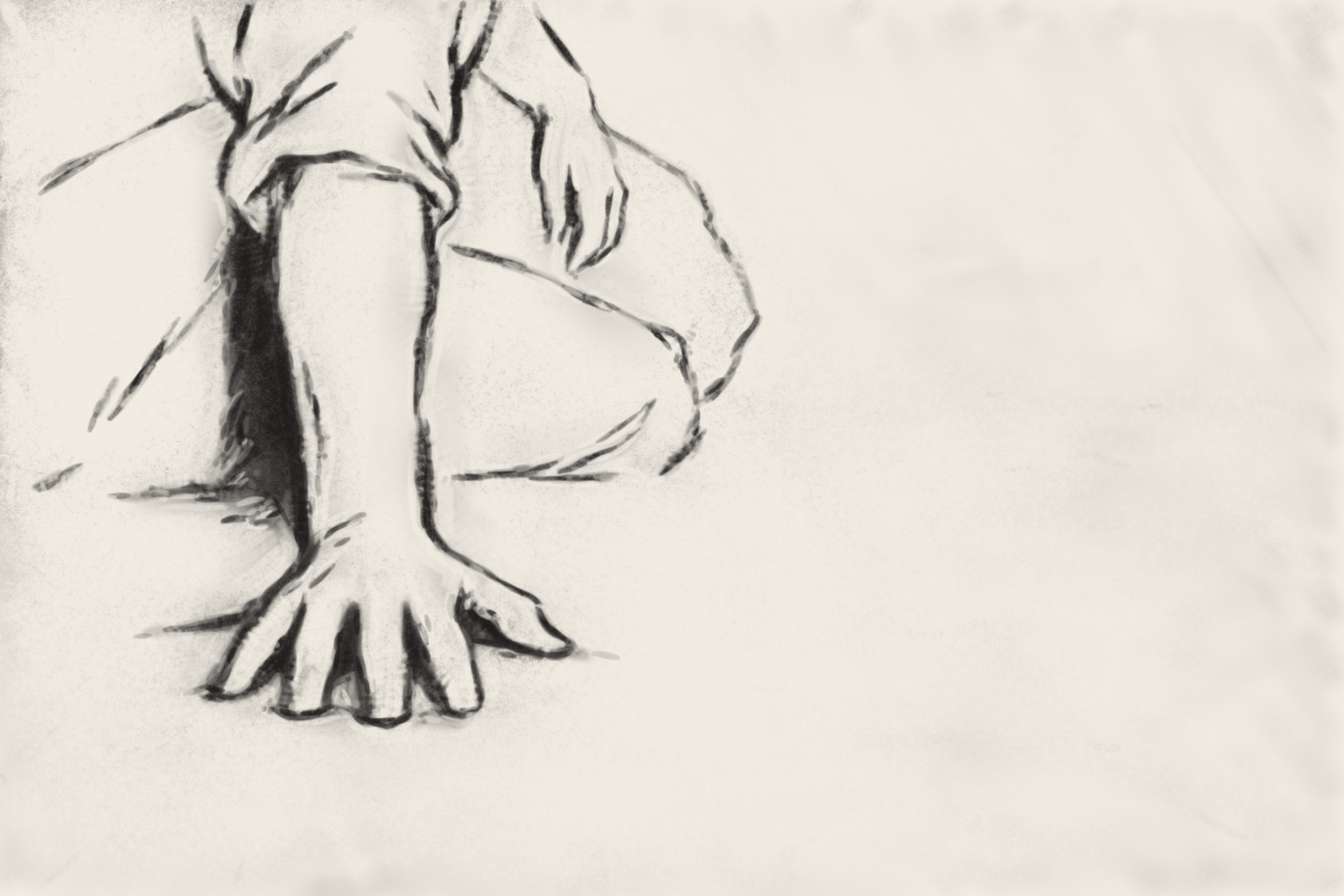
Sitting 04 branches directly from 02. It keeps load-bearing palm and wrist planes, adds a clearer middle-value side to the forearm, and removes much of the surrounding activity. The comparison supports a limited but visible gain; it does not establish that the work has found its final expressive direction.
O — observe the retained gain
Four unequal fingers and a thumb remain accounted for. The hand has volume and its contact with the floor remains more convincing than the reduction branch. The seated mass now reads with fewer interruptions, while the open floor provides a quieter interval.
The hierarchy is only partly resolved. The hand is still more described than the rest; native shading is soft and smooth, and angular remnants remain in the clothing. We have improved coherence without proving that the isolated foreground hand is the strongest possible expressive choice.
Decision: promote sitting 04 as the working version. O means a pause to look at the whole image, not finished work. The next intervention should name a consequential spatial or expressive change. More finger detail or a lower target error would not, by themselves, justify it.
Process & methods
The built-in image generator received the actual sitting 02 native drawing and a brief to preserve pressure-bearing planes while simplifying clothing and floor. Before execution, the assistant checked four fingers plus thumb, palm volume, and contact. The hanging hand remains suggestive rather than fully resolved; the proposal also retained some nail detail despite the prompt.
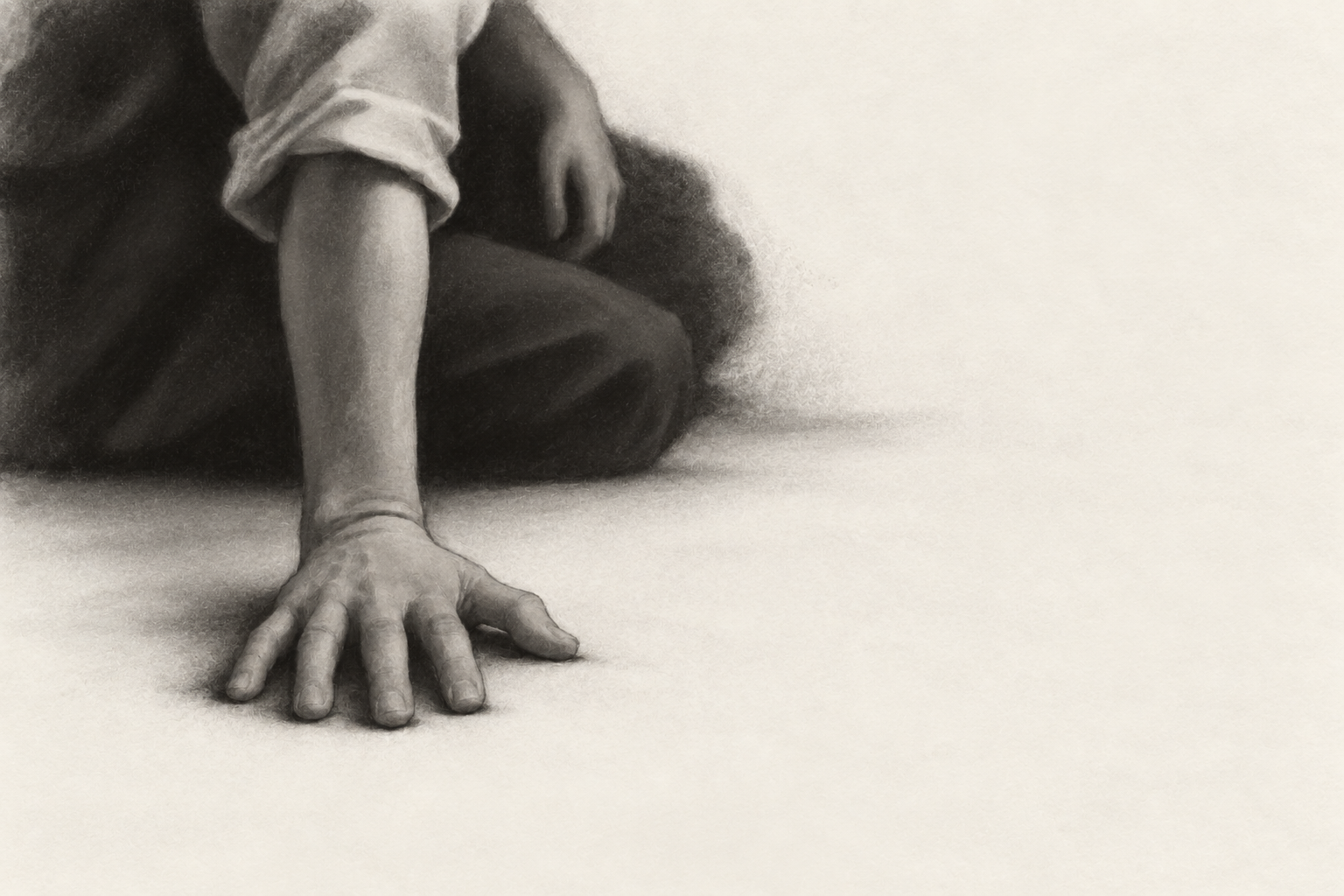
The local Hands-based runner restored sitting 02’s scalar canvas by hash. One whole-canvas hybrid sitting used a broad 300-pixel planning view followed by a finer 600-pixel view. There was no separate hand-polishing pass. All changes came from recorded native deposition or lifting commands; generated pixels were not pasted.
Candidate acceptance uses actual rendered pixel and gradient error against the proposal. It does not measure artistic merit. Both stages replayed exactly from the source on this runtime. The assistant then compared the result with the retained and rejected predecessors; no independent critic agent was involved and no renderer code changed.
| Stage | Accepted | Lifts | Execution stop |
|---|---|---|---|
| 05-selective-broad | 401 | 259 | attempt-budget |
| 05-selective-current | 922 | 491 | attempt-budget |
The attempt budgets ended execution. The observation route is a separate artistic judgment, not an automatic conclusion from those stops.