Visual stages, comparisons and decisions from the original run. Internal prompts, operating documents and downloadable implementation files are omitted. Some interactive comparisons are shown as separate images.
What must remain?
Three proposals, one native branch, one retention decision. The reduction changes the drawing substantially, but weakens the hand’s physical support. Sitting 02 remains the primary drawing.
Reading the set
These are three separate built-in image-generator calls, each using the same actual native sitting 02 as reference. They are external visual proposals, not native executions.
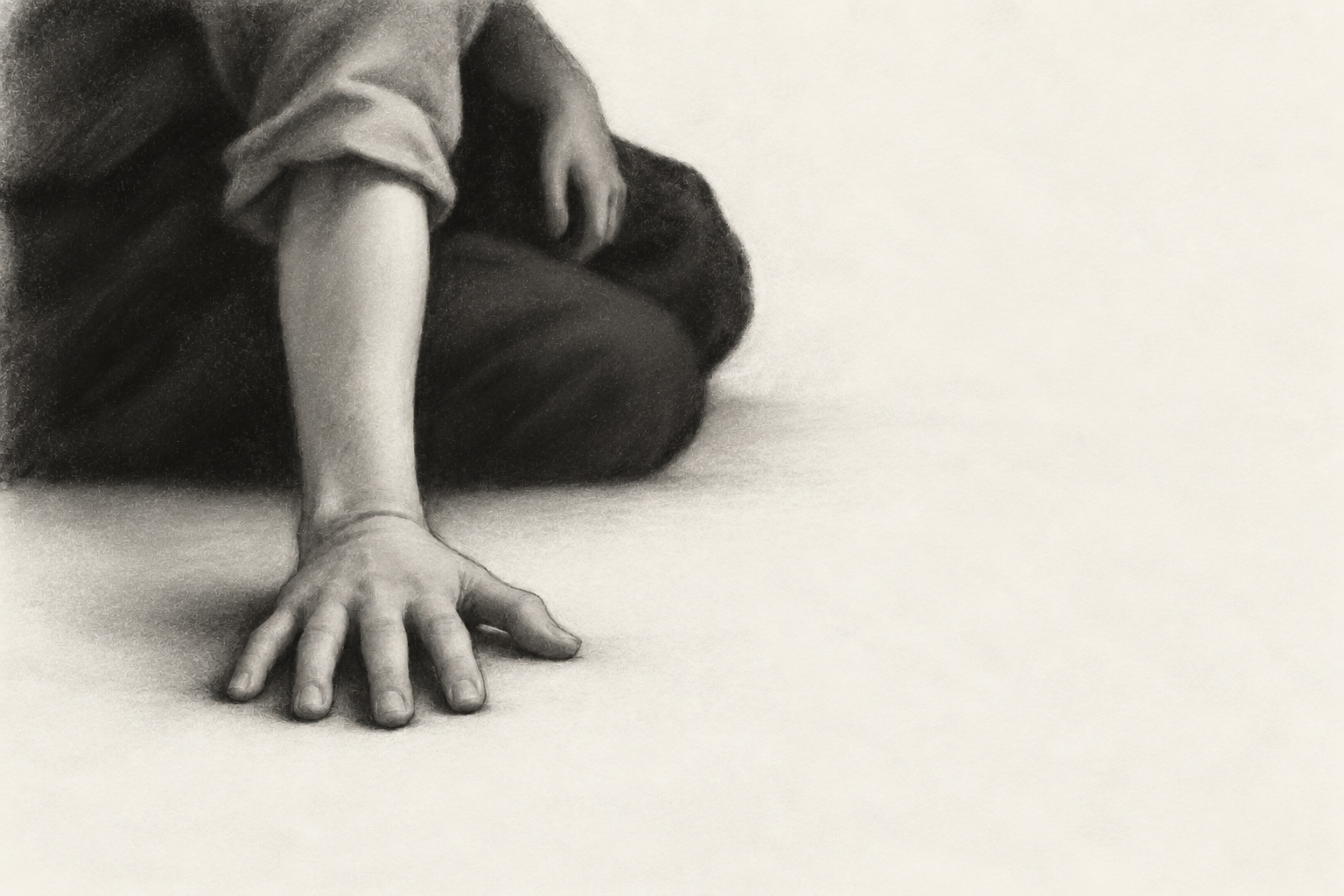
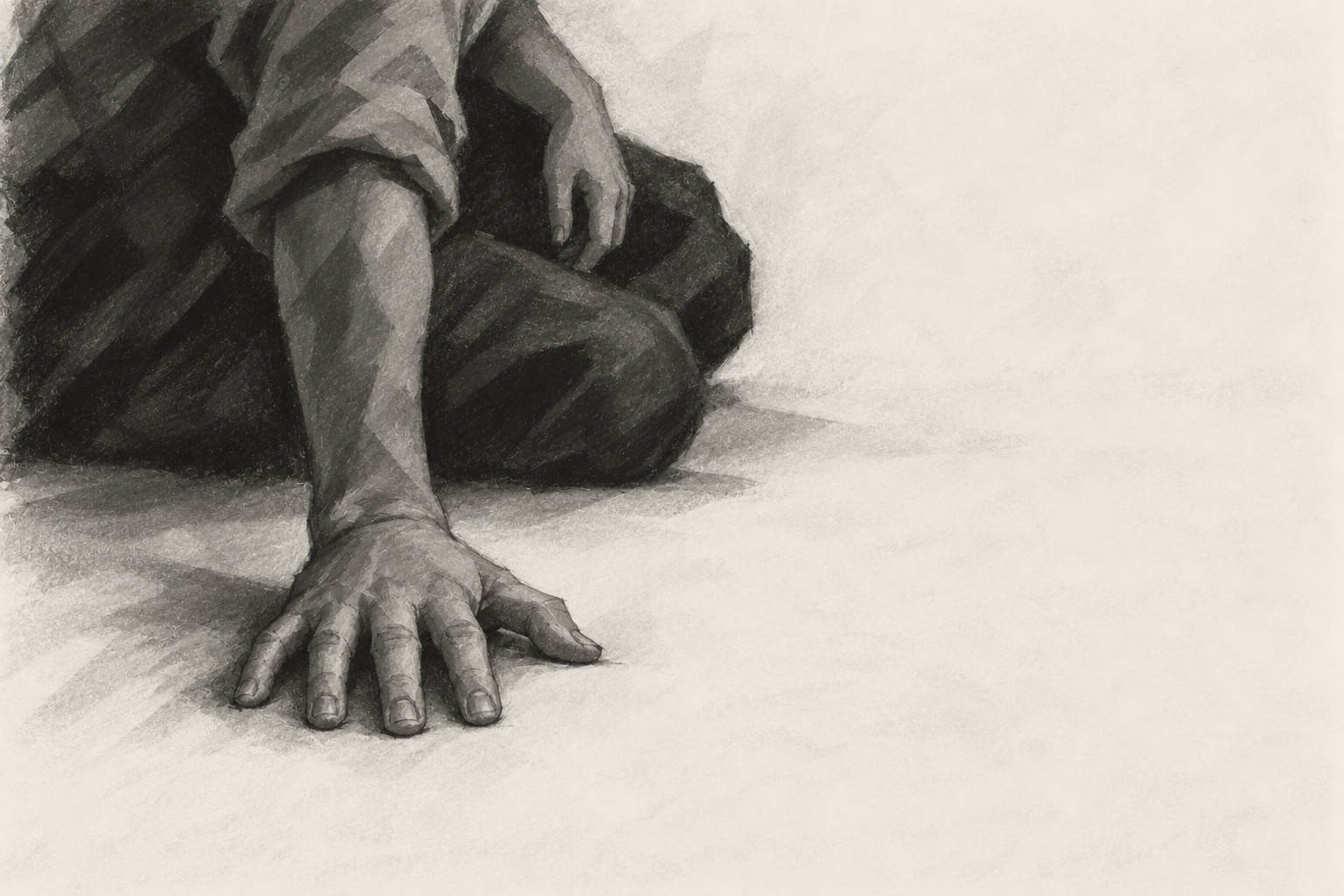
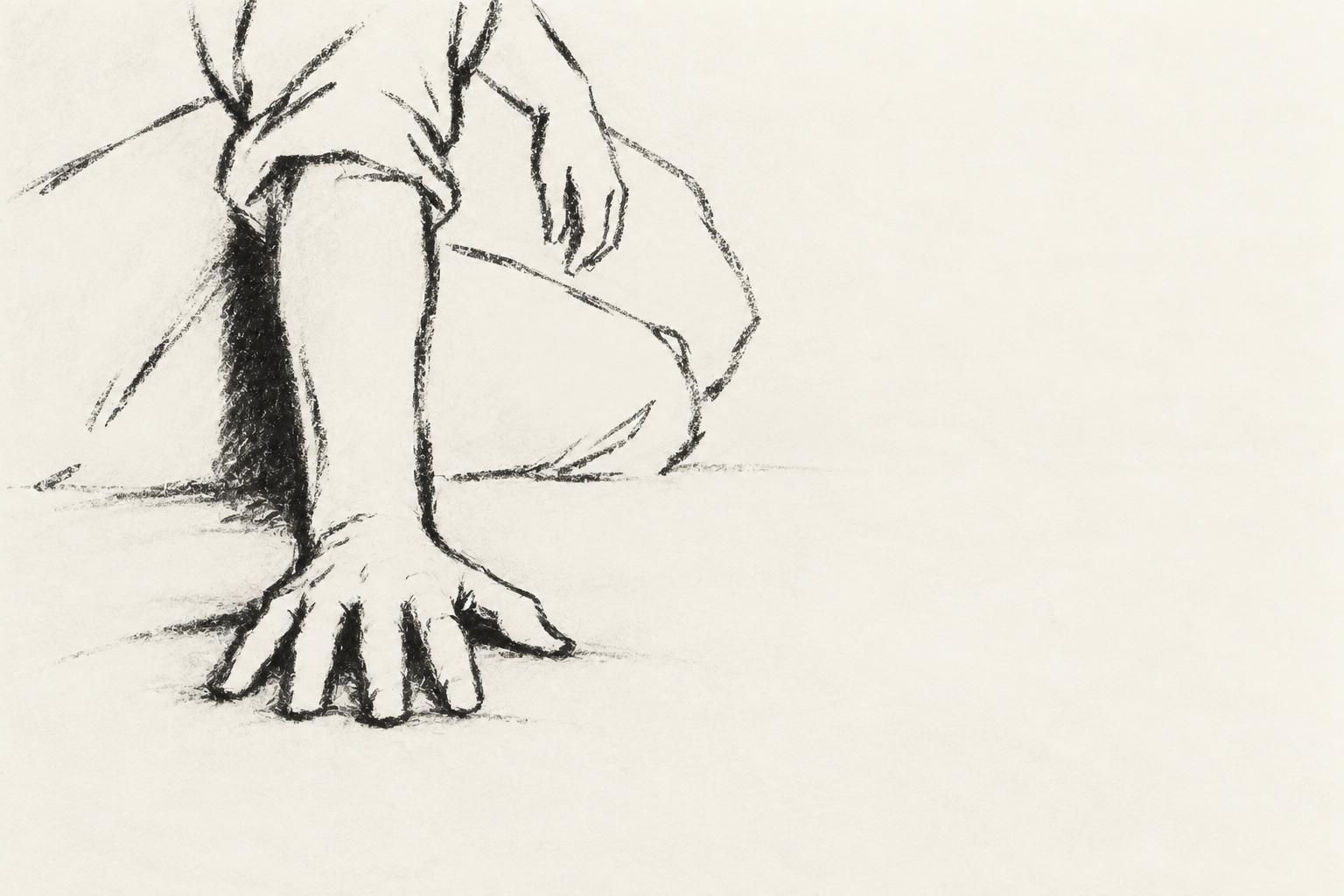
C, executed on a branch
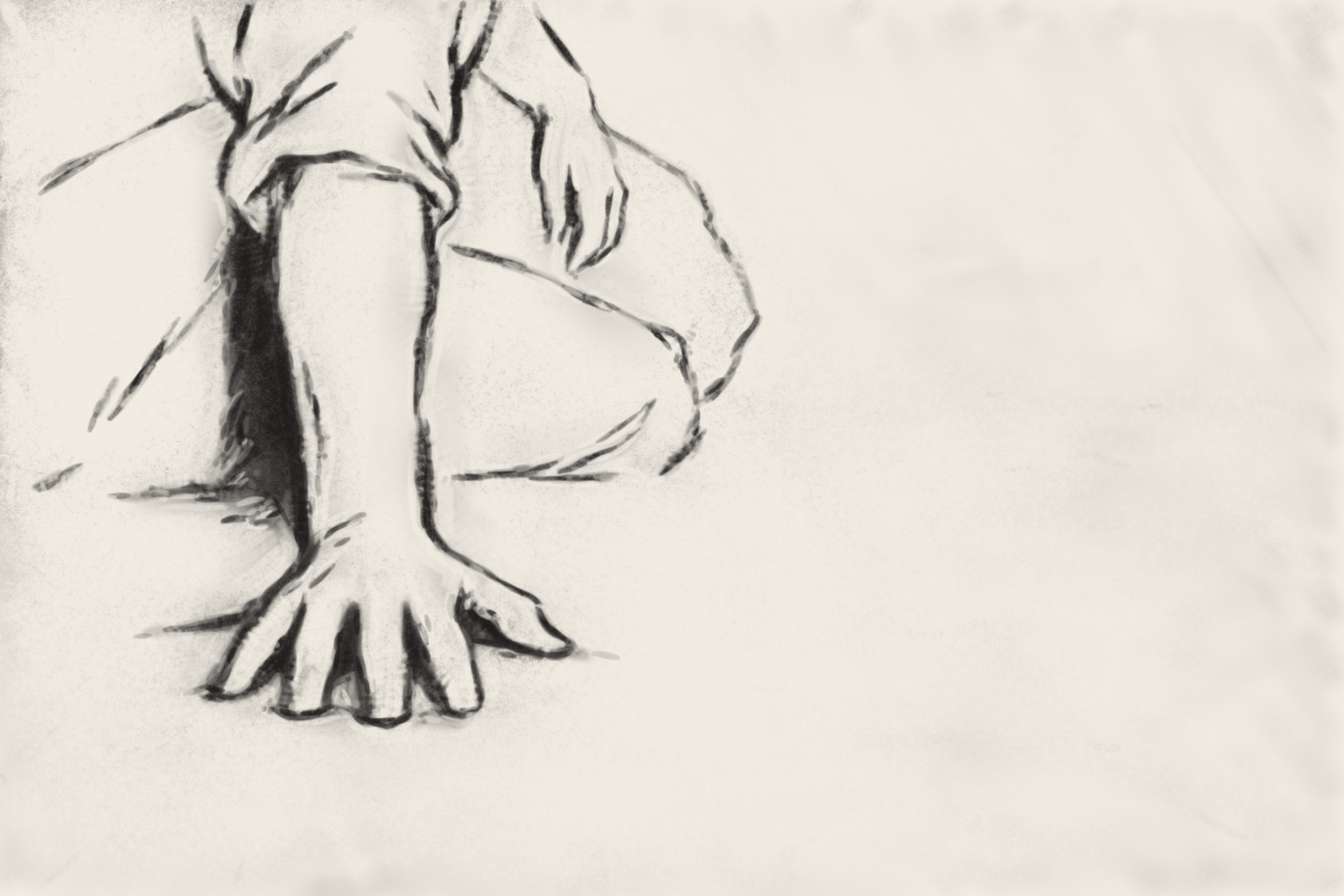
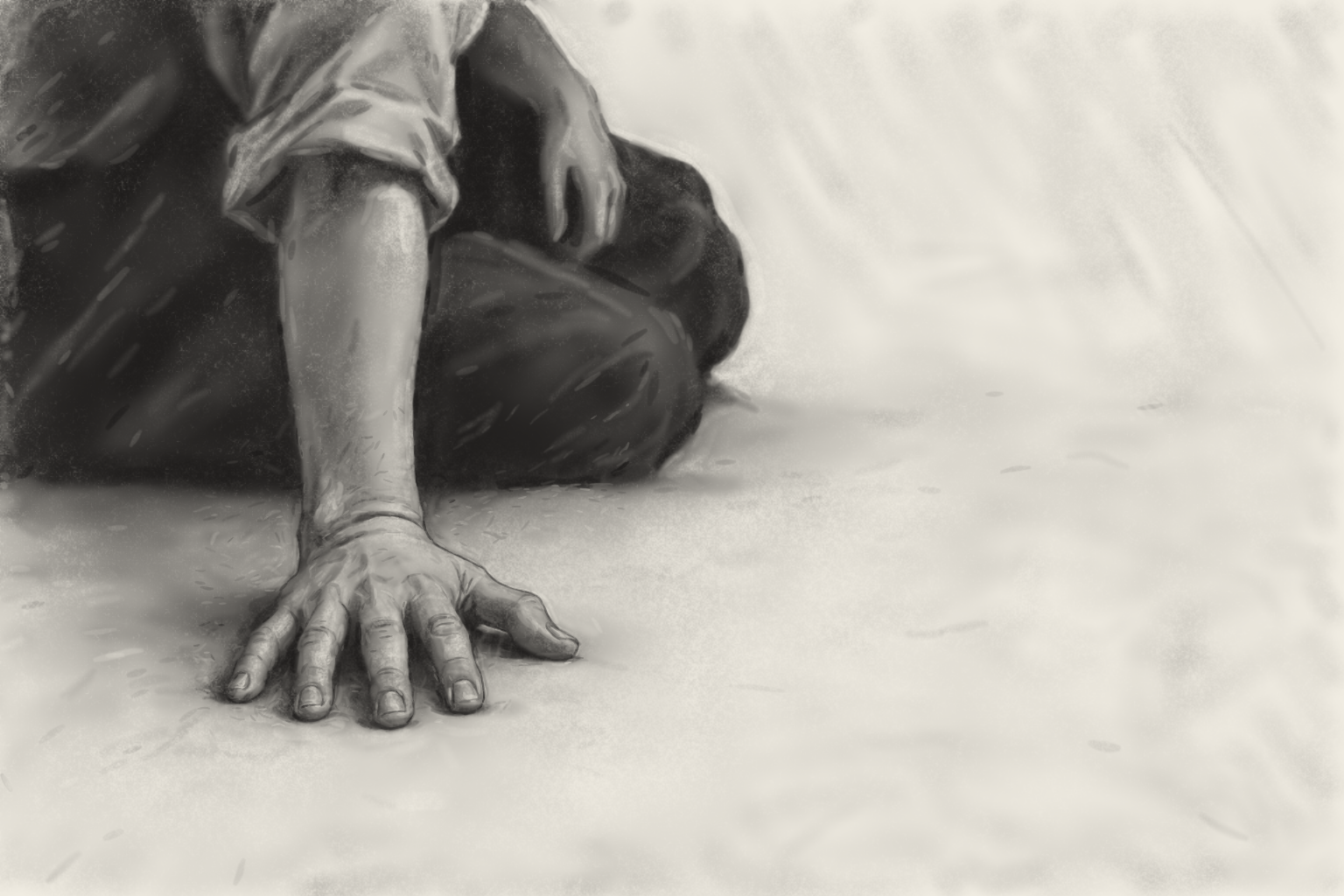
Transformation is not enough
The body and hand now share sparse description. That answers part of the hierarchy problem. But the hand reads as an outlined shape, its dark inter-finger gaps stronger than the plane carrying weight. Five digits remain legible; anatomy count alone does not establish convincing support.
The vertical dark wedge gives the composition a spine, but risks becoming a graphic stripe. Native execution softens the proposal’s broken contours into a more uniform outline and leaves faint floor smears. These are both proposal and execution limits, not a single problem that more marks automatically solve.
Decision: preserve this branch; do not replace sitting 02. Route Δ. The next direction should retain selective palm and wrist planes while omitting unnecessary clothing and floor description. It should not simply restore detail everywhere.
Process & methods
The assistant compared the three proposals, documented C’s selection and risk, then ran one uninterrupted native sitting. The existing canvas was restored by hash; a broad 300-pixel planning view handled mass removal and deposition, followed by a 600-pixel view for finer marks. Both passages covered the whole canvas. There was no isolated hand-polishing passage.
Candidates were judged on actual rendered pixel and gradient error against C. That objective controls execution fidelity, not artistic quality. The assistant then judged the output against the brief and retained predecessor. No independent critic agent was involved, and renderer code was unchanged.
| Stage | Accepted | Lifts | Execution stop |
|---|---|---|---|
| 04-reduction-broad | 221 | 191 | no-useful-actual-marks |
| 04-reduction-current | 1412 | 710 | attempt-budget |
Both stages replayed exactly from the saved source on this runtime. Their stopping conditions are resource/search evidence, not artistic Hold. The primary predecessor was not overwritten.