Visual stages, comparisons and decisions from the original run. Internal prompts, operating documents and downloadable implementation files are omitted. Some interactive comparisons are shown as separate images.
The Floor Takes It
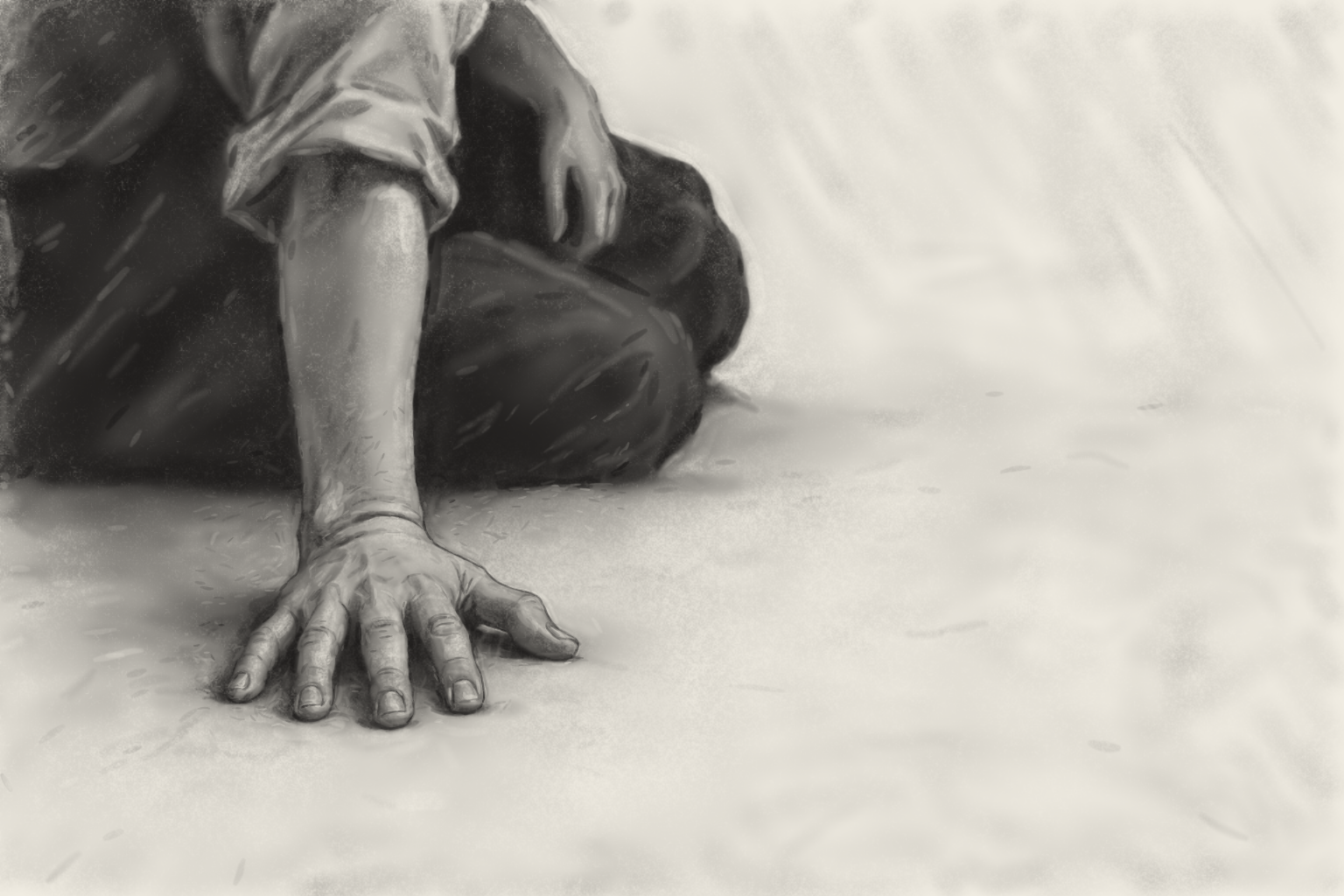
The hand now accounts for all five digits. Support is more credible, and the floor is quieter. This revision continues the existing native canvas.
What changed
Process & methods
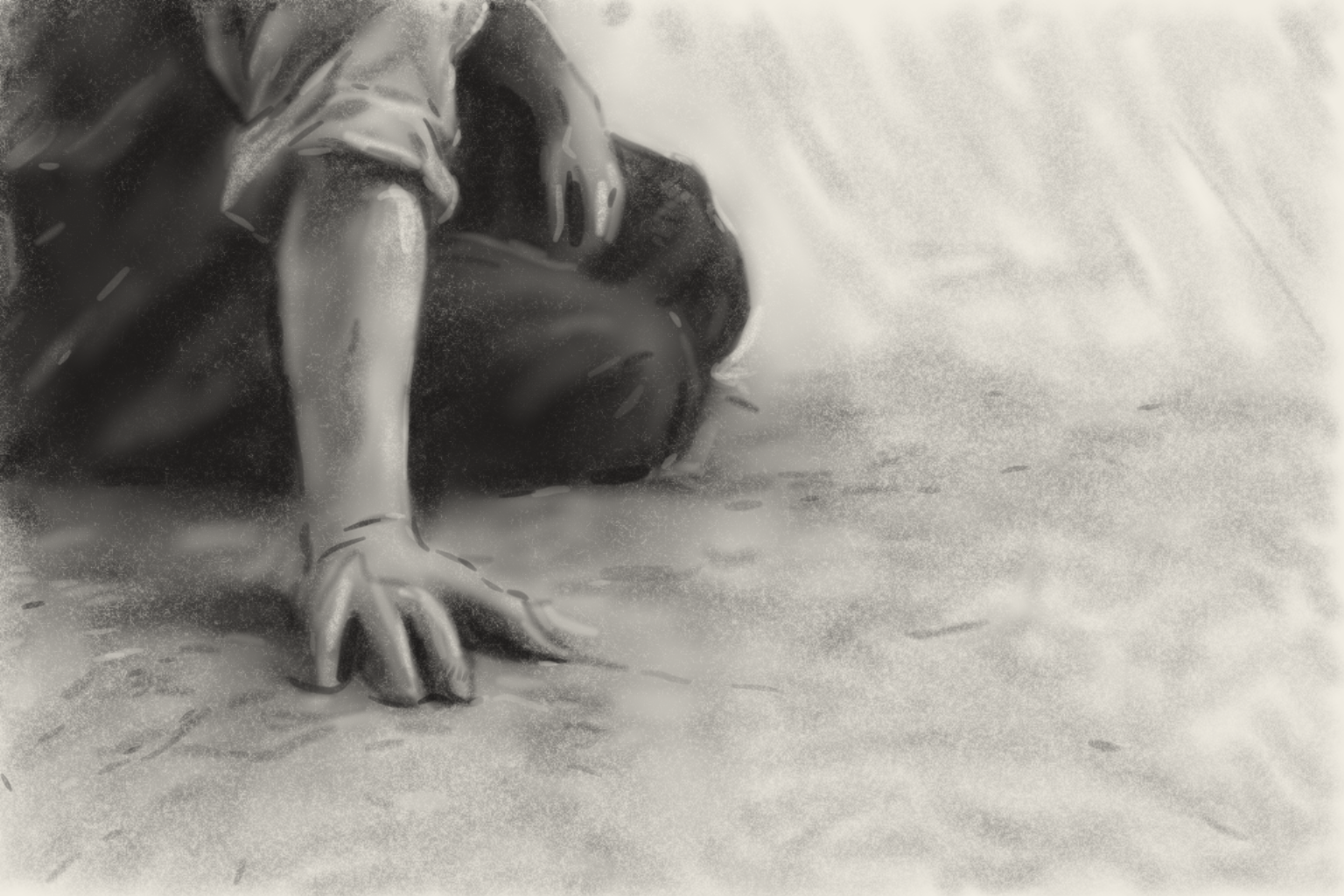
The previous generated proposal already failed to account for the fifth digit. The assistant missed that before execution. This time the proposal was revised and visually checked before the native painter received it: four fingers plus a thumb, a broader coherent palm, and a quieter field of floor.
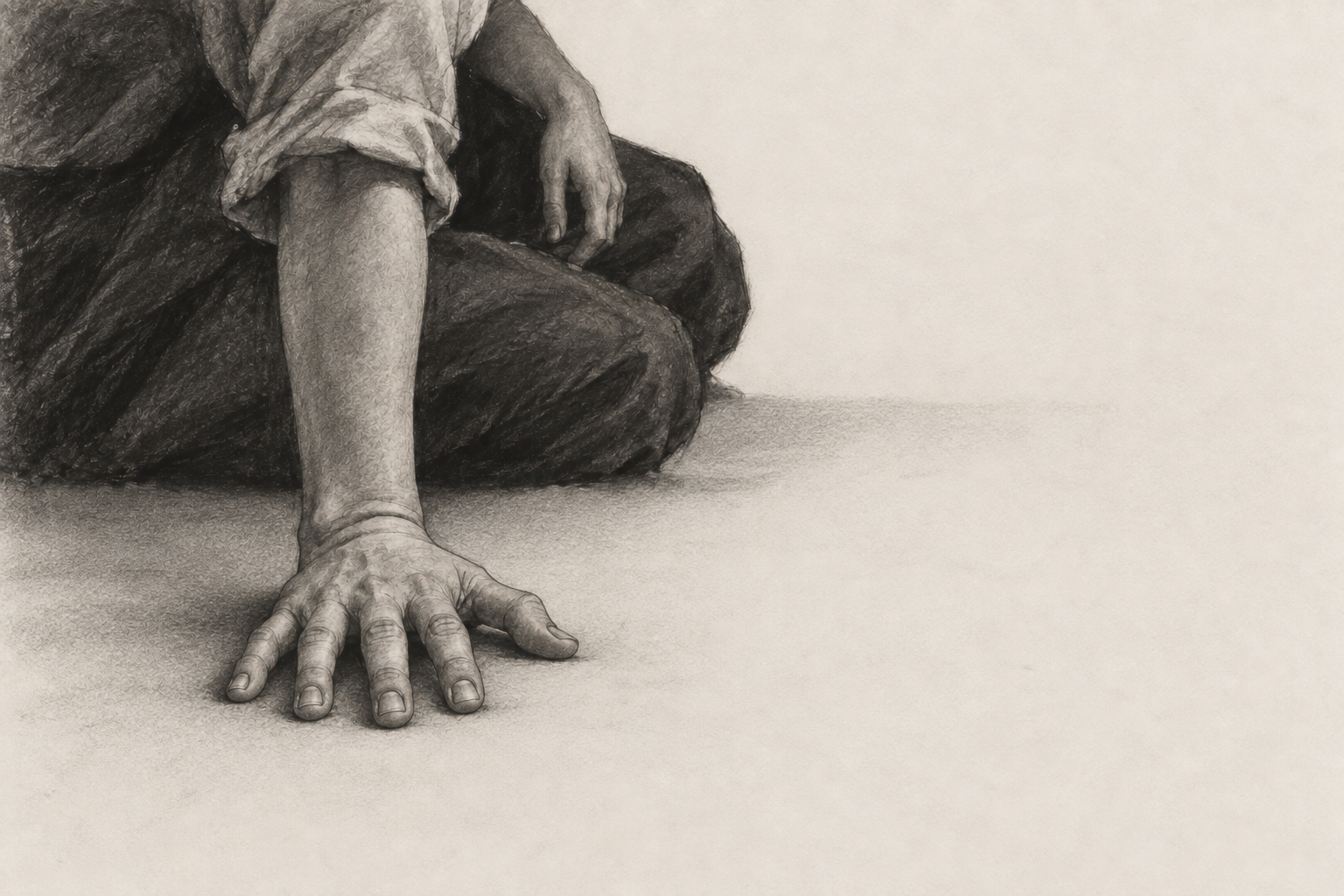
The runner resumed the first sitting’s exact scalar canvas. A whole-canvas broad stage and finer stage revised the relationship of body, hand and floor. A planned close working view then covered the entire wrist, hand and contact area: a 500 × 430 canvas region viewed at 600 pixels wide. That gives the planner more spatial information than the whole-canvas view, without pasting generated pixels.
Every accepted native command deposits pigment or lifts toward paper. Candidates must improve the rendered target error. The actual canvas is reobserved every 32 accepted marks. The three stages constituted one planned sitting; the assistant read the completed result afterward. No renderer code was changed.
| Stage | Commands | Attempts | Stop |
|---|---|---|---|
| 02-relation-broad | 240 | 8,667 | attempt-budget |
| 02-relation-current | 790 | 17,333 | attempt-budget |
| 03-contact-current | 1129 | 22,000 | attempt-budget |
Each checkpoint replayed exactly from the saved source on this runtime. The contact passage left every pixel outside its rectangle unchanged. These are execution checks. Attempt budgets are not artistic stop decisions, and the anatomy check was visual, not an automated detector.
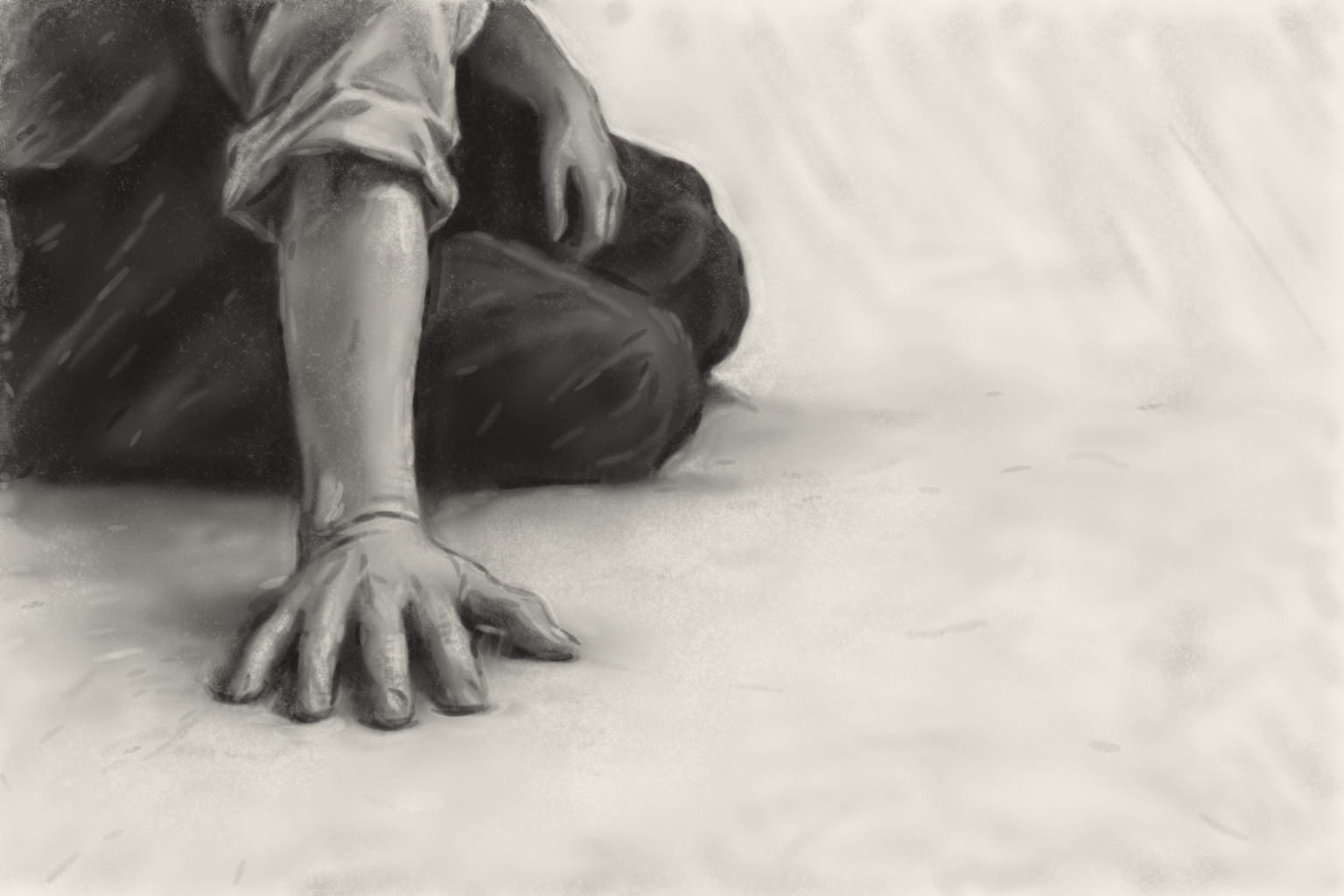
Whole-canvas revision before the close working view
Δ — keep the gain; question the hierarchy
The missing digit is corrected in the actual native result. The planted hand now reads more convincingly against the floor; this is a retained gain. But the hand is much more resolved than the arm, clothing and hanging hand. That contrast is conspicuous and is not yet clearly an intentional hierarchy.
The floor is quieter but retains diagonal smears and isolated marks from the earlier canvas. Clothing remains modeled through many folds. The next artistic question concerns the whole drawing: how much description is necessary to carry weight, and where can it be withheld? More finger detailing alone would move away from that question.
Decision: retain sitting 02 as the working canvas. Route Δ; not finished. No further generation or revision executed after this reading.